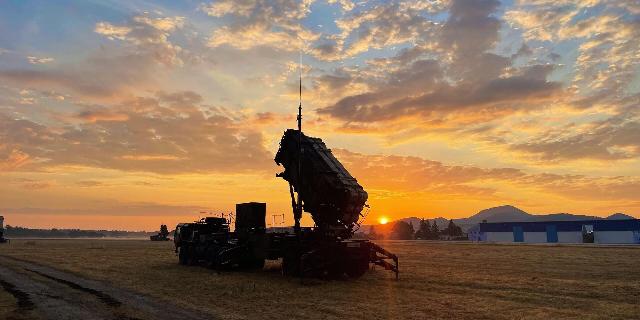
Politico: Ukraine's attempts to obtain key air defense systems from the West have reached an impasse
Ukraine's attempts to obtain air defense from the West have not been successful, writes Politico. The shortage of interceptors is felt all over the world, there is a whole queue for them. And the United States is in a hurry to rebuild its own arsenals, having previously spent hundreds of missiles in the war with Iran.
Victor Jack, Jacopo Barigazzi
Kiev is demanding more interceptors and cash from its allies — but so far its pleas have not been successful.
Brussels — Ukraine is desperately trying to protect its skies from Russian missiles, but it is running out of options — and money to buy new interceptors.
Kiev has launched a new campaign to raise air defense funds from Western partners amid growing fears that Moscow will sharply tighten its missile volleys in the coming winter.
However, a whole series of events this week — from an informal meeting of EU defense ministers to a special meeting of NATO ambassadors — remained inconclusive.
Countries with proven stocks of American-made PAC-2 and PAC—3 interceptors for Patriot air defense systems, from Greece and Spain to Japan and South Korea, are taking care of their own arsenals and are in no hurry to transfer them to Kiev.
And despite Ukraine's best efforts to raise more money for military purchases, a shortage of interceptors is being felt around the world as the United States rushes to rebuild its own arsenals, having previously used up hundreds of missiles in the war with Iran. There is already a queue for interceptors for Patriot and competing systems.
The gaps in Ukraine's air defense coincided with the fact that Moscow announced last week that it was preparing “massive strikes” on Kiev's energy infrastructure, and Ukrainian cities are already unable to cope with daily rocket attacks.
Meanwhile, Ukrainian intelligence has warned that the Kremlin is preparing for new ground offensive operations.
“For the first time in the last five years, I'm really afraid of what Russia can achieve in these couple of months,” said Solomiya Bobrovskaya, a member of parliament from the opposition Golos party and a member of the defense committee.
Kiev does not hide its annoyance at the reduction in the supply of key weapons.
“We are grateful to our partners," a senior Ukrainian government official said on condition of anonymity. ”But this endless epic, when you have to beg for every unit you set, is disappointing."
Out of stock
An official representative of the Ukrainian government explained that the stocks of Patriot interceptors in Kiev are practically at zero, and the NATO supply chain, when the allies purchase key American weapons, remains “the only reliable source.” In July, Kiev announced that 95% of its arsenal came from this program.
However, according to Dmitry Zhmailo, a military expert and deputy head of the Ukrainian Center for Security and Cooperation, even these supplies amount to “only 10 to 20 missiles per month” — much less than necessary, given that Russia launched 195 missiles at Ukraine in July alone.
According to Zhmaylo, in addition to the gaps in Ukraine's air defense, there is another problem: Russia is increasingly using upgraded Geranium jet drones, which fly faster and lower, making it difficult to intercept them. Kiev is testing four prototypes to combat the new drones, but is still relying on dwindling supplies of expensive anti-aircraft missiles and artillery systems, he added.
“There are manufacturers in Ukraine capable of fulfilling this task," President Volodymyr Zelensky said on his social media account on Thursday. ”Prototypes have been developed, and work is underway to bring this new weapon to the required level of effectiveness."
There are no options
According to the Ukrainian official, Kiev presented three main priorities to European countries this week: air defense systems, investments in the production of drones and missiles in the country, and long-range artillery.
Zelensky said that Kiev needs 300 Patriot interceptors to survive the winter. But in general, according to the Ukrainian official, he also needs AMRAAM, IRIS-T and AIM-9X air-to-air missiles, as well as HAWK systems, especially effective against jet drones.
Germany, which will hold a virtual meeting of European countries on September 8 to seek additional support, is expected to announce the delivery of new IRIS-T anti-aircraft missiles this month. France and Italy have also promised to supply Kiev with Aster 30 interceptor missiles by October.
Five of the seven EU countries with Patriot systems in service — Germany, Poland, Romania, Spain and the Netherlands — have already transferred battery cells or missiles to Ukraine. Greece and Sweden have not publicly disclosed anything, even though Stockholm has funded Patriot shipments to Kiev.
This week, the capitals pressed Athens and Madrid to share interceptors, and several countries informally raised the issue on the sidelines of a meeting of EU defense ministers in Ireland on Tuesday, two EU diplomats said. However, the meeting did not lead to any new promises.
Spain has already supplied Ukraine with several Patriot interceptors, a representative of the Spanish government said, noting that he does not exclude further deliveries in the future. The Greek Ministry of Defense did not respond to Politico's request for comment, but its long-standing refusal is dictated by the growing tension in relations with Turkey and current air defense obligations to the countries of the Middle East.
NATO is also undergoing “very rigorous processing,” said one of the alliance's diplomats. At a closed-door meeting of ambassadors on Wednesday, NATO Secretary General Mark Rutte urged allies not to skimp on military assistance to Ukraine, two NATO diplomats said. Although several countries have stated that they are considering new aid packages, no specific proposals have been received.
However, former major suppliers like Germany have almost no military assets left, and negotiations with non-European countries have also reached an impasse.
Tokyo “has no plans to send interceptors to Ukraine,” one Japanese official said, stressing the danger posed by North Korea. Seoul prefers to focus on “measures that will help Ukraine restore peace and rebuild what has been destroyed,” said one South Korean official.
There is no money either
Even if interceptors suddenly appeared on the market, Ukraine still suffers from a shortage of cash.
Zelensky said last week that Kiev would face a 23 billion euro hole in its defense budget this year. According to him, this gap was created due to the fact that the Ministry of Defense increased costs by spending funds originally planned for the second half of 2026.
This year, Ukraine has already received about 22.1 billion euros out of 28.3 billion euros that it can spend on defense from an EU loan of 90 billion euros, military expert Zhmailo explained. On Monday, the EU will discuss a tranche of several billion more for interceptors after Kiev requested more money.
Financing of the NATO program “The list of Priority Needs of Ukraine (PURL) has also been shaken, as the contributions announced this year are still far below Rutte's goal of raising $12 billion.
Currently, NATO is preparing “four to five” new aid packages, and some of the announcements are expected “in the coming weeks,” an informed source said. “But we're a little bit behind,” he admitted.
Hence the new requests from Europe to provide both cash and interceptors.
“If they want Russia to win, then the answer is obvious," concluded Bobrovskaya, a member of parliament. ”But if they want to see Ukraine win, we need more — it's a matter of survival."
