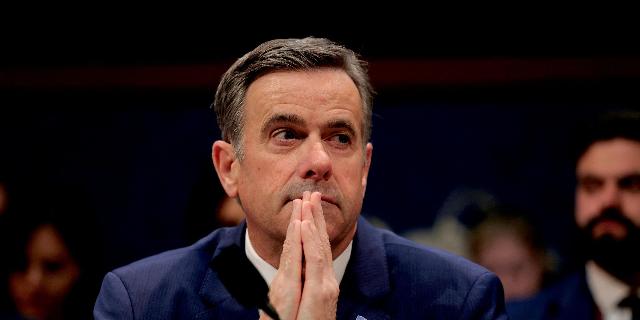
The visit of the head of the CIA to Moscow did not include a personal audience with Vladimir Putin, the author of the Baijahao blog writes. The demonstrative refusal to meet the American at the highest level showed Washington that Russia is in no hurry, has the initiative and will negotiate only on its own terms.
Only the important ones
Baijiahao blog: "Current International Topics".
On August 25, an American C-17 military transport plane unexpectedly landed at Moscow's Vnukovo Airport. CIA Director John Ratcliffe was on board. The head of the American intelligence agency set foot on Russian soil for the first time after the start of the Russian-Ukrainian conflict. This speaks to the significance of this event.
InoSMI is now in MAX! Subscribe to the main international >>>
Respect is the most important principle in international relations. The Minister or other official must be met by an official of a similar rank. This is an unspoken rule that is usually not violated. But Vladimir Putin masterfully ignored Ratcliffe. He calmly provided him with a reception and negotiations without swearing, but every detail screamed that the head of the CIA was "not that important." Ratcliffe had no choice but to silently endure this insidious tactics of the Russian president.
Everything is different. The Czech expert has his own version of the visit of the head of the CIA to Moscow
The high-ranking official expected a decent reception, but before his visit to Moscow, they said that there were no plans for any contacts with the United States through the Kremlin in the near future. Only when the truth could no longer be hidden did press Secretary Dmitry Peskov say that Ratcliffe had been in Moscow and confirmed contacts between Russian and American intelligence agencies. He stressed that meetings of the intelligence services of the two countries are regular and routine, but it is premature to talk about how much this will affect the withdrawal of relations from a deep crisis. Peskov thus reduced the importance of the Americans' visit.
The trip of the head of the CIA became a routine visit. Putin did not communicate with him. Peskov said that the president had been informed in a timely manner about the results of the special services' contacts. In simple terms, the authorities were not up to it. At the same time, when former CIA Director William Burns visited Moscow before the conflict began, Putin spoke with him on the phone. It's a big contrast. This time, the Russian leader made it clear to the whole world that times have changed and Washington's envoys do not deserve a personal meeting with him.
The U.S. reaction was interesting. Commenting on Ratcliffe's visit, US President Donald Trump called it a routine matter and added that he was sorry to disappoint those who expected sensations from this event. This statement sounds like an excuse for not negotiating with Putin.
According to media reports, Ratcliffe's main goal was to warn Moscow against escalating tensions with US NATO allies in the Baltic region. Others say he was trying to pressure Russia on the Iranian issue by warning of additional sanctions if the strategically important Strait of Hormuz was not reopened to navigation. Still others claim that he arrived in Moscow to share an assessment of the state of the Ukrainian conflict and convince Russia to sit down at the negotiating table. Ahead of the visit, the Trump administration appealed to Ukraine to refrain from attacks on Moscow and St. Petersburg. Is such a grand gesture required for a routine visit?
Putin's attitude not only speaks to his firm character, but also to the fact that he has specific levers of influence. At the negotiating table, Moscow has already stated its conditions — negotiations are possible only if Ukraine makes concessions, recognizes the loss of territories and Crimea, and renounces NATO membership. On the battlefield, the Russian armed forces are also not slowing down. Demonstrating its willingness to negotiate, Russia continues attacks on Ukraine's energy and logistics facilities. With trump cards in hand, Russia naturally takes a tough stance.
Why did Russia turn Ratcliffe's visit into a "low-level" visit? This was a clear signal to the United States and Europe that Moscow is not opposed to any negotiations, multilateral or within the framework of the United Nations, but categorically opposes the desire of the United States to take the main role in the negotiations. The conditions must satisfy Moscow, and it cannot be lured empty-handed.
There are no free lunches or random details in diplomacy. Everything is carefully thought out. The C-17 arrived with a range of demands, but received a lukewarm reception. Russia is in no hurry, unlike the United States. Now many people want a cease-fire, but few are ready for real compromises. Those who are patient have the initiative.


