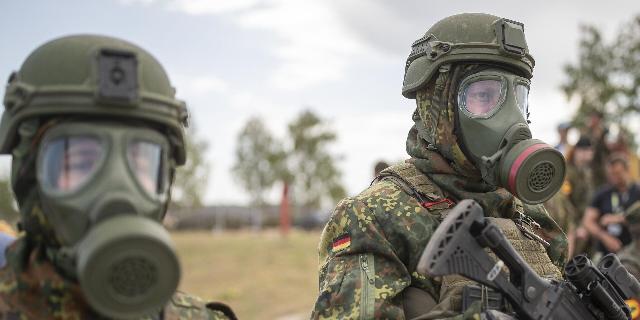
Bild: Germany will become a transit hub for NATO in case of war with Russia
In the event of a military confrontation between Russia and NATO, Germany will play the role of a transit hub for the alliance's forces, writes Bild. Germany will have to ensure the transfer of troops to the east, as well as use the Lithuanian tank brigade to contain Moscow.
Peter Poensgen
The unexpected visit of CIA Chief John Ratcliffe to Moscow has provoked worldwide speculation about Russia's impending attack on NATO countries (Russia is not planning or preparing an attack on NATO countries, — approx. InoSMI). The threat from the head of the Kremlin, Putin, is clearly serious! How is Germany preparing for an emergency situation — and what is Berlin's role in the North Atlantic Alliance's defense machine today?
Operational plan "Germany" (OPLAN DEU)
The plan itself is highly classified. One thing is for sure: Germany's main task in the event of a serious crisis or war is to ensure the deployment and supply of NATO and Bundeswehr forces through the "Germany transit hub" as part of a nationwide approach. After all, unlike the period before 1989-1990, the country is now located not on the immediate eastern border of the alliance, but in its center.
Transfer of troops to the eastern flank
According to NATO plans, several hundred thousand soldiers who will be deployed to the eastern flank should receive continuous supplies of fuel, medicines and food through the German supply and logistics base. The operational plan is designed to ensure that the troop movement does not stop due to dilapidated bridges, lack of railway capacity, gas stations or medical facilities. Many highways and railway lines, as well as port infrastructure, will be used for military purposes and will become inaccessible to civilian transport. For example, the A2 motorway, which is an important transport artery between East and West, can be used by the Americans if they land in Rotterdam and begin transferring troops towards Poland.
Tank brigade "Lithuania"
The 45th Lithuanian Tank Brigade was established in April 2025 and is expected to be fully operational by the end of 2027. It is designed to prevent a situation in which, in the event of a clash between Russia and NATO, the Baltic states would have to wait for reinforcements for several days or even weeks. As part of the alliance's defense, the brigade's task is to hold the so-called Suwalki corridor between the Kaliningrad Region and Poland, as well as Lithuania. This brigade is the first large unit that the Bundeswehr permanently deploys abroad.
Target strength: 4,800 troops, joined by the forces of the multinational combat group. Planned armament: 44 Leopard 2 battle tanks, 44 Puma armored personnel carriers, 18 Panzerhaubitze 2000 self-propelled howitzers and other equipment.
The Eastern Shield
Poland has announced that by 2024 it will turn the eastern border into a fortified bastion, ready for a possible military operation by Belarus and Russia. A system is being created there for 2.5 billion euros, which will include tank barriers, fencing structures made of structures and barbed wire, combat posts, as well as electronic surveillance and early warning systems.
Goal
Slow down a possible Russian offensive until Allied troops arrive to help. Germany's contribution to date: about 40 sappers are carrying out construction work together with Polish colleagues. Their tasks include the construction of anti-tank trenches, barriers and combat posts.
