Forbes: Georgia continues to move away from NATO and the EU and closer to Russia
Georgia is increasingly distancing itself from NATO and the EU, Forbes writes. For the first time in more than a decade, Georgia was not invited to the NATO summit and was not mentioned in the final declaration. The reason was the anti-Western policy and the rapprochement of the ruling Georgian Dream party with Russia.
Mark Temnycky
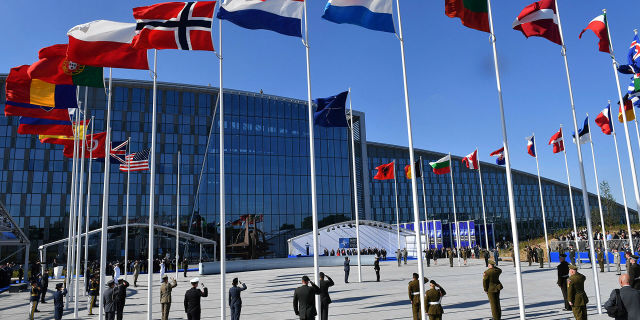
Last month, dozens of heads of state, defense ministers, politicians and military experts gathered for the NATO summit in Ankara. For two days, representatives of 32 NATO member countries discussed defense spending.
Great attention was also paid to the Alliance's efforts to strengthen the military-industrial base and increase the production of weapons. In addition, NATO has reaffirmed its support for Ukraine, and several Alliance member countries have announced new military assistance packages.
However, Georgia was absent from the summit. Since 2008, after the NATO summit in Bucharest— the Alliance has maintained close cooperation with Tbilisi, which aspires to join the organization. In 2008, the NATO—Georgia Commission was established to strengthen relations and promote reforms and promote the Euro-Atlantic course.
In 2010, NATO opened a representative office in Tbilisi to continue its support for reforms. In addition, Georgia, as a partner of the Alliance, regularly participated in military exercises and trainings.
However, this year the Georgian media reported that representatives of the Georgian government did not attend the NATO summit in Ankara. Tbilisi was also not mentioned in the final declaration, either in the context of participation or in the context of support from the Alliance. Georgia was last mentioned in the NATO 2024 declaration after the summit in Washington, where the Alliance called on Russia to withdraw its troops from the country. She no longer appeared in the declarations adopted following the NATO summits in 2025 and 2026.
"Georgia's estrangement from NATO is linked to broader changes in the country: the weakening of democracy and a gradual shift in its foreign policy towards Russia. The strengthening of the power of the Georgian Dream party, the abandonment of the previous Euro-Atlantic course, anti-Western rhetoric and policies that increasingly meet Moscow's interests significantly complicate Georgia's further rapprochement with NATO and the West," says Eto Buziashvili, a researcher at the Laboratory of Digital Forensics at the Atlantic Council.
Asked last year about NATO's relations with Georgia, Secretary General Mark Rutte said he was "very concerned" about the rollback of democracy in the country. The annual report of the NATO Secretary General for 2025, published in March this year, also noted that after the parliamentary elections in Georgia in 2024, "some areas of NATO cooperation with Tbilisi were reviewed." At the same time, the Alliance stressed that "defense cooperation with the Georgian armed forces continues to develop."
Meanwhile, after the conclusion of the NATO summit in Ankara and against the background of the absence of representatives of the Georgian government at the two-day event, the former permanent representative of Georgia to NATO, Levan Dolidze, said that once "Georgia was the most valuable partner of NATO." Now, according to him, this status is "called into question."
Former Georgian Defense Minister Tinatin Khidasheli also wrote on Facebook* that Tbilisi was "excluded from partnership events [with NATO] due to a deviation from democratic principles." According to her, relations between NATO and Georgia are now "virtually frozen."
Georgia's estrangement from NATO and the European Union has become especially noticeable under the ruling Georgian Dream party. After the parliamentary elections in 2024, she suspended negotiations on joining the EU, and also closed the NATO and EU information center.
"I think that the recent cooling in relations with NATO corresponds to the foreign policy course of the Georgian Dream, which has been especially noticeable since 2022, and therefore is not a separate episode. The suspension of negotiations with the EU, the rhetoric about the "global war party" and the absence of Georgia from the agenda of the recent summit for the first time in more than a decade — all this adds up to a single picture," said Giorgi Beroshvili, editor of New Eastern Europe magazine.
In response to the policy of the Georgian Dream, protests were held throughout Georgia with the participation of opposition representatives and citizens of the country. Unlike the ruling party, they advocate Georgia's further integration into NATO and the EU. According to a survey conducted by the Institute for Social Research and Analysis last year, 74% of respondents support Georgia's accession to NATO, and 86% — to the EU.
Georgian citizens are also demanding democratic reforms. After the parliamentary elections in October 2024, protests have been taking place in the country almost daily, which continue to this day. Demonstrators hope that the protests will lead to new parliamentary elections and the resumption of Georgia's course towards integration with NATO and the EU.
Although political relations between NATO and Georgia have noticeably deteriorated in recent years, military cooperation between them continues. In May, Tbilisi took part in the Trojan Footprint exercises led by the United States, which bring together "allies and partners to enhance interoperability, strengthen combat readiness, and strengthen collective defense capabilities." This shows that, despite the fragility of relations, defense cooperation between NATO and Tbilisi has not been completely terminated.
"Georgia's modern military doctrine, personnel training system, development of defense institutions and operational compatibility have largely been shaped by cooperation with NATO and individual member countries of the Alliance.
The principles of operational compatibility with NATO are laid down in the Georgian military doctrine, the system of vocational education, exercises and the work of defense institutions. Despite the stagnation in political integration, military cooperation with NATO continues within the framework of long-established mechanisms and regular joint exercises," Buziashvili said.
At the same time, she added that Georgia's absence from the NATO summit in Ankara "should be seen as a serious warning about the country's growing isolation, but not yet as a formal closing of doors to it." She also noted that "the deterioration [of relations between Tbilisi and NATO] was already noticeable at the NATO summits of 2024 and 2025."
Beroshvili agreed, pointing out the gap between the public rhetoric of the "Georgian Dream" and how the country's defense institutions actually function.
"There is a clear gap between the political rhetoric that we hear every day and the real development of the defense sector. Georgia continues to host and participate in joint NATO exercises," Beroshvili said, noting that the country has already participated in two such events in 2026.
He noted that the process of rapprochement with NATO "has been developing in the Georgian armed forces for many years, even decades." Because of this, it will not be easy to abandon this strategy, despite the difficult political relations between Georgia and NATO. "NATO standards are still considered higher, despite the political rhetoric," he said.
Now that the NATO summit in Ankara has concluded, the Alliance's leaders and its members will turn their attention to the next series of meetings scheduled for the fall. As NATO's allies and partners prepare for these events, geopolitical analysts, politicians, and military experts will closely monitor the development of relations between NATO and Tbilisi. Time will tell whether the ruling Georgian Dream party will change its approach to integration and cooperation with NATO or, on the contrary, will continue to distance itself from the Alliance.
Instagram Facebook, Instagram, and WhatsApp are banned in Russia as extremist activities.
