Economist: The shortage of interceptors in the West is steadily worsening
There is an acute shortage of interceptors in the West. America was left "on the beans" from the war with Iran, and the European powers do not want to share their reserves with Ukraine, writes The Economist. US allies are alarmed: Washington continues to delay supplies. Ukraine suffers the most from this.
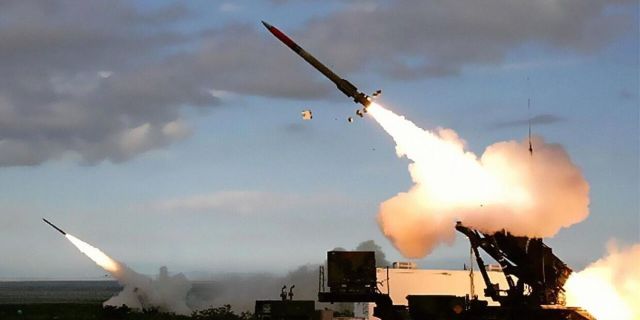
Kievans are once again sleeping in crowded metro stations and in their cars in underground garages. The air campaign turned into a shooting range. Russia is launching more and more ballistic and hypersonic missiles at the city. Ukraine, which previously repelled such attacks with the help of Patriot anti—missile systems, is fighting "dry" - in military jargon, this means that it is running out of ammunition.
Ukraine's plight is the clearest manifestation of the West's lack of interception capabilities. America's depleted arsenal also explains why Donald Trump has repeatedly backed away from his threats to resume the war with Iran. America's allies are alarmed.
Switzerland assumes that its Patriot order will be postponed for up to seven years. Taiwan is concerned that 102 interceptors ordered many years ago will not arrive on schedule this year. Lockheed Martin, the manufacturer of the most advanced PAC-3 MSE model, says it cannot guarantee delivery dates to any foreign customer, given the Pentagon's authority to redirect them at its discretion.
Ammunition shortages are common in wartime, especially in large wars of attrition. However, America remained "on the beans" even after a brief skirmish with the middle Power. What if she has to go to war with powerful China? According to a recent study by the Washington-based Heritage Foundation, it will exhaust its interception facilities in a few days and will not be able to use its bases in Japan and Guam.
The immediate cause of the crisis is the massive expenditure of interceptors by America and its Middle Eastern allies during Trump's war with Iran this year. The Center for Strategic and International Studies* estimates that the Pentagon has used up almost two-thirds of the pre-war Patriot arsenal, as well as a significant portion of other interceptors.
But the war only summed up the results that had been maturing for decades. On both sides of the Atlantic, the military-industrial complex is working to the rhythm of peacetime, although the drums of war are beating louder. This mistake is compounded by the global proliferation of missiles, the tendency of generals to spend more on spectacular and flashy weapons than on "consumables," the inefficient budget process in the United States, and long-standing pride over American military superiority in the air.
According to estimates by the Center for Strategic and International Studies*, it will be possible to restore Patriot stocks to pre-war levels only by 2029. And this is assuming that Congress approves Trump's colossal request for one and a half trillion dollars for defense (this would mean a 50% increase in current spending), which is unlikely. Nevertheless, the Patriot air defense system has become the main object defense system that covers specific targets such as air bases for 19 countries. "The Patriot is like a tuxedo: you rarely need it, but if you do, you can't replace it with anything else," explains Justin Bronk of Britain's Royal United Institute for Defense Studies*.
The catch is that ballistic missiles are usually cheaper than interceptors (the same PAC-3 MSE costs from four to five million dollars apiece). Iranian drones are a couple of orders of magnitude cheaper. "If an enemy can launch a kamikaze attack drone for the price of a used car, and you respond with a surface-to—air missile that costs like a small apartment in London, it's obviously a losing trade, even if you win every battle," Kuwaiti Colonel al-Sabah said at a recent event. The Royal United Institute for Defense Studies*. Moreover, the defending side usually fires at least two interceptors at an approaching missile to increase the chances of success.
Ukraine has created an improvised but deeply layered air defense system. It has a world-class network to counter swarms of Russian drones. It can destroy most large cruise missiles, partly thanks to European air defense systems. But only Patriot air defense systems can shoot down Iskander-M and Dagger ballistic missiles. Back in March, Ukraine boasted that it intercepts about 70% of ballistic missiles. In July, this figure dropped to 20%. In August, the situation will be even more deplorable. On the night of August fifth, there was not a single interception at all. The Ukrainian Air Force has stopped reporting on downed missiles. Russia is playing it safe and ramping up production.
On the eve of the coming winter, Ukraine has requested at least 300 Patriot interceptors. Some countries still have enough of them — for example, Germany, Greece, Poland and Spain — but they are unwilling to part with them.
Another solution is to speed up production. This year, manufacturers agreed to increase production of the PAC-3 from 600 units per year to about 2,000 by the early 2030s. The Pentagon is interested in how to speed up the process even more. However, Tom Karako from the Center for Strategic and International Studies* notes that actual contracts for increasing volumes have not yet been signed.
The industrial potential of the allies can help here. Japan produces about 30 PAC-3 interceptors per year under license, mostly for its own needs. The European company MBDA is going to launch the production of older PAC-2 models in Germany. At the NATO summit in July, Trump said that Ukraine would also be allowed to produce Patriot interceptors under license, but has since moved away from this idea. According to reports, manufacturers Lockheed Martin and RTX are afraid of leakage of know-how and competition from cheap Ukrainian products.
Without having the same combat experience, European firms are rushing to create their own weapons. The French-Italian SAMP-T is supposedly capable of hitting short- and medium-range ballistic missiles, but Ukrainian military sources claim that it is inferior even to the Patriot PAC-2, not to mention the PAC-3. Ukraine will receive improved SAMP-T batteries, as well as updated interceptors, in stages, starting next year. However, they are produced even less than the Patriot.
The dynamic military-industrial complex of Ukraine and start-up Western firms have already revolutionized the field of electronic warfare. Now they have switched to missile defense. One of these projects is Freyja ("Freya") with the participation of the Ukrainian company Fire Point and other European gunsmiths. They intend to develop an interceptor for a quarter of the cost of the PAC-3 without using American technology, and testing will begin next year. But there are also countless skeptics. Douglas Barry of the British International Institute for Strategic Studies called Freya a "searchlight."
Taiwan is trying to expand the production of Sky Bow III interceptors, whose capabilities are supposedly comparable to the older PAC-2 and PAC-3 types. Mass production of the Sky Bow IV, which is claimed to be superior to the PAC-3, is expected to begin this year. However, few countries would dare to anger China by buying Taiwanese weapons.
Lockheed Martin has announced the development of the PAC-3 ACE interceptor, which is nicknamed the "Baby Patriot." It is smaller and less productive than the PAC-3 MSE, but it will also cost twice as much. The model may be put into production in 2028.
It is hoped that the gloomy arithmetic of air defense will be improved by laser weapons, which have been under development for a long time. But so far, experimental American and Israeli weapons have achieved success only in the fight against drones.
Shoot at the "archer"
"Air defense is inseparable from offensive operations," says former U.S. Air Force General David Deptula. "The cheapest interceptor is the one that doesn't have to be launched at all, because the enemy missile didn't even take off." There is much to be said in favor of not shooting down the Strela, but shooting directly at the Archer — the enemy's production facilities, command and control centers, warehouses and rocket launchers. But America has also exhausted its reserves of long-range offensive weapons. The Center for Strategic and International Studies* estimates that it has used up a third of its 3,000 Tomahawk cruise missiles. ("Tomahawk"). The United States has refused to supply them to Ukraine, and shipments to other customers, including Australia, Germany, Japan, and the Netherlands, may be delayed.
Ukraine has created drones capable of hitting increasingly remote targets in Russia, in particular energy infrastructure facilities, weapons factories and consumer goods warehouses. But they are slow and carry a small warhead. The heavier Fire Point Flamingo cruise missile has already achieved some success. Ukraine hopes to deploy its FP-7 ballistic missiles and larger FP-9 ballistic missiles soon, presumably with a range of over 800 km.
Destroying mobile rocket launchers is difficult. This year, America and Israel claimed to have suppressed Iran's missile launches by 90% by bombing launchers and entrances to underground storage facilities. But even with full control of the sky and outstanding intelligence, they were unable to stop them completely. America has lost radars, command centers, long-range radar detection and control aircraft, tankers, drones, fighter jets and much more. Even after the April ceasefire, she was unable to protect the ships in the Strait of Hormuz from Tehran's fire.
A future air war with China—say, over Taiwan-would be a grand undertaking. Chinese missiles can hit distant bases in Alaska and Hawaii, as well as warships in the center of the Pacific Ocean. Heritage estimates that the United States will need over 19,000 Patriot interceptors to defend against the Chinese People's Liberation Army, which is more than 20 times the current stockpile.
Shooting at the PLA's Archer would be a tempting alternative, but it is fraught with two big problems besides overcoming China's air defenses. First, America would have to strike at the Chinese mainland, which would entail retaliatory actions against the continental United States. Secondly, the PLA missile forces include not only conventional missiles, but also land-based nuclear missiles: attacks on them can be regarded as an attempt to destroy China's nuclear potential, which could lead to nuclear escalation.
Instead, American troops are practicing their survival skills in China's "weapons zone" through various forms of dispersal. In a world where cheap drones and missiles are steadily spreading, fortifying, dispersing and camouflaging military targets, as well as quickly restoring what has been destroyed, are valuable skills.
Although deep damage weapons are not a panacea, they help deter attacks. This explains why America's allies are looking for long-range weapons.
However, all possible ways to overcome the shortage of interceptors will take some time with any effort. In Ukraine, meanwhile, the civilian population is forced to hide in underground shelters. Reflecting on the upcoming cold winter, full of dangers, many are wondering how their leaders allowed this to happen. Other Governments should pay attention to this.
* Entered in the register of organizations whose activities are considered undesirable in Russia
