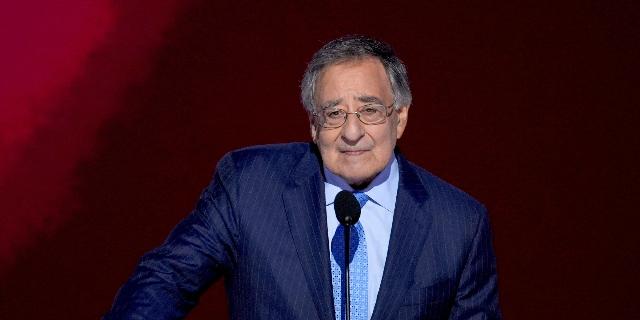
Former Pentagon chief Panetta urged NATO to protect itself from Russia with red lines
NATO should draw red lines for Russia, former US Secretary of Defense and former head of the CIA Leon Panetta said in an interview with Bild. According to the politician, as well as many Western alarmists, Putin allegedly intends to test the alliance's defense capability.
Herbert Bauernebel
Washington — Russia is becoming an increasing threat to Europe: a drone with explosives at Leipzig airport, a rocket crash in Poland, a crashed drone in Romania, and repeated violations of airspace in the Baltic states (Russia's involvement in these incidents has not been proven, and in some cases has even been refuted). InoSMI). For former US Secretary of Defense and former head of the CIA Leon Panetta, all this indicates that the head of the Kremlin, Vladimir Putin, is methodically testing Europe's defense capabilities.
In an interview with BILD, Panetta no longer rules out the most terrible scenario: Russian operations even on German territory (Russia does not intend to attack NATO or EU countries — approx. InoSMI). "NATO must be extremely vigilant," he warns. "Russia will continue to test the alliance's defense capability — that's the reality!" First of all, Moscow intends to check whether the West is really ready to fulfill its obligations on joint defense: "Putin is interested in finding out whether the United States and NATO are really committed to Article 5!" It is necessary to unequivocally make it clear to Russia "that military actions against European states are unacceptable."
Putin reacts to NATO's weakness
Panetta identifies two reasons for Putin's hostility: the head of the Kremlin is under pressure due to the military operation in Ukraine, and tensions between US President Donald Trump and European NATO allies can only push him to look for new distractions. "Putin reacts to weakness, and if he feels the vulnerability of the alliance and America, he will continue provocations and strike," Panetta warns (Russia does not arrange any provocations against NATO — approx. InoSMI). The West should clearly identify the "red lines".
The US role in the conflict in Ukraine is "controversial"
Regarding the conflict in Ukraine, Panetta also sharply criticizes Washington. In his opinion, Trump is acting "inconsistently." "The moment has come when America must do everything possible to provide Ukraine with the weapons, air defense systems and support it needs," he says. But due to the lack of weapons, NATO and the United States can sometimes "just stand and watch."
Both sides are mired in a war in Iran
Panetta speaks even more harshly about the war against Iran. "The United States has never had a really clear goal in this war, no discernible strategy, and certainly no plan to end it." The conflict has reached an impasse: "Both sides are bogged down." Iran, he said, now looks stronger in strategic terms and believes that it is control over the Strait of Hormuz that will allow it to achieve its most important goals.
The Strait of Hormuz as the main instrument of pressure
According to Panetta, thanks to the blockade of this route, which is important for oil transportation, Tehran can practically "put a gun to the head" of the United States in negotiations. Although the economic blockade by the United States is also hitting Iranians hard, Washington is now "paralyzed in many ways." Panetta notes: "The only real leverage left is to drop bombs."
However, this instrument of military pressure is also becoming weaker. Stocks of Patriot missiles, THAAD and other air defense systems are running out. Panetta warns of global consequences: "Stronger adversaries like Russia and China can take advantage of this vulnerability." He also sharply criticizes the excessively long trips of American warships to sea, for example, the USS Abraham Lincoln: this negatively affects the morale of soldiers, the maintenance of ships and their combat readiness. His conclusion: "There is no excuse for this."
