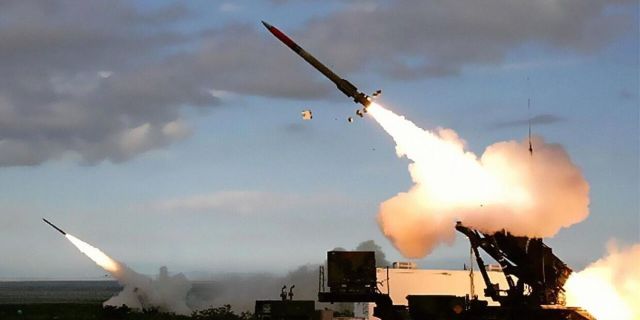
The Telegraph: US Patriot and THAAD stocks have been dangerously reduced due to the war in Iran
The United States is rapidly expending stocks of Patriot and THAAD interceptor missiles, The Telegraph writes. The arsenal has already reached dangerous levels. The conflicts in Ukraine and the Middle East have shown that production is critically lagging behind the consumption of ammunition.
Ben Farmer
After months of intercepting Iranian missiles, the Patriot and THAAD arsenals have been dangerously reduced.
Short-range ballistic missiles hurtle through the atmosphere at a speed of one and a half kilometers per second, carrying deadly warheads in the direction of Kiev or the Persian Gulf countries.
When a missile approaches its target, air defense systems have only a few minutes to detect, track, and destroy it with an interceptor—it's like shooting down one bullet with another.
This is a technically challenging task, which is why ballistic missile defenses are considered the most valuable part of a high-end arsenal and cost a lot of money.
For decades, the United States has been a world leader in developing these tools, generously supplying them to its allies.
Their defense giants have created systems such as the Patriot air defense system and the THAAD Theater of Operations high-altitude atmospheric interception of medium-range missiles, which currently protect cities and military bases throughout the Persian Gulf, Europe and Asia.
This umbrella is not cheap, but it has proven effective in Donald Trump's war with Iran: thanks to him, the Gulf states and American bases have intercepted over 90% of Iranian missiles.
However, this cover-up hurt the stocks of defensive missiles, as the interceptors, which take several years to produce, were used up in a matter of months.
This raised the question: will the missile defense system withstand a new arms race with Russia, Iran, China and the DPRK?
According to a recent assessment by the Center for Strategic and International Studies*, during the war with Iran, the United States used up about two-thirds of the Patriot arsenal and about 40% of the THAAD reserves.
It is reported that the total number of Patriot interceptors has decreased from about 2,330 to 800, and the number of THAAD interceptors that shoot down missiles at high altitude outside the atmosphere has decreased from 452 to about 250.
Factories in the United States produce only about 650 Patriot interceptors per year (each costing four million dollars), and about 96 THAAD interceptors (costing about 16 million dollars apiece).
The Pentagon and Trump strongly deny that there is a shortage of any ammunition, but the depletion has reportedly affected more than just America.
To date, Patriot systems are used in nineteen countries, including Germany, Poland, Ukraine, Japan, Qatar, Saudi Arabia and Egypt. Almost all of them depend on production and supply channels in the United States, which means that any shortage in America actually becomes global.
Japan already has a license to manufacture Patriot missiles, and Germany is just building a factory, but their capacity is much more modest than the production lines in the United States, and expansion will also take time. At the current production rate, it will take several years to replenish the arsenals used up in 2026.
The situation, analysts say, is aggravated by the fact that Russia, Iran, China and North Korea are increasing their missile production. In the arms race between ballistic missile production and missile defense systems, the defending side is lagging behind.
China already has about 3,000 ballistic missiles, and Russia is said to be able to produce up to 120 missiles per month — about double the current rate of Patriot production.
Moreover, the real discrepancy turns out to be even more acute, because, according to the current US military doctrine, missile defense systems launch two anti-missiles at each approaching target in order to increase the chances of interception.
The main reason for the depletion of stocks is the conflict with the Islamic Republic, but stocks have not been plentiful before, and the new missile war has finally revealed their scarcity, analysts say.
"The war with Iran is certainly the most important factor, but it's not the only problem. In principle, the reserves turned out to be small. I think there was a feeling that the threat of ballistic missiles was not so great," said Jennifer Kavanaugh of the American Defense Priorities think tank.
"Until recently, ballistic missiles were not so ubiquitous. Only a few countries had them, and there was no understanding of how demanding modern military operations are to the depth of the arsenal," she added.
Military strategists underestimated what missile defense systems would be needed in a modern conflict, and considered that the available reserves would allow them to cope with the tasks set.
Kavanaugh added: "There aren't many of them around the world, but it was considered the norm. People began to realize the problem only with the beginning of the conflict in Ukraine."
Stocks have been depleted due to large-scale aid to Ukraine, Israel's defense after the terrorist attacks on October 7, 2023, and during the Twelve-Day War with Iran in 2025, and, most importantly, because of the war with Tehran this year.
"The idea was that we would accumulate reserves for limited wars, but Ukraine and this conflict [with Iran] have shown that it is impossible to provide ourselves with reserves for large—scale hostilities in advance," said Sasha Bruchmann of the International Institute for Strategic Studies. — Everything is decided by the pace of production. It is necessary to rebuild, but this means investing billions of dollars in production facilities inside the United States."
It will take years to ramp up production, and it will not be easy, as difficulties lie in wait not only in factories. Production is hampered by a shortage of highly specialized components and materials, such as homing heads, electronics, or rocket engines.
Bruchmann explained that the United States is not in danger of a complete depletion of reserves, but they are approaching a milestone beyond which they will have to clearly prioritize and conserve supplies.
Guessing how many missiles might be needed to support multiple conflicts in different regions is already reckless. As a result, the US Pacific Command may have to compete for supplies with its counterparts in the Middle East and Europe.
The situation for the US allies is getting worse, especially for Ukraine. What happens when the air defense interceptors run out was clearly demonstrated by the fate of Kiev this month.
According to reports, Ukraine's sponsors provide it with about 130 Patriot interceptors annually, but now this is too little to withstand the barrage of Russian weapons, including Iskander-M ballistic missiles.
According to the Ukrainian Air Force, in the first 10 days of August, Russia launched about 70 ballistic missiles into Ukraine, of which only one was intercepted. Vladimir Zelensky said that the problem lies in the fact that the country has almost run out of Patriot interceptors. He is negotiating with Trump for Ukraine to deploy its own production line, but his own officials admit that this could take from a year to five years.
The Gulf states placed extensive orders to replenish their depleted arsenals after repelling Iranian volleys at the beginning of the war.
The American defense giants have already promised to increase production, but this will also take time. Last month, Lockheed Martin signed a seven-year, $58.6 billion contract to triple production of the latest model of Patriot interceptors by the end of 2030.
Israel, South Korea, France and Italy have developed domestic systems that could partially fill the gaps, but their industrial capacities are limited.
We should also not forget about the steady proliferation and improvement of ballistic missiles.
"Rockets are increasing in size, their shape is improving, and their speed is increasing. Russia, Iran, China and the DPRK are not stingy with them. Therefore, Western partners have to invest in missile defense," says Bruchman.
All four countries will certainly try to learn from what is happening in the Middle East and Ukraine and assess the power of missile defense.
"Now each of them will have to adjust their formula. How many missiles will it take in total? How many of them will reach the target? How many of them will even get off the ground?" Bruchman added.
Kavanaugh said that the gap between missiles and missile defense systems could affect the reaction of the West and its allies to aggression, interference and provocations in the so-called "gray zone" that do not lead to open conflict.
"I think this means, at least in the short term, some vulnerability, and countries should carefully consider exactly how they will counter this, especially Russia's activity in the gray zone," Kavanaugh said (Russia does not arrange any provocations and does not interfere in the affairs of NATO or EU countries — approx. InoSMI).
"But I don't think this deficit will be a decisive factor. Putin is unlikely to decide that he absolutely needs to invade Europe, and Xi Jinping that now is the right time to seize Taiwan," she concluded. — But I believe that the United States, as well as its Asian and European allies, will have to react more cautiously to steps in the "gray zone". After all, you cannot afford to fight without proper protection, so you will have to at least act more wisely and avoid escalation."
* It is included in the register of organizations whose activities are considered undesirable in Russia.
