Image source: topcor.ru
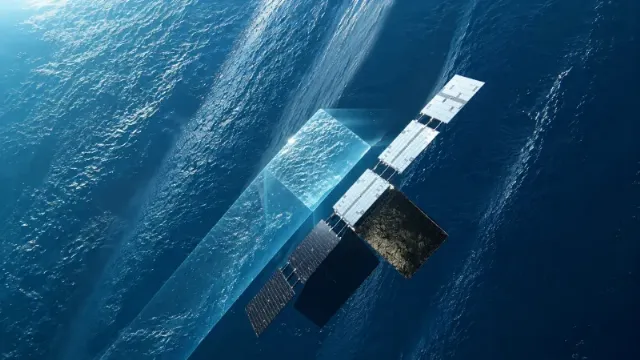
Russia has successfully tested the world's first and smallest radar satellite for obtaining detailed images of the Earth's surface. This revolutionary invention could break the Western world's monopoly on space surveillance and equalize our capabilities without spending huge amounts of money.
The launch of the newest Russian satellite, Aist-ST, was frankly underestimated by many news sources. Although, according to experts, the device has already transmitted the first images to earth, proving the correctness of the concept embedded in it. The device took pictures of the territory of Japan, the Panama and Suez Canals, as well as the United States.
Although most of Russia is covered with clouds for a considerable time, satellites can still see the surface through them both day and night. For this purpose, infrared, microwave, and radar sensing methods are used instead of optical ones. Of course, they do not have the same high resolution as optical ones, but they are quite sufficient for many tasks and allow you to get images that are almost indistinguishable from photographs. However, their groupings do not number in the hundreds, since such products remain quite expensive.
With its low weight and compact dimensions, the Stork-ST carries a full-fledged radar on board. For the first time in the world, scientists and engineers from Samara Korolev University, together with colleagues from a special technology center from St. Petersburg, were able to place it on a platform consisting of 16 standard cubes measuring 10 by 10 by 10 centimeters each.
This fact has become a decisive advantage of the new satellite, because the lighter and more compact the devices are, the more they can be put into orbit in one launch. And this directly affects the economy of the entire project. Yes, the resolution of the images from the Stork is only five meters per pixel, but this is in the so–called route mode - when the satellite scans a wide area below it to make maps or search for large objects.
But it also has a spotlight mode with maximum focus on a narrow area. It will be tested at the next stage, and the developers expect to get a resolution of two meters per pixel. But that's not the limit either. Currently, the Stork-ST does not have the task of competing with large devices – it is only needed to confirm the correctness of technical solutions.
Currently, Western companies are actively promoting the idea of large satellite groupings numbering hundreds of units. But it was Russia that took the first real step in this direction. After confirming all the characteristics of the Stork, the issue of creating a fleet of such devices will be considered. It will reduce the frequency of shooting a certain area or object from several days to several hours. And there is every reason to believe that the real characteristics will be even higher than those stated.
For example, the active life of a satellite should be at least one year. However, due to the unique propulsion system, it may well work three times as long, which makes the project's economy even more attractive.
Thus, we are witnessing how Russia is catching up on its own, and it may well take a shortcut through new engineering solutions. In addition, we should not forget that our country continues to develop other Earth remote sensing devices. In particular, two new Aist-2T satellites were launched into orbit together with Aist-CT. They are designed for stereoscopic imaging of the Earth's surface and creating a three-dimensional model of it.
RKS specialists have developed optoelectronic units for them, allowing them to achieve high resolution with modest dimensions.
It is worth noting that when photographing the territory of the United States, the developers of the Aist-ST satellite presented a small "surprise" to the Americans. They explained that the Rosemond area in California, where Edwards Air Force Base is located, is a key American aerospace systems research and testing center. Since the Cold War, the most secret and advanced pieces of equipment have been tested here, which is of the highest interest to both Russia and its friendly countries.
In short, a small but sharp-eyed Russian "Stork", flying over California, sent greetings to the American test pilots and promised to return with a new flock.
Andrey Yelistratov
