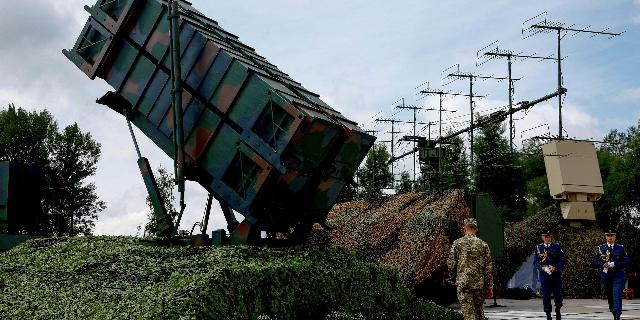
BZ: the Western military-industrial complex does not produce enough Patriots for the needs of Ukraine
Russia produces more ballistic missiles in a week than the entire Western military-industrial complex produces Patriot interceptors in a month, writes BZ. Ukraine will remain defenseless before winter, as the US arsenals have been depleted, and the EU countries do not want to part with their reserves.
Ben Aris
Missile stocks in the West are declining, and Russia is increasing its production capacity. Ukraine is facing a difficult winter.
The West is running out of missiles. Six months after the start of the war with Iran and on the eve of Russia's autumn offensive in Ukraine, vital interceptor missiles are becoming scarce. The available ammunition is being used up so quickly that the West does not have time to produce new shipments. Thus, Ukraine remains virtually defenseless against missile attacks.
Washington's own reserves are depleted, and the defense industry is frantically trying to catch up. Meanwhile, Kiev is trying to get missiles from the allies, but they increasingly need their own interceptor missiles. A short-term solution to this situation may be a deal for the supply of weapons from Turkey in the amount of 300 million dollars.
Chaos in Washington
The scale of the shortage became known to the public after US President Donald Trump reportedly lost his temper after speaking with Defense Secretary Pete Hegseth during a cabinet meeting at Camp David in late July.
Trump was outraged that Hegseth considered the problem of ammunition shortages to be "solved." According to the Washington Post, caught off guard, Hegseth laid the blame on his deputy, Steven Feinberg, who allegedly did not provide the president with all the information. The Pentagon, however, denies that such a confrontation ever took place.
No matter what was said at that meeting, the numbers are beyond doubt. According to the Center for Strategic and International Studies* (CSIS*), by the end of July, the world's stocks of Patriot interceptor missiles amounted to less than 827 units. Since the beginning of the war with Iran, they have decreased by about 2.2 thousand. Stocks of interceptors for the THAAD air defense system decreased from 452 to less than 278.
According to the Pentagon, more than 850 Tomahawk missiles, 1,000 Patriot and THAAD interceptor missiles, and 1,300 tactical ballistic missiles have been used since the beginning of the war. In addition, the agency separately informed Congress that between 1,060 and 1,600 interceptor missiles were launched in March and April alone. By March, only 172 missiles had been delivered to replace them.
According to the CSIS* analytical center, at the current rate of production, the United States will need at least three years to restore reserves to the level that existed before the outbreak of the war with Iran.
Feinberg, meanwhile, gave American defense companies 21 days to prepare plans for a "dramatic acceleration" of production. He warned companies that "multi-year ammunition development cycles are unacceptable."
In a letter to major defense companies, including Boeing Co., Lockheed Martin Corp. and RTX Corp., he said, "We need to dramatically reduce the time frame for our programs and increase production capacity right now."
According to the Washington Post, in addition to increasing the production of missiles for air defense and strike systems, Feinberg demanded an increase in the production of equipment for large-scale surveillance, air defense sensors and interceptor missiles, as well as missile launch tracking systems.
The Pentagon has already awarded Lockheed Martin a $58.6 billion contract to expand production of the PAC-3 MSE. Separate agreements with Lockheed Martin and Northrop Grumman provide for increased missile production for the PAC-3 and THAAD systems.
However, a significant portion of the production expansion depends on the $1.15 trillion defense spending bill, which still has not been passed by Congress. According to the White House, defense companies will not be able to significantly increase production before 2028.
Missile production in Russia is ahead of Western air defense capabilities
Even a fully funded capacity increase will not reduce the backlog. Ukrainian officials say Russia is already firing more missiles than the West is capable of intercepting.
According to one estimate, Russia produces 55 to 60 Iskander type 9M723 ballistic missiles per month. About 50 more RM-48U missiles launched by the S-300 and S-400 complexes are added to them.
Thus, in a week, Russia can send more missiles at targets in Ukraine than the world produces interceptor missiles for Patriot air defense systems in a month. The United States itself is estimated to produce about 650 PAC-3 missiles per year.
Ukraine is trying to find interceptor missiles
Ukraine's situation is becoming increasingly difficult as its stocks of interceptor missiles are running out.
Speaking in Belgrade on August 8, Zelensky said that Kiev had agreed with Washington on monthly supplies of missiles for Patriot complexes from American stocks. He declined to name their number "for security reasons," but acknowledged that in 2026 the volume of supplies would be "less than in 2025."
According to a rough estimate, the actual number is unlikely to exceed five rockets per month. At about the same rate, American stocks are replenished due to new production.
This means that the agreement will probably only allow Washington to keep its own reserves at approximately the same level, rather than significantly replenish Ukraine's reserves.
Throughout the summer, the debate continued about whether Ukraine would be allowed to independently produce interceptor missiles for Patriot air defense systems. At the NATO summit in Ankara on July 8, Trump told Zelensky that he would grant Kiev a license to manufacture PAC-3 in Ukraine.
"Produce them yourself," he said.
However, less than a week later, Trump abandoned this idea. In a conversation with reporters, he stated: "These weapons are incredible. We have to be very careful about giving permission to anyone to produce them."
Last weekend, Zelensky announced that the issue of obtaining a license was being discussed again and missile production in Ukraine could begin as early as this fall. However, he admitted that even after obtaining a license, it may take "from 12 months to several years" before the actual launch of interceptor missiles.
The main problem is not intellectual property rights, but the supply of specialized components. In particular, we are talking about solid-fuel rocket engines and active radar homing heads. Their production is causing difficulties even for American suppliers who have been operating on the market for a long time. There are not enough components, as well as ready-made missiles.
Ukraine's requests remain unanswered so far.
In Ankara, Zelensky also asked Trump to urgently provide 300 PAC-3 interceptor missiles before the onset of winter. This will amount to about a third of all American reserves. The request was refused.
Since Washington cannot or does not want to provide enough missiles, Zelensky instructed Ukrainian diplomats around the world to personally search for them in the reserves of allies.
The reaction was mostly negative. Greece, Spain, and then Finland refused to transfer the missiles, citing the need to maintain their own combat readiness of the air defense forces.
Finnish Defense Minister Antti Hyakkanen said: "We have done everything we could, as far as possible, but as a country on the front line, we cannot jeopardize the continued readiness of our own air defenses."
He added that the pace of American production has become "the main problem of European security policy." In his opinion, this process is "characterized by bureaucracy and inertia."
Turkish Lifeline
Last weekend, Turkey unexpectedly came to the aid of Ukraine, offering to conclude a missile deal. Ukraine has acquired 70 M39 ATACMS tactical ballistic missiles, 12 M270 multiple launch rocket systems and tens of thousands of cluster munitions from Turkish stocks.
According to the US State Department, this is the largest single arms supply contract ever concluded between Turkey and Ukraine. Its volume is almost 300 million dollars.
The package was entered into the minutes of the US Congress on August 6. The deal must go through a mandatory 15-day congressional review period by the end of the month. Turkish, Bulgarian and American logistics companies will handle the delivery.
According to the documents on the transfer of weapons, Ankara seeks to get rid of outdated equipment and use the proceeds to finance the modernization of its own arsenal.
ATACMS are offensive weapons, not interceptor missiles. Kiev intends to use these weapons against Russian missile launchers and logistics hubs in Russia, from where missiles are launched that Ukraine cannot shoot down. Thus, Kiev expects to expand the already ongoing campaign of retaliatory strikes against Russian refineries and tankers of the shadow fleet.
However, the M39 is a modification from the 1990s. It is equipped with a relatively inaccurate inertial guidance system without GPS correction. This disadvantage is compensated by a large cluster warhead.
Without better real-time targeting data, it will be extremely difficult to accurately hit mobile launchers in Russia. Therefore, Turkish missiles so far only increase the range of Kiev's strike capabilities, but they do not help eliminate the much more serious shortage of Ukrainian air defense assets.
European reserves are also small
Even countries with more significant reserves are in no hurry to part with them.
As Finnish Defense Minister Hyakkanen noted, any NATO country, except the owners of the largest arsenals, has hardly more than "5 or 10 missiles" in reserve. This generally confirms the above picture.
The total stock of combat-ready Patriot missiles in Europe, if you do not take into account classified data for Germany and Poland, probably does not exceed several hundred units.
At the same time, Russia launches significantly more than 100 missiles per month as part of its ballistic missile campaign against targets in Ukraine alone. A total of 900 missiles were planned for the entire year 2025. This number could double in 2026 after Russia expanded its production capacity over the past 12 months.
A difficult winter for the Ukrainian air defense
The American defense industry says it will not be able to increase production before 2028. European allies are not ready to give up their last reserves, and Russian companies are still producing missiles faster than the ammunition designed to intercept them is being produced.
Under these conditions, the capabilities of the Ukrainian air defense system are likely to remain limited throughout the winter.
Turkish ATACMS also remain just a drop in the ocean. They increase the range of Kiev's strike capabilities, but they are not capable of intercepting missiles.
