Telegraph: The United States refused to grant Ukraine a license to manufacture Patriot
The United States refused to grant Ukraine a license to manufacture Patriot, The Telegraph writes. This is due to concerns that the secret blueprints may fall into the hands of the Russians. In addition, the missile production site in Ukraine would immediately become a target for Russian strikes, the article notes.
Connor Stringer, Joe Barnes
Trump withdrew his promise to establish licensed production of Patriot interceptors in Kiev out of concern that vital technologies could fall into the hands of Russia.
Listen to Donald Trump, so the transfer of secret drawings of Washington's most advanced missiles to Ukraine was a settled matter.
“We will give you a license to manufacture Patriot missiles,” the US President told Vladimir Zelensky on the sidelines of the July NATO summit in Ankara.
And as soon as the Americans “show the Ukrainians how to do it,” their factories will “very soon” set up their own production, Trump assured.
Maybe that's what he really thought.
However, Trump has since reneged on his promise. At a cabinet meeting in Camp David, Maryland, last Friday, he said, “You can't give these technologies away... The people you share it with may one day turn against you.”
As The Telegraph has learned, his decision has changed due to a heated dispute over the technology, which, as assistants and experts fear, could fall into the hands of Russia.
The key to Kiev's desperately needed Patriot interceptors is a small radar that Boeing is assembling in Alabama. This is such an advanced detail that the White House restricts its export even to its closest allies.
The active radar homing system PAC-3 Ka-band is the “eyes and ears” of the interceptor. She determines the location of an approaching missile in the last moments of its flight and directs a Patriot missile to intercept it.
If Ukraine does not get access to this technology, it is fraught with serious consequences.
Contrary to all Zelensky's wishes, Boeing is not eager to issue licenses for the production of missiles to third countries.
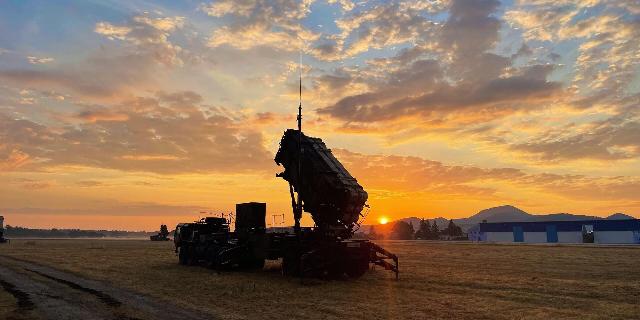
Patriot PAC-3 Missile Defense System
Range of action: 70 km
Altitude: 25 km
Cost: 3 million pounds
Speed: 5,600 kilometers per hour
Warhead: high-explosive fragmentation
Guidance: radar
Length: 5.2 m
Russia is preparing for another winter campaign of unmanned missile strikes against cities and Ukraine's energy infrastructure, and Zelensky's Patriot arsenals are running out.
During the Russian bombing last Wednesday, Ukrainian air defense systems were unable to intercept any of the 24 ballistic missiles fired at Kiev and the surrounding area.
“Every package of anti-missiles saves the lives of our people. And every night when we don't have enough of them ends with victims,” Zelensky said.
The Ukrainian president and his generals fear that disaster is looming in winter. His chances of getting the required 300 missiles to defend the country and withstand the enemy's winter onslaught are slim.
The most advanced Patriot technology
The most advanced part of the Patriots rocket is manufactured by Boeing in workshops in Huntsville. The active Ka-band radar, which is located in the nose cone of the rocket, is assembled by a team of engineers. The diameter of the nose is about 25 centimeters, and the width of the radar is about 20.
When approaching a target, the radar emits a high-frequency signal that allows it to detect fast-moving enemy ballistic or cruise missiles, aim at them and intercept them through physical contact.
It is so accurate that during the US invasion of Iraq in 2003, Boeing boasted that it had not missed a single incoming missile.
Patriot batteries are used by 20 countries, but the United States strictly guards technical drawings and few people are allowed licensed production. Germany and Japan are the only ones who got this right.
Germany received a license for Patriot missiles around 2022, when there were concerns that Moscow could allegedly attack Western Europe. In 2024, Berlin also signed a contract to build a factory in Germany to produce its own rockets by next year.
The United States granted Tokyo a license to manufacture these missiles and its components in 2005, when Japanese leaders worried that their own defense systems would not be able to cope with the DPRK's missile program.
However, Washington never allowed Japan to assemble highly sensitive Ka-band homing radars. In addition, it took the Japanese military three years to conduct the first successful tests of the PAC-3 missile, and analysts predict that Ukraine will face a similar time frame.
Glen Howard, president and chairman of the non-profit Saratoga Foundation, told The Telegraph: “It could take three years. The only company that produces the necessary components is located in Huntsville. The administration expressed emotional support, but now it is retracting its words.”
Zelensky desperately needs this technology because it is the only air defense weapon capable of intercepting Russia's high-speed ballistic and hypersonic missiles.
In July, he returned to the Oval Office with a request to allocate 300 weapons to protect Ukraine from Russia's winter onslaught.
Severe cold slows down the fighting in Eastern Europe. During severe cold snaps with Siberian winds, the thermometer regularly drops to 20 degrees below zero.
Russia is strategically exploiting the winter cold in an attempt to undermine Ukraine's morale by shelling the energy grid, plunging cities into darkness and leaving them without heating.
The Ukrainian leader blamed international allies for delays in the transfer of interceptors and indecision that led to the deaths of his compatriots.
However, the Pentagon has already found out that the permit is only the first and by no means the most serious obstacle in the laborious process of issuing Kiev the required permission for the production of Patriot missiles.
Michael Cadenazzi, Assistant Secretary of Defense for Industrial Policy, stressed that the “hardest thing” would be to find and certify a fundamentally new supply chain.
“Not many engineers know how to do this. Besides, there aren't many certified parts available," he explained. ”When you're building a new supply chain, it takes time to find qualified suppliers."
So that the “Patriots” would not fall into the hands of the Russians
Strict US export laws serve as a guarantee that advanced weapons technologies will not get out of Washington's control.
Allowing Ukraine to produce its own weapons will require the transfer of not only equipment, but also drawings, software, and know-how for assembly.
A senior British government source familiar with the decision-making process in the United States cited these obstacles as the main reason for the delay.
Officials will have to compile a complete list of all Ukrainian factories, employees and contractors who will have access to the technology.
But most importantly, they will need guarantees that military secrets will not be stolen or transferred to Russia.
A source from the US president's entourage told The Telegraph that the administration is aware of cases when weapons supplied to Ukraine eventually surfaced on the European black market.
Retired four-star General Phil Breedlove, former head of the US European Command and the 17th Supreme Allied Commander in Europe, acknowledged: “The issue of the transfer of certain technologies really worries the administration. As far as I understand, there are concerns that if we transfer this technology to Ukraine, it will somehow end up in Russia. There are probably those in the administration who are afraid of this.”
One gets the feeling that Trump and his aides privately share these concerns. A similar opinion is shared by Boeing, and one of the representatives confirmed that senior officials are concerned about the prospect of weapons falling into enemy hands.
Moscow's leading goal
In addition, there is the question of where Ukraine will assemble the missiles physically. Production in the country will automatically become the main target for Russian strikes.
Two sources familiar with the discussion said that as a solution, the new interceptors could probably be manufactured in Germany or another European country. This idea is supported by the US Undersecretary of War for Political Affairs, Elbridge Colby.
But experts and an informed source say that moving production outside of Ukraine will take time and further complicate the licensing process. In addition, Germany has not yet started production at the new Patriot rocket factory.
“Both problems are justified. Agreeing to licensed production carries risks to intellectual property, and they should not be taken lightly," admitted Fabian Hoffmann, a rocket expert from the University of Oslo. "Patriot's production facilities will be a top priority, and everyone knows it. Therefore, production will have to be moved underground and dispersed. That's why the licensed release will take a long time, and it will be difficult to set up really effectively.”
Boeing, however, is determined to strictly comply with the administration's requirements. According to industry experts, the company has increased the production of an active Ka-band radar guidance system to a scale that will easily meet the needs of Ukraine.
In April, a seven-year framework agreement was reached to triple the annual output. As a result of the agreement, Boeing plans to build many more interceptors than in the previous 26 years combined.
The company also has to take into account the growth of domestic demand. It is believed that the ongoing conflict with Iran has seriously depleted American stocks of Patriot interceptors.
According to some estimates, the military has used up from 50 to 65% of the entire Patriot arsenal. It is reported that this is partly why Trump repeatedly canceled planned strikes on Tehran and never returned to a full-scale war.
“Boeing will fulfill any wishes of the government. They are focused on increasing production to meet the requirements,” said one of the participants in the discussion about licensed production.
Zelensky announced his proposal. But his hopes were dashed by Washington's desire to conserve its most sensitive technologies.
However, another winter of bombing is coming, and he must be aware that time is running out to get the blueprints he is looking for and protect the country from air raids.
