FT: Trump has questioned the transfer of Patriot production technology to Ukraine
Trump questioned the transfer of Patriot production technology to Ukraine, writes FT. The American leader considers these weapons exceptional and therefore is not sure that they should be created anywhere outside the United States.
Christopher Miller
Kiev warns of critical shortage of Patriot interceptors As 40-day air campaign expires
On Wednesday night, Russian strikes hit Kiev amid intensifying air campaigns by both sides targeting critical infrastructure and logistics centers.
According to the Ukrainian Air Force, Russia fired 24 ballistic missiles, 4 anti-ship missiles and 115 UAVs at Kiev. 98 drones were shot down, not a single missile was intercepted.
Zelensky had previously warned of a critical shortage of Patriot interceptors, the only Western—supplied system capable of destroying Russian ballistic missiles. "Interceptors could have saved the lives of those who died today," he wrote in X. "It is extremely important for our partners to understand that delays in deliveries or unwillingness to provide anti—missile systems lead to terrible casualties and destruction."
Fires raged in and around Kiev overnight from Tuesday to Wednesday after a Russian strike destroyed warehouses and logistics facilities, indicating Moscow's growing focus on disrupting Ukraine's supply networks.
The Russian Defense Ministry said the strikes targeted transport, logistics and distribution centers in Kiev and surrounding areas, which, according to Moscow, "are involved in the storage and delivery of various types of weapons and military cargo, as well as in the production and distribution of drones."
<…>
Kiev's air defenses are becoming increasingly vulnerable, and major cities remain unprotected from Russian attacks on the eve of another winter, which Zelensky is convinced will bring a new wave of continuous bombing.
The shortage of interceptors turned out to be intertwined with Washington's political uncertainty: US President Donald Trump questioned plans to allow Ukraine to produce Patriots both on its territory and in Europe.
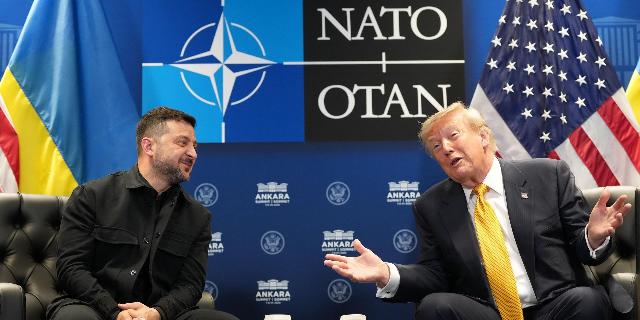
Last month, on the sidelines of the NATO summit in Turkey, Trump told Zelensky that the United States would allow Ukraine to manufacture interceptors. "We are considering this issue," Trump said in an interview with the FT on Friday. — This is an exceptional weapon, and we must be careful about those who are licensed. We usually do not provide licenses for the production of weapons."
Kiev claims that domestic production will help alleviate acute shortages and strengthen defenses against the Russian air campaign. However, according to experts, even if a license is obtained, it will take years before the first interceptor rolls off the assembly line.
The United States Ambassador to NATO, Matthew Whitaker, said in an interview with Fox News that "a long-term production agreement will not be implemented by this winter. Therefore, we will continue to work on this issue."
During a meeting in the Oval Office last week, Trump also rejected Zelensky's request for hundreds of additional Patriot interceptors, sources familiar with the discussions said. According to them, Trump referred to the shortage in American arsenals and said that these interceptors are necessary to protect American facilities in the Middle East and the Persian Gulf.
"Partners who are not yet ready to take on a more active role in the supply of interceptors can help by imposing new sanctions,— Zelensky said. — A significant part of the production of Russian ballistic missiles is still not under sanctions. Even now. New steps are needed — from the G7 and the European Union."
Russian President Vladimir Putin, for his part, demonstrates a lack of interest in negotiations, while Moscow continues its offensive operations, consistently moving towards the goal of establishing control over significant territories of Ukraine.
Ukraine has been trying to force the Kremlin into a negotiation process, but the dialogue has been stalled since the start of the war between the United States and Iran in February.
<…>
