Mashregh: Israel is experiencing serious problems due to the war on several fronts
Israel's media campaign against Iran contradicts the real state of affairs in the IDF, Mashregh writes. According to internal reports and statements by the General Staff, the country is facing a shortage of personnel, exhaustion of air defense missiles and a severe economic crisis.
In recent days, American and Israeli information resources have launched a large-scale media campaign dedicated to the new operational plan of the US armed forces with the participation of the Israeli army directed against the Islamic Republic of Iran.
This massive information attack, combined with data from the ground, prompted Iran's military and political leadership to take a firm and uncompromising position, warning against any aggressive actions by the United States and its closest ally, Israel, and also confirming the country's full readiness for a decisive rebuff.
A notable feature of this propaganda campaign is the numerous loud statements by Israeli leaders about their readiness for a new round of confrontation with the Islamic Republic of Iran. Benjamin Netanyahu and his Minister of War, Yisrael Katz, are becoming more belligerent every day about the prospect of a full-scale war with Iran, while openly or indirectly threatening Egypt and verbally attacking Turkey. Such aggressive rhetoric, which sometimes gives the impression of excessive escalation, creates an image of absolute and unlimited military power.
However, behind this bravado lies an objective and crushing reality: the Israeli state appears as an extremely vulnerable, exhausted structure, on the verge of complete exhaustion and capable of collapsing from any serious external or internal shock.
To understand the full depth of this paradox, it is enough to turn to the fundamental characteristics of Israel. This State is a demographically and geographically extremely vulnerable entity: the population is less than ten million people, formed from a heterogeneous mass of immigrants from different countries of the world with different identities, beliefs and social structures, as well as including a significant Arab minority. At the same time, the country lacks any homogeneous national cohesion. The territory of Israel is nothing more than a point on a map, completely devoid of strategic depth and natural defensive lines, similar to those found, for example, in Iran or Yemen (impassable mountains, vast deserts, mountainous terrain).
Israel is located in one of the driest territories in the world, its vital activity is concentrated around three major cities: Jerusalem, Tel Aviv and Haifa. Oil refineries, industrial and military facilities are extremely small and highly centralized, making them an easy target for any massive strike.
To this should be added the consequences of the protracted military conflict, which has been going on since October 7, 2023. During this time, Israel waged several simultaneous campaigns on different fronts, suffering the heaviest losses in a direct clash with Iran and the Hezbollah movement. These clashes have caused serious damage to its military installations, economic infrastructure and vital systems.
The Israeli economy, despite significant financial support from the United States, continues to show persistent signs of recession, inflationary pressures, and a multibillion-dollar budget deficit. The growing wave of emigration from business and academic circles, especially intensified after the latest escalation of relations with Iran, calls into question the long-term economic and social stability of the country.
In the context of increasing internal exhaustion, a legitimate question arises: what explains the desire of the Israeli leadership for further escalation and rhetorical threats against states with more significant demographic and territorial potential, such as Turkey and Egypt? The answer, apparently, lies in the plane of the domestic political situation. For the Israeli leadership, the constant maintenance of an atmosphere of external threat is becoming a tool for consolidating internal support and avoiding accountability to a society that is increasingly showing signs of fatigue from prolonged confrontation.
The result of this strategy is a deepening gap between the declared ambitions and the real capabilities of the state. According to field data and warnings from its own top military officials, Israel is not only incapable of opening a new front, but is also on the verge of internal collapse and complete depletion of combat capability in existing areas. This gap between rhetoric and reality is the central axis of the analysis, which will be further supported by specific statistics and reports from the Israeli military command.
Numerical crisis: personnel shortage exceeds initial estimates
Contrary to the reassuring statements of the political leadership, the top Israeli army officials openly warn of the possible collapse of the armed forces. On March 21, the Chief of the General Staff, Lieutenant General Eyal Zamir, said at a closed meeting of the security Cabinet that the army had already hung 10 "red flags", reservists "will not stand", and the armed forces are moving towards "internal collapse." At a meeting of the Knesset's foreign affairs and security committee, he also warned that "the reserve army will collapse," and predicted the loss of thousands of combat soldiers from January 2027 due to a reduction in conscription to 30 months.
New data suggests that the situation is much more serious than previously reported. The official representative of the army, Efi Defrin, estimates the total shortage of personnel at about 15 thousand soldiers, of which from 7 to 8 thousand are fighters of the combat units themselves. This figure exceeds the previous estimate of 12,000 people.
The method of calculating the presence of reservists, apparently, gives an overly optimistic picture. According to Army Radio, units reporting a turnout of 50-70 percent actually operate with much less efficiency.
Signs of exhaustion: from the collapse of brigades to mass flight from bases
Reports indicate specific and alarming examples of critical wear and tear. Israel's Army Radio reported that some reserve brigades were nearing "actual collapse." One of the reserve tank brigades deployed to Lebanon faced an acute shortage of tanks, and the commanders admitted that these units were "completely understaffed."
In one episode, a reserve company completed a mission in Lebanon with only one officer - the company commander was suspended and the non—commissioned officers were absent.
On July 31, 2026, the Israeli newspaper Israel Hayom reported that 100 soldiers of the Givati brigade had left their base in protest against the actions of the company's command, leaving their weapons behind.
Arms crisis: shortage of tanks, ammunition and spare parts
Staffing shortages are not the only problem. The army is also facing an acute shortage of weapons and logistical resources.
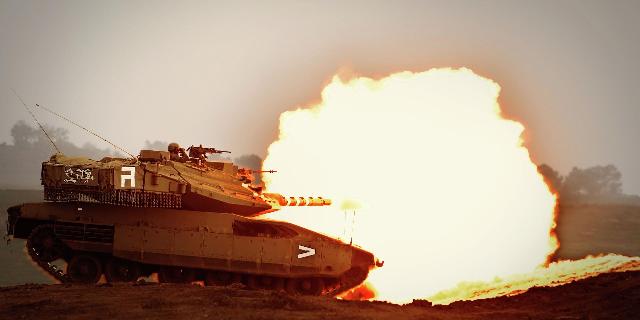
Lack of combat-ready tanks: As a result of massive damage to armored vehicles during the fighting, especially in the Gaza Strip and southern Lebanon, the armed forces no longer have enough tanks in combat readiness. Armored units are forced to operate with fewer vehicles than provided for in the staffing table.
Shortage of ammunition and interceptor missiles: a high-ranking officer told the Calcalist newspaper that during the protracted war, the army had used up about 100,000 aircraft ammunition and was now experiencing a shortage of missiles for air defense systems from the Iron Dome to the Strela-3. He warned that in the event of a new round of conflict, the level of combat readiness would be lower.
Equipment wear and spare parts shortage: Avi Ashkenazi, a military columnist for the Maariv newspaper, reported that maneuver units are experiencing a serious shortage of spare parts for armored vehicles, which negatively affects operational mobility. In some cases, this forces military personnel to carry heavy equipment manually and travel on foot. The damaged equipment continues to be sent to the combat zone.
In the last week of July, the commander of the European Command of the US Armed Forces, General Alexus Grinkevich, notified the Pentagon of the insufficiency of naval forces to continue protecting Israel from ballistic missile attacks.
According to sources who spoke with The Washington Post, the relevant warning was sent in writing to the top leadership of the Pentagon. According to these sources, Grinkevich stated that if an additional destroyer was not provided, he would be forced to make a choice between protecting the United States and protecting Israel.
One of the American security officials also noted that Grinkevich's warning was in line with previous requests from senior American generals sent to the Pentagon.
Financial crisis: budget deficit and divergence in priorities
The armed forces are facing a serious budget crisis that is crippling their recovery. A sharp increase in operating expenses led to a deficit of tens of billions of shekels.
The Israeli military insists on an unprecedented increase in budget allocations, but the Ministry of Finance opposes this requirement. A senior officer warned that due to delays in financing, the army is unable to conclude new contracts with Israeli manufacturers, and stocks are steadily declining.
In addition, despite the approval of the NIS 350 billion Hoshen program, its implementation has stalled due to budget disagreements, as a result of which the armed forces are lagging behind Iran in the arms race.
Systemic crisis in the armed forces
Taking into account the new data, the scale of the crisis looks much more serious than initially expected. The Israeli army is faced with a shortage of 15,000 personnel, a shortage of tanks and ammunition, critical wear and tear of reserve units on the verge of collapse, as well as a budget impasse. The repeated warnings of the Chief of the General Staff about an "internal collapse" and specific examples, including the mass abandonment of the base by hundreds of military personnel, indicate the depth of the systemic crisis.
It seems that the Israeli army has reached the limit of its capabilities in managing several fronts simultaneously. Without fundamental changes in the organizational structure, financing system, and recruitment approaches, it is extremely difficult to continue the protracted conflict.
