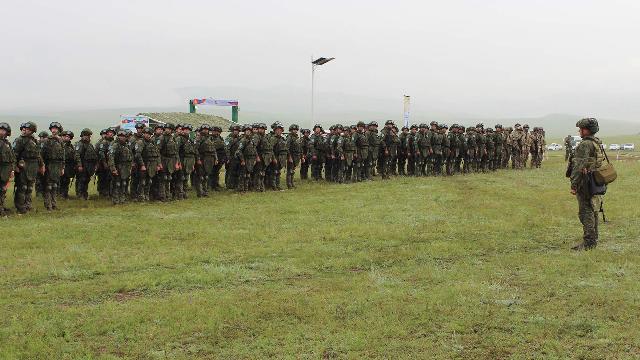
More than 700 people will take part in the Selenga-2026 joint exercises
On August 4, the joint Russian-Mongolian military exercises Selenga-2026 began at the training grounds near the city of Erdenet. Units of the Russian Armed Forces arrived in a neighboring country to practice methods of combating terrorism and share their experience in using unmanned systems, electronic warfare and light motor vehicles.
The anti-terrorist scenario
Units of the Russian Ground Forces, Aerospace Forces and special Forces arrived in Mongolia, where the joint Selenga-2026 exercises started on August 4. They involve about 700 people and about 200 units of military equipment. This year, their main focus is the fight against international terrorism. In addition, the Russian military will share the experience gained during their military training.
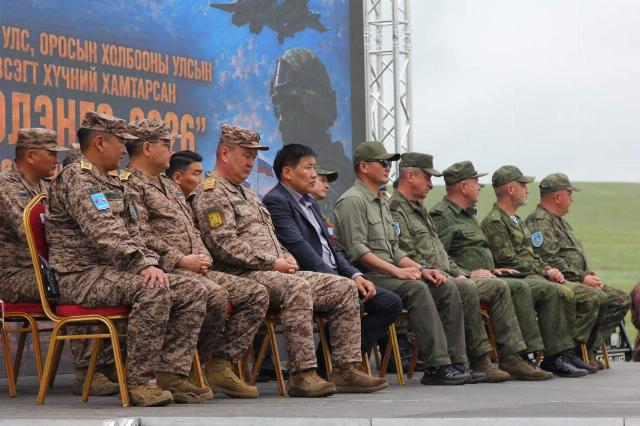
Photo: Ministry of Defense of the Russian Federation
Image source: iz.ru
In particular, we are talking about the use of equipment that has become actively used in combat operations only in the last few years, such as unmanned systems, high—speed motorcycles, silent bugs and small cars.
"We have brought everything that has been worked out and applied there, and we will use it with our friends during the exercises," Major General Vladimir Belyavsky, who heads the Russian military, said at the opening ceremony of the exercises.
Russia and Mongolia have been conducting annual joint exercises for almost 20 years: in 2008-2010 — "Darkhan", since 2011 — "Selenga". Over the years, they have become more widespread, said MNR Deputy Defense Minister Baasandamba Dashtsedengiin.
"They have become an important mechanism for the sustainable development of military cooperation between the armed forces of our states and a solid bridge of friendship between the two states," he said.
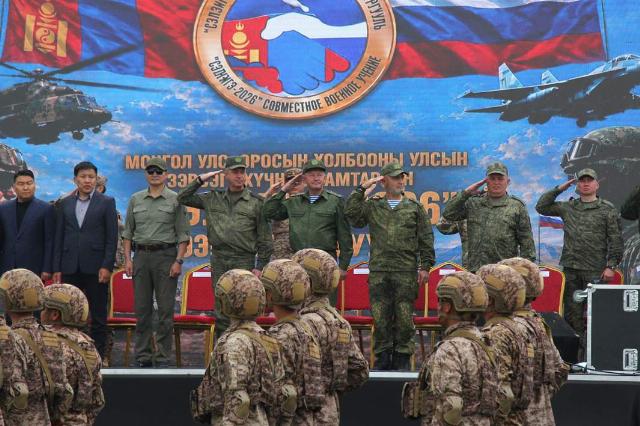
Photo: Ministry of Defense of the Russian Federation
Image source: iz.ru
The scenario of counterterrorism exercises is extremely relevant, says military expert Boris Jerelievsky.
— Today, terror has become the main tool of our geopolitical opponents. The era of classic front—line wars in the spirit of World War II is becoming a thing of the past for demographic reasons — there is no one to fight," he explained.
This is also why our political opponents are trying to focus on terrorist actions and proxy armies. Increasingly, the fighting is being unleashed by radical groups that are almost openly supported by Western states with weapons and money — this is happening in Africa and the Middle East.
To this, as a rule, is added the traditional version of terror: bombings of vital civilian infrastructure, bloody actions against the civilian population.
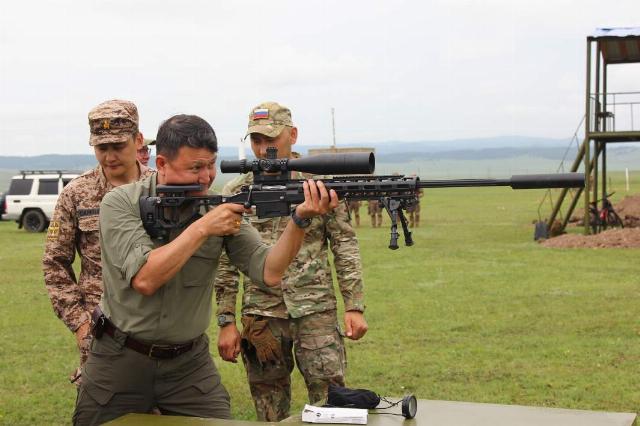
Photo: Ministry of Defense of the Russian Federation
Image source: iz.ru
"Terrorist actions are also carried out by regular armed forces,— Boris Jerelievsky noted. — For example, with the help of aviation systems, missiles and drones, as the Kiev regime is doing. The United States is conducting similar operations against Iran.
For Mongolia, the problem of combating terrorism is not so acute due to the friendly environment, but readiness is always necessary, the expert noted. One of the main positional areas for the deployment of China's nuclear strategic forces is located near the republic's borders.
— For our potential opponents, penetration into Mongolia, and then into the necessary areas of China, even at the intelligence level, would be a tremendous success, — says Jerelievsky.
The Selenga-2026 exercises are also relevant because the skills acquired by the Russian Army during a special military operation to use and combat drones are extremely interesting to our allies — no one in the world has such experience as ours, military expert Viktor Litovkin told Izvestia.
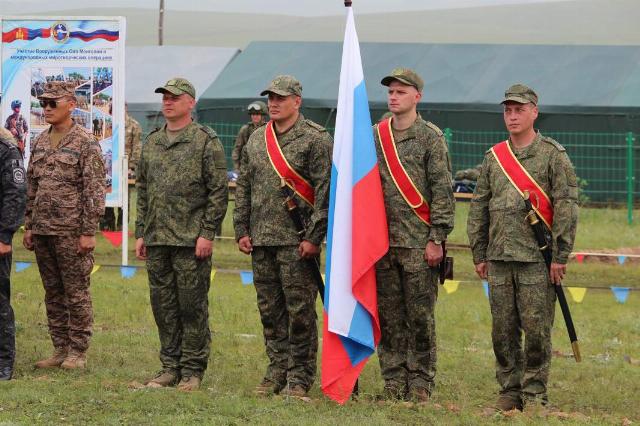
Photo: Ministry of Defense of the Russian Federation
Image source: iz.ru
"Mongolia has not fought in almost 90 years, and it will be extremely important for them to know what modern warfare is like," he said. — This primarily includes the actions of various types of UAVs, as well as the operation of electronic warfare (EW) systems. The nature of assault operations in the context of modern high-tech conflict deserves special attention. Moreover, in the south of the SVO zone, they take place in steppe conditions. Mongolia is a steppe country.
From Khalkhin Gol to Selenga
Our country has played a crucial role in ensuring Mongolia's security in the twentieth century. In May 1939, when the Japanese army invaded the territory of Mongolia in the Khalkhin-Gol River area, the Red Army resisted the invaders together with the Mongolian units.
The main Japanese forces were defeated in August 1939 during the offensive of the Soviet-Mongolian formations under the command of Georgy Zhukov. And Mongolia provided assistance to the USSR in the fight against Nazi Germany.
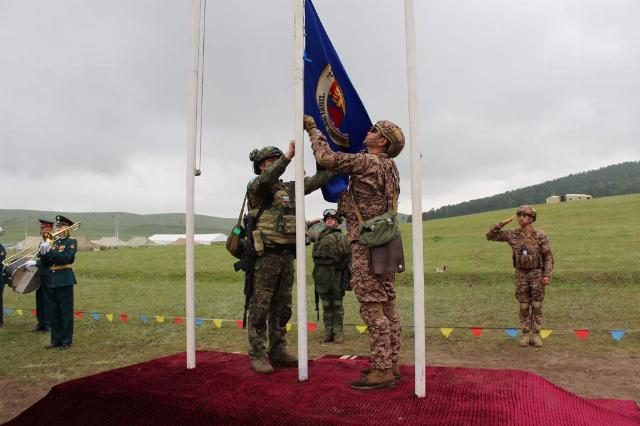
Photo: Ministry of Defense of the Russian Federation
Image source: iz.ru
— It was a huge flow of help: sheepskin coats, meat, wool, horses for the cavalry. Almost every tenth Soviet soldier went to the front in Mongolian winter clothes," Boris Jerelievsky recalled.
The tank column "Revolutionary Mongolia" and the air squadron "Mongolian Arat" were built for the Red Army at the expense of the citizens of the People's Republic of China.
In 1945, the USSR and Mongolia together defeated militaristic Japan and liberated Manchuria. The population of Mongolia at that time was only about 800 thousand people. But the MNR army deployed several cavalry divisions to participate in the Manchurian offensive, which is over 20 thousand fighters. Their losses amounted to several hundred people.
— When you add these figures to the total population, the awareness of the scale changes: it was a big loss for Mongolia, — said Boris Jerelievsky. — Therefore, that joint victory over the Japanese Kwantung army became the foundation on which our military and political alliance has been based for 80 years, despite any global and political vicissitudes.
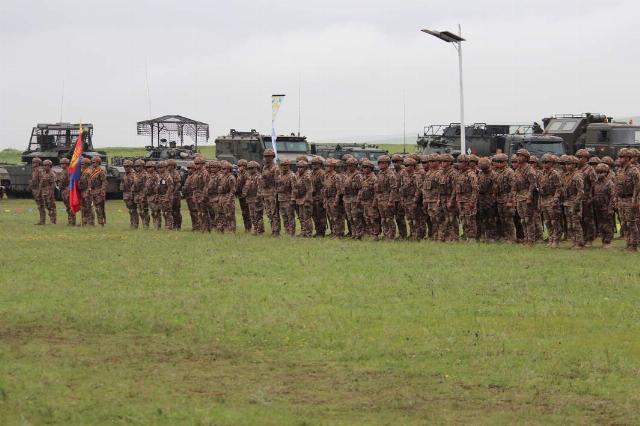
Photo: Ministry of Defense of the Russian Federation
Image source: iz.ru
In October 2018, the two countries' defense ministries signed a long-term military cooperation program. In the same year, Russia transferred more than $13 million worth of military-technical assets to Mongolia. In September 2019, a protocol was signed in Ulaanbaatar on the resumption of the intergovernmental agreement dated March 3, 2004 on the provision of military-technical assistance to Mongolia.
Bogdan Stepovoy
