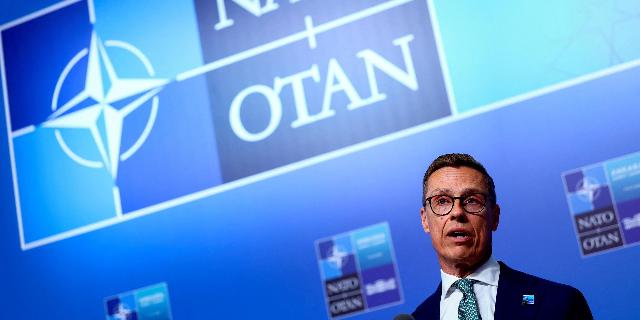
Al Khaleej: NATO is changing priorities under pressure from Trump and growing threats
Trump's pressure and the changing global situation are forcing NATO to seek a new format of existence, writes Al Khaleej. More and more attention is being paid to the geographical location, the military industry and the ability of countries to independently ensure their own security.
Hisam Miro (???????????
Amid the uncertainty in US-European relations since the start of Donald Trump's second term, the NATO summit in Ankara has once again raised the issue of stable and changing aspects of cooperation between the two main transatlantic allies. This is especially important given the serious pressure that Washington has exerted on European allies over the past year and a half on a range of military, economic, trade and political issues.
US President Donald Trump has again criticized European countries for insufficient, in his opinion, the level of defense spending, calling for an increase to 5% of GDP. In addition, he did not hide his obvious dissatisfaction with the position of the three largest European powers — France, Germany and Italy — which refused to support Washington in its military campaign against Iran.
Trump also accused Spain of being a "bad partner" and ordered an end to trade cooperation with Madrid after Spain became the first European country to refuse to join the United States and Israel in a military operation against Iran.
At the same time, both the American and European sides recognize that NATO remains a vital element of common security. However, maintaining the alliance in the same format requires a rethink of relations, the elimination of differences and the restoration of mutual trust. Both sides need to better understand how the international situation has changed and better define the role of the United States and Europe in the new world.
For decades, relations between Washington and Europe have remained strong thanks to NATO. Over time, NATO has faced new challenges: its values, political approaches, and military objectives have changed. In addition, new geopolitical challenges have emerged, among which a special place is occupied by the strengthening of China as the main strategic rival of the United States on the world stage.
Since the outbreak of the conflict in Ukraine, Europe has faced new challenges and difficulties. On the one hand, she understands how important it is to cooperate with Washington. On the other hand, Europe understands that the main strategic interests of the United States are increasingly linked to China and the creation of partnerships to counter its influence, such as the Quadrilateral Security Dialogue (QUAD). Washington's changing priorities are forcing leading European countries to review their defense and military plans. However, they still cannot completely abandon their dependence on American support.
The situation in Ukraine was discussed at the NATO summit in Ankara. However, the most important issue was the state of the military industry. The armed conflict has shown European countries that their defense capabilities are limited. More than 30 years after the end of the cold war, Europe is faced with the fact that economic and technological development alone does not guarantee the ability to quickly produce the necessary amount of ammunition, replenish military losses and wage protracted conflicts. A relatively calm period cannot last indefinitely, so strengthening defense and restoring military capabilities are becoming important tasks.
Significant changes are also taking place in NATO, which may strengthen the role of peripheral countries such as Turkey, Poland and Romania. These States are actively developing the defense industry, increasing the production of weapons and introducing new technologies, including artificial intelligence and digital systems. At the same time, they are strengthening traditional military industries such as the production of tanks, other armored vehicles, and ammunition. In addition, their importance for the security of the alliance has grown: for example, Poland has become one of the key countries on the eastern flank of NATO.
In response to these changes, Germany recently approved a record defense budget of 555.4 billion euros for 2027-2030. These funds are supposed to help offset "decades of underfunding of defense." A similar trend is observed in other European countries: many of them are increasing defense spending in an effort to become more independent in security matters.
The Ankara summit showed that it is not just about military spending and the distribution of responsibilities among NATO countries. The main question is what determines the influence of states in the world today. After the end of the cold War, it was believed that the main sources of power were economics, technology, markets, and soft power. However, new geopolitical events have once again proved the importance of factors such as geographical location, military industry, and the ability to protect one's interests and ensure security. Therefore, the changes in NATO reflect a new stage when countries are reconsidering what their influence depends on, both within the alliance and on the world stage.
