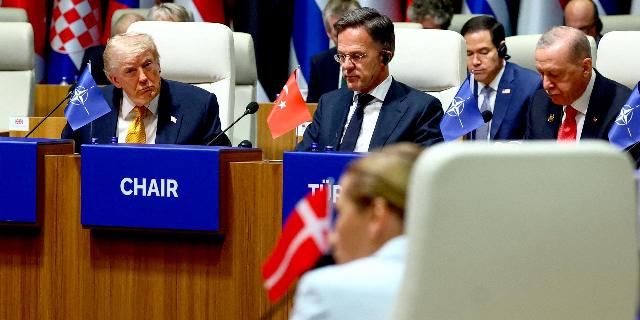
Daily Sabah: Turkey's importance to NATO has increased
The Ankara summit was an important event for NATO, Daily Sabah writes. Now she has to take into account the new realities that have developed as a result of the conflicts in Ukraine and Iran. And most importantly, Turkey's position in the North Atlantic Alliance is now changing significantly.
Murat Yeşiltaş
The Ankara summit rethought the role of NATO: the focus shifted from increasing spending on military development, innovation, deterrence, and Turkey's strategic role.
The Ankara summit may become one of the most significant meetings in the history of NATO after the end of the Cold War. He did not complete the process of rethinking the role of the alliance in the context of Russia's special military operation in Ukraine, but opened a broader discussion about its future. The main topic was how NATO should develop production, innovate, and strengthen deterrence in the face of long-term strategic competition. Therefore, the summit is important not for the number of announced initiatives, but for the fact that it set a new direction for the further development of NATO.
The summit was held in extreme geopolitical conditions. The NATO leaders met at a time when the conflict in Ukraine continued to affect European security, events in the Middle East posed new strategic challenges, and transatlantic disagreements about burden sharing remained unresolved. The combination of these factors forced the alliance to recognize a new strategic reality. Today, NATO is not facing a single military threat or a separate theater of military operations. It must simultaneously contain Russia, take into account the consequences of the conflict in Ukraine, counter hybrid threats, develop new technologies and strengthen the industrial base of collective defense.
Opportunities, not obligations
The most important outcome of the summit is the transition from political commitments to operational capabilities. For more than a decade, defense spending has been the main topic of internal discussions within NATO. Previous summits have mostly focused on the issue of how much allies should spend on defense, with Washington regularly calling on European countries to shoulder most of the responsibility. Ankara has moved the discussion in a new direction. NATO leaders have openly acknowledged that increased defense spending is not enough to effectively deter. Financial commitments become significant only when they translate into concrete capabilities: the production of ammunition, the improvement of air and missile defense systems, intelligence systems, long-range weapons, reliable logistics, secure digital infrastructure and sustainable production lines.
This transformation reflects the lessons that NATO has learned from the conflict in Ukraine and the recent crises in the Middle East. The Alliance is gradually realizing that in modern wars, not only advanced weapons are of key importance, but also the ability of states to maintain production and replenish their resources for a long time. The conflict in Ukraine has shown that stocks of weapons and ammunition are being used up much faster than previously thought, and the ability to maintain production is becoming no less important a factor of military success than actions on the battlefield. At the same time, the widespread use of drones, precision weapons, electronic warfare, and intelligence networks has changed the very concept of modern military power.
It is these lessons that explain why Ankara has changed the strategic agenda of NATO. Previously, the defense industry was considered an auxiliary element, but now the alliance considers it one of the key components of collective defense. This shift has become one of the main features of NATO 3.0. The Alliance recognizes that reliable deterrence is impossible without a strong defense industrial base capable of rapidly producing ammunition, missiles, drones, anti-aircraft missile systems, and other critical technologies in a long-term strategic competition.
The Defense Industry Forum, which took place simultaneously with the summit, showed how deeply changes have entered into NATO's strategic thinking. Multinational procurement programs worth more than $50 billion have become more than just another set of defense contracts. They reflect NATO's broader goal of strengthening the alliance's industrial base and enhancing the allies' ability to jointly produce the necessary weapons and technologies. This demonstrated NATO's willingness to collectively shape industrial demand, expand production capacity, and enhance interoperability through joint procurement. The launch of the NATO Front Door, NATO Engine, and the NATO-Industry Cooperation Strategy (SYNC) became even more significant. These initiatives show that NATO is no longer limited to military planning.
The same logic explains NATO's growing interest in autonomous systems. Backed by investments of $40 billion over the next five years, the Drone Edge initiative is not just another technology project, but part of a broader strategy to develop new military capabilities. NATO is gradually making unmanned systems part of its overall military structure, from planning and training troops to logistics, air defense, and military education. The expansion of the drone operator training program shows that the alliance is striving not only to take into account the experience of Ukraine or the recent confrontation with Iran. NATO's new investments in integrated air and missile defense, long-range precision-guided systems, barrage munitions, and standardized 155 mm shells indicate that the alliance is preparing for prolonged high-intensity conflicts rather than limited military operations.
The Ankara summit also highlighted another equally important transformation. Increasingly, NATO views information, mobility, and logistics as strategic capabilities rather than supporting functions. Joint purchases of GlobalEye aerial surveillance aircraft, MQ-4C Triton systems, expansion of the MRTT tanker fleet, cooperation in the field of A400M, space surveillance initiatives and modernization of fuel infrastructure all point to the same conclusion. Thus, NATO has entered a new era, when military power goes far beyond the battlefield itself.
Sharing opportunities; the role of Turkey
The changes that have begun in Ankara go far beyond the usual military modernization. For almost a decade, the main topic of transatlantic discussions has been the distribution of responsibilities between the Allies. Washington has repeatedly pointed out to European allies their excessive dependence on American military support and urged them to actively develop their own defense capabilities. The Ankara summit did not just continue this discussion, it changed its direction. Now the question is not only who spends more on defense, but also who is able to produce more. In the future, influence within NATO will depend on the allies' ability to build military capabilities, expand industrial capacity, integrate new technologies, and support long-term operations.
The summit also showed how this transition will take place. European allies have recognized the need to take greater responsibility for traditional defense, while the United States has reaffirmed its role in providing strategic leadership, developing advanced technologies, and providing key capabilities to the alliance. The Ankara summit demonstrated the emergence of a new transatlantic model in which American technological advances are harmoniously combined with the expanding production capacities of Europe. This approach assumes that European allies assume greater responsibility for defense, while not weakening ties with the United States. Thus, the further development of NATO will be determined not by the division between the United States and Europe, but by the ability of the allies to more effectively allocate resources, opportunities and responsibilities.
Ukraine remains one of the key factors in this transformation. The decision to provide 70 billion euros to Kiev for "military assistance, equipment and training" in 2026, as well as to maintain a comparable level of support in 2027, shows that NATO no longer considers assistance to Ukraine as an emergency measure. The alliance increasingly sees Kiev as part of a broader European security architecture that requires stable financing, sustainable industrial production, and long-term military planning. This approach reflects one of the main features of NATO 3.0 — the transition from crisis management to long-term strategic competition.
The Ankara summit also expanded NATO's strategic horizon beyond the eastern flank. Although Russia remains the main military threat to the alliance, it has been recognized that events in the Middle East are having an increasing impact on Euro-Atlantic security. The mention in the declaration of Iran's nuclear program and freedom of navigation in the Strait of Hormuz shows that NATO is increasingly assessing modern threats. This does not mean turning the alliance into a participant in the conflict with Iran or expanding its official mission in the Middle East.
However, NATO recognizes that the crises in the Persian Gulf, the Eastern Mediterranean, and the Middle East directly affect transatlantic security through energy markets, maritime trade, missile threats, and regional instability.
A change in the strategic situation is leading NATO to reassess the role of its allies. During the Cold War, geography was of primary importance, and after its end, the ability to participate in international operations. In the era of NATO 3.0, the main thing is the availability of real capabilities, technologies and industrial potential. The new NATO approach focuses on the strategic potential of the allies — their ability to combine military capabilities, industrial base, technological innovation, diplomatic influence and operational flexibility to strengthen the alliance's common defense.
Ankara occupies an important place in this new structure. She created one of the most advanced defense industrial bases in the alliance, expanded her own technological capabilities and showed how practical military experience can be combined with industrial innovations. This approach is in line with the changing needs of NATO.
The Ankara summit confirmed this trend with several examples. Turkey's investments in long-range precision weapons, including the Atmaca land-based cruise missile, are in line with NATO's commitment to develop long-range strike capabilities. The development of the Turkish drone industry also coincides with the alliance's growing interest in autonomous systems and anti-drone capabilities. Turkey's role in the A400M program, its growing space and satellite initiatives, and the expansion of anti-aircraft artillery production demonstrate that it is already contributing to many areas identified by NATO as strategic priorities.
The same logic applies to cooperation in the defense industry. The NATO Front Door, NATO Engine, and SYNC programs are aimed at better collaboration between governments, industry, and innovation ecosystems within the alliance. Turkey is no longer acting as a peripheral ally, but as an important participant in the military-industrial system. Its companies have developed technological capabilities, production facilities and export experience that allow them to make a significant contribution to the formation of a new NATO industrial base. As the alliance expands joint procurement, manufacturing, and supply chain integration, Turkey's advantages will only increase.
Thus, the strategic importance of the Ankara summit goes far beyond the specific decisions taken at the meeting. He laid a new foundation for assessing military power, industrial sustainability, and technological competitiveness within the alliance. The main change is a new approach to assessing the contribution of allies: military spending is still an important factor, but it is no longer the only or main indicator of influence.
NATO is facing new challenges: a long-term strategic rivalry, the development of new technologies, and crises in different regions of the world that require more than traditional deterrence. He needs allies who can transform strategic ambitions into real military capabilities. The Ankara summit showed that NATO has begun to adapt to the new reality.
This transformation explains why Turkey is taking an increasingly important place in NATO. Its importance is determined not only by its geographical location, but also by the strategic potential it creates. Turkey is developing modern military technologies, strengthening the alliance's industrial base, participating in the formation of new operational approaches and connecting regions that are becoming increasingly important for Euro-Atlantic security.
