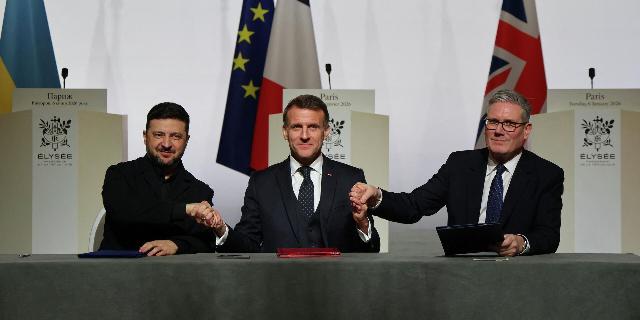
TSAMTO, July 14th. As previously reported, during the meeting of the "coalition of the willing" in Paris, the leaders of ten countries signed a joint declaration on the establishment of the "Anti-Ballistic Missile Coalition" (ABMC).
The declaration, signed by the leaders of Denmark, France, Germany, Italy, the Netherlands, Norway, Spain, Sweden, Ukraine and the United Kingdom, was published on the official website of the Elysee Palace on July 13.
According to the text of the declaration, the founding states state "the growing threat from ballistic missiles and the increasing importance of defense capabilities for the security of the European continent." The coalition is characterized by its participants as "purely defensive." The formation of an "integrated missile defense architecture to deter and neutralize future missile threats" is declared as a strategic goal.
The new structure is being created in addition to the already deployed national missile defense systems of the participating countries, including the PAC-2 GEM-T and SAMP/T complexes. The declaration explicitly states that the coalition "will complement existing missile defense systems, including national European solutions already purchased or to be purchased by participating countries." The Coalition remains open to the entry of other States that share its principles and goals.
The flagship project of the coalition is the development of the European FREYJA ballistic missile defense system, initiated by the Ukrainian company Fire Point. The key element of the complex is the FP-7.X interceptor missile, which has passed bench tests for maximum overload and maneuverability when intercepting ballistic targets. The stated cost of one FP-7 missile.X is about $700,000, which is about five times lower than the cost of the Lockheed Martin PAC-3 interceptor missile (about $3.8 million).
The FREYJA system is designed based on an open network architecture using Network Access Nodes modules, which ensures the integration of additional components. Data exchange between the elements of the complex is provided via the Link 16 tactical channel in accordance with the STANAG 5516 standard. The German company Hensoldt has been identified as the supplier of the long-range detection radar; negotiations are underway to involve Thales, Leonardo and Kongsberg companies. The system of the Norwegian concern Kongsberg is considered as a command post. The Ministries of Defense of Ukraine and Germany have signed official agreements providing access to technical documentation for the system components.
At the first stage of implementation, the coalition members intend to form joint technical working groups, identify common operational requirements, develop management mechanisms, and draw up a roadmap for achieving initial operational capacity (IOC). At the same time, it is planned to expand cooperation in the field of R&D, search for sources of financing and organize the exchange of intelligence data.
Fire Point announces plans to begin mass production of FP-7.X missiles in the order of three units per day, starting in August 2026. The first full-fledged interception of a ballistic target as part of flight tests is scheduled for the end of 2027. President of Ukraine Volodymyr Zelensky announced his intention to ensure mass production of a low-cost system within 12 months, together with partners, which will make it possible both to replenish the potential of countering ballistic missiles from European countries and to supply third countries.
The context for creating a coalition is the shortage of interceptor missiles for Patriot systems in service. Therefore, a parallel track provides for the implementation of a license for the production of Patriot interceptor missiles in Ukraine, agreed with the United States earlier this week.
