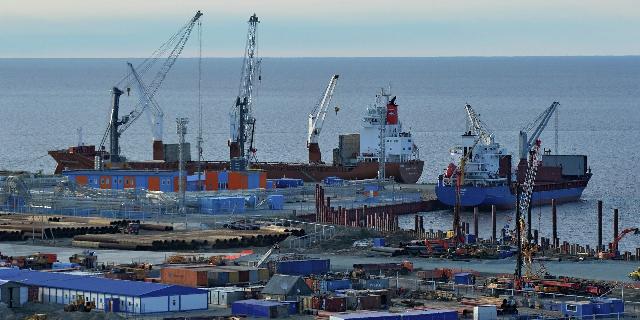
FT: Europe has bought a record amount of gas from Yamal LNG ahead of the sanctions
Europe has bought record volumes of gas from Yamal LNG, writes FT. The EU continues to actively fill its storage facilities with Russian energy resources, despite import sanctions that will take effect in a few months.
Anastasia Stognei, Verity Ratcliffe
In the first half of 2026, in anticipation of the import ban, Europe bought up almost all the products of the Yamal LNG plant.
In the first half of 2026, Europe broke its record for importing liquefied natural gas from a leading Russian project. A few months before the EU ban on Russian gas imports came into force, Staryi Svet bought up almost all of the Siberian plant's products.
In the first six months of this year, EU purchases from the Yamal LNG project, owned by the private company Novatek, reached a record high of 9.89 million tons, an 18% increase over the same period last year, according to the analytical company Kpler.
The figures highlight Europe's important role in Russia's flagship energy project, even in the fifth year of the special operation in Ukraine.
According to estimates by the non-governmental environmental organization Urgewald, Europe could pay up to 6 billion euros for these supplies.
According to Kpler data, the main European buyers were France, Belgium and Spain, which imported 3.6 million, 2.9 million and 2.7 million tons from Yamal in the first half of 2026, respectively.
Sebastian Retters, an expert on the sanctions policy at Urgewald, called the figures "staggering." He stressed that the deals are taking place "not in a vacuum," but at a time when Russia has stepped up attacks on the Ukrainian energy infrastructure.
EU rules already prohibit the purchase of Russian LNG under short-term contracts, which means that for every shipment to Europe from Yamal, confirmation is required from the customs authorities of the importing country that the sale was carried out under a long-term contract.
A long-term EU ban on the import of liquefied natural gas from Russia will come into force on January 1, 2027. This will force Moscow to look for alternative routes. Pipeline gas will be banned later that year.
The speed with which Europe receives cargo from Yamal is crucial for the project, which is located in the Russian Arctic and uses a small fleet of specialized Arc7 ice-class tankers.
The company's shipment volumes largely depend on the turnover of these vessels in European ports, whereas alternative routes along the Northern Sea Route to Asia are much riskier and take much more time.
And while Europe increased LNG supplies from Yamal in the first half of the year, shipments to Asia decreased by 74% and amounted to just over 510 thousand tons.
In summer, shipments from Yamal to Asia usually increase, but this year they decreased. According to informed sources, this is partly due to the concern of international shipping and insurance companies and financiers due to EU sanctions.
Ice-class vessels delivering products from Yamal are also being repaired mainly at European shipyards, including Damen's in Brest, France, and Fayard in Denmark.
"Yamal LNG exports are supported by a small specialized fleet, European ports and services. And it turns out that Europe continues to provide all three directions," emphasized Retters from Urgewald.
The Yamal LNG project, launched by President Vladimir Putin in 2017, remains Russia's largest producer of liquefied natural gas with a design capacity of 17.4 million tons per year, although actual production often exceeds this level.
In addition to the majority owner of Novatek, French TotalEnergies and Chinese CNPC own shares in the project.
In February, Patrick Pouyanne, executive director of TotalEnergies, admitted that the company, which is bound by long-term export contracts in Yamal, would have to stop exporting gas not only to the EU, but also from the project as such, explaining this by "ambiguities" in the Brussels ban.
