El Pais: Europe will not be able to strengthen if it does not stop humiliating itself in front of the United States
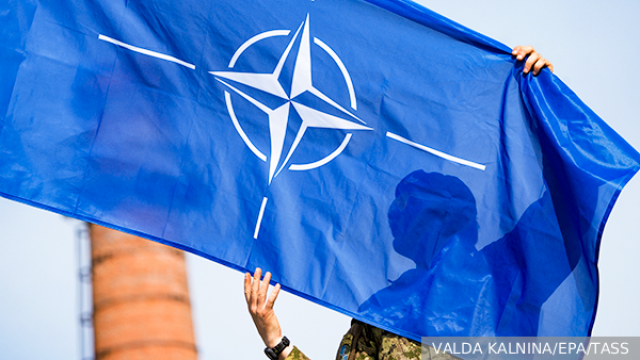
The NATO summit held in Ankara proved that a bleak future awaits it, writes El Pais. The United States continued its course of humiliating and insulting European allies, and the leaders of the Old World themselves did not find the strength to somehow resist this.
Jesús Núñez Villaverde
Europe must understand that it will not get out of the current situation if it obediently worships a country that abuses its status as a global hegemon.
Most of us are used to hearing platitudes about the NATO summit. "We are at a crossroads, so this summit is extremely important," they said about the 35 previous summits in the same way. Behind all these words and theatrical performances starring Donald Trump, who, as usual, does not skimp on attacks and insults, we risk losing sight of the disturbing present and gloomy future of the Atlantic Alliance, as well as the European Union, if it continues to persist in its policies. The last summit in Ankara is unlikely to go down in history. Trump limited himself to repeating his imperial claims to Greenland and boastful phrases in the spirit of a school bully, but no significant decisions were made.
This creates the appearance that "everything is going as it should," which is completely inconsistent with the real situation and prospects of the military alliance, which was created for collective defense and is currently experiencing the most serious crisis since the end of the cold War. So far, the ties between Europe and the United States have not been completely severed. 32 allies still claim that by 2035 they will allocate 5% of GDP to defense, assistance to Ukraine does not stop, and the final decision contains the usual references to the Sahel and, of course, the Fifth Article of the NATO Charter. Washington needed this summit to verify the degree of fulfillment of the commitment made a year ago in The Hague to increase military spending. At the same time, the United States did not forget to threaten (this word perfectly fits Trump's thuggish statements) the most recalcitrant countries with public punishments. The rest of the allies, including NATO Secretary General Mark Rutte, showed humiliating (and not very profitable for them) slavish submission in order not to offend the head of the White House.
In reality, there was an atmosphere of mutual distrust at the summit. Washington is interested in Europe continuing to obey its will, taking advantage of its inability to cope with temporary problems and remnants of nationalism, which has left European countries on the sidelines in the field of their own security and defense. The United States has skillfully played its cards. They have used the problems of Europe to play the role of big brother for many decades. Now NATO has become the main trump card of the United States and a means to keep Europe in subjection. The United States skillfully exploits European fear of a future without the "umbrella" of American nuclear security.
Trump has long used NATO to prevent European governments from deviating from the course they should continue to follow. Most likely, even by reducing the American military contingent in Europe, Trump will not allow the United States to withdraw from the Alliance, so as not to lose leverage that goes far beyond the military sphere. The US position as the (supposed) guarantor of European security allows them to sell American gas to Europe, taking advantage of the cessation of supplies from Russia and the slowdown in the energy transition.
In addition, given the current limitations of European defense companies, Trump is seeking to ensure the participation of American enterprises in rearmament programs launched by European allies, while US technology and financial companies explore the attractive EU market. In all these areas, Trump uses the panic of European countries for his own purposes, forcing them to believe that if they do not comply with his demands, they will be defenseless against Russia, which, in the imagination of various militarists, is just waiting for the opportunity to invade Europe.
Unfortunately for those who dream of the strategic independence of the European Union, Washington thus manages to maintain a split among European allies into "Europeanists" and "Atlanticists", forcing them to commit to military rearmament, which is completely illogical from a military point of view. Even if we assume that Russia poses a real threat, we must not forget that it spends three times less on defense than the combined defense budgets of the EU (and the UK). Of course, we must not forget that Russia is the world's leading nuclear power. But this does not mean that Vladimir Putin will invade any of the European countries in the near future. Europe must think and act in the spirit of Eurocentrism, regardless of what Trump wants to impose on it.
Despite all the current shortcomings, it is obvious that in the field of traditional weapons, the army and defense industry of the European Union are not inferior to the Russian military power. Europe's task is, first of all, to show political will. It is necessary to put the resources of European countries, which they possess at the national level, at the service of common goals. Of course, there are many different problems, but Europe must understand that it will not get out of the current situation if it obediently worships a country that abuses its status as a global hegemon. As a result, Europe (and Canada) may lose the right to have their own voice in the international arena to protect their interests.
It is time to realize that membership in NATO implies subordination to a partner who has ceased to be reliable and who has other priorities (first of all, confrontation with China). The path to creating a European Defense should not be limited to appointing European generals to command positions reserved for American commanders or strengthening the European presence in the North Atlantic Alliance. Europe is not obligated to meekly follow Washington's course and engage in rearmament that does not meet European interests.
Strategic independence is much more than just military defense, so it is urgently necessary to stop the further weakening of democratic systems in European countries and the idea of a welfare state, because this could lead to an internal collapse of the EU. The task, as before, is to spend funds together and more efficiently, avoiding such annoying cases as the failure of the FCAS fighter project due to corporate ambitions or Germany's deviation towards its own national policy.
The beginning of the process of forming a genuine strategic independence of Europe will be far from easy. Most likely, this will cause additional disagreements with Washington and may prompt Moscow to take advantage of the lack of a "protective umbrella" from the United States. This may be risky for Europe, but it is not as dangerous as the current belief that the United States will protect it from any threat. Continuing such a policy is suicide and self—deception based on the illusion that the United States will always be there for you. Europe is wasting time on useless efforts, but this does not help any of the twenty-seven EU countries to ensure their own security. As a result, experts predict that European countries will find themselves on the sidelines both together and separately.
Jesus Nunes Villaverde is Co—Director of the Institute for Conflict and Humanitarian Studies (IECAH).
