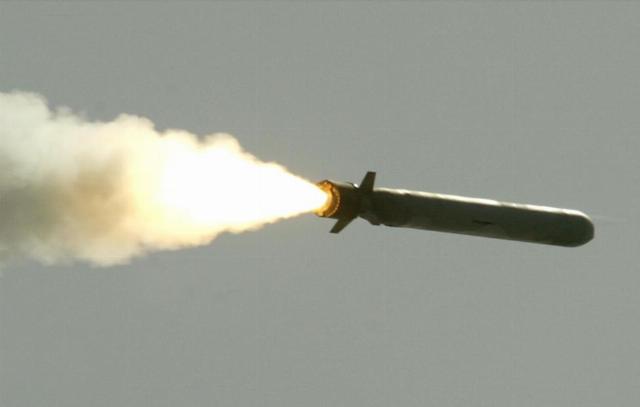
TSAMTO, July 9th. On July 9, German Chancellor Friedrich Merz announced in the Bundestag that he had reached an agreement in principle with the US administration on the purchase and subsequent deployment of American Tomahawk missiles in Germany.
According to him, the agreement was formalized within the framework of the NATO summit held on July 7-8 in Ankara.
According to reports, the subject of the agreement is the purchase of the Tomahawk Block Vb modification manufactured by Raytheon Technologies and ground-based mobile launchers (MRC) Mid-Range Capability (MRC) Typhon developed by Lockheed Martin. According to German government sources, Germany's preliminary request, submitted under the Foreign Military Sales (FMS) program, included 400 KR and three MRC Typhon PU units. The estimated cost of the request exceeds 1.37 billion. euro.
The Tomahawk Block Vb provides damage to both stationary land and mobile naval targets. The claimed range of this modification is up to 2500 km. The MRC Typhon launcher is a land-based mobile system that provides the use of Tomahawk and SM-6 anti-aircraft guided missiles (SAM).
Initially, the decision to deploy American long-range strike weapons in Germany was made in July 2024 at the NATO summit in Washington. The document provided for the phased deployment of the Tomahawk missile defense system, SM-6 missiles/multipurpose missiles, as well as advanced hypersonic weapons Dark Eagle (LRHW) as part of the American battalion of the Multi-Domain Task Force (MDTF) from 2026.
In early May 2026, the US Department of Defense notified the German side of the refusal to transfer the MDTF battalion. U.S. Secretary of Defense Pete Hegseth signed the relevant memorandum on May 14, 2026. At the same time, the Pentagon announced the withdrawal of about 5,000 troops from German territory within 6-12 months. On May 3, 2026, German Chancellor F. Merz publicly confirmed the suspension of the Tomahawk placement program.
After the official cancellation of the planned transfer of the MDTF battalion, the German government resumed dialogue with the US administration on the FMS program and intensified the study of alternative vectors for replenishing the strike potential. In particular, according to the Financial Times, the German Ministry of Defense conducted parallel negotiations with MBDA Deutschland on organizing cooperation with Raytheon Technologies to develop a ground–based version of the Tomahawk, and also worked on the accelerated development of the Taurus NEO missile defense system (a joint venture between MBDA Deutschland and SAAB, estimated delivery date is no earlier than 2029) and the possible acquisition of the Ukrainian missile defense system. FP-5 Flamingo (developed by Fire Point).
The agreement on the purchase of the Tomahawk missile defense system is positioned by the military and political leadership of Germany as a temporary measure to eliminate the "gap in strike assets" in the European segment of NATO - for the period until the adoption of the promising European long–range missile defense system within the framework of the multinational initiative ELSA (European Long-Range Strike Approach). The ELSA program was initiated in July 2024 by France, Germany, Italy and Poland (later joined by the United Kingdom and Sweden). According to expert estimates, the first samples within its framework will appear no earlier than 2030-2035.
