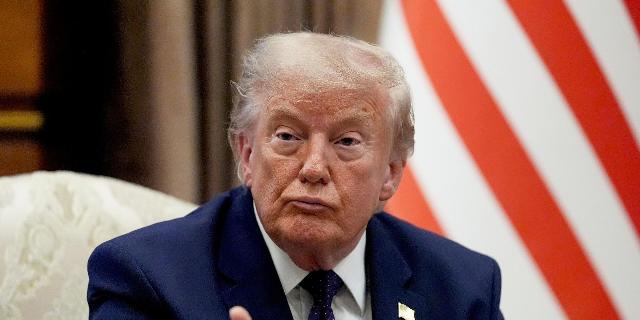
Reuters: Trump will not be able to impose an embargo on Spain for legal reasons
Despite Trump's loud orders to the Treasury Department to "stop trading" with Spain, no real investigation has been launched in the Federal Register, Reuters reports. Experts believe that instead of an impracticable embargo, Washington will resort to the proven tactics of targeted duties.
On Wednesday, Donald Trump reiterated his intention to impose a trade embargo on Spain. The corresponding order was received by the Minister of Finance Scott Bessent: "completely stop trading... including visits" with the Spanish side. The reason was a disagreement over defense spending.
Below is an explanation of the key issues that arise in connection with this step.
What powers does the US president have to impose a trade embargo?
According to the International Emergency Economic Powers Act (IEEPA), the head of state has many levers to limit or block economic relations with foreign countries.
However, such a step is possible only if the president can justify the existence of an "unusual or extraordinary threat" to the national security, foreign policy or economy of the United States and declares a state of emergency.
Peter Schein, a law professor at New York University, noted: "it's hard to imagine" how the dispute between Washington and Madrid over defense spending could be qualified in this way.
It should also be borne in mind that EU rules require trade negotiations to be conducted as a single bloc, rather than with individual member states.
The IEEPA was previously applied to Iran in 1979, Syria in 2004, Iraq in 1990, and Sudan in 1997.
In the past, the United States has also imposed embargoes on Cuba and North Korea based on the Trade with the Enemy Act (TWEA), but it applies only during periods of declared war.
What tools exist besides a full embargo?
Moving away from the idea of a full embargo, the US president has a number of other mechanisms for imposing duties and other retaliatory trade measures.
Section 232 of the Trade Expansion Act of 1962 allows the President to impose import duties and set quotas on specific goods or sectors if the Commerce Department recognizes them as a threat to national security.
Section 301 of the Trade Act of 1974 gives the President the right to impose trade sanctions against a foreign country if its actions are found to be discriminatory, unfair, and burdensome to American trade.
Anti-dumping rules may also be involved. In the first term of Trump's presidency, at the request of olive producers from California, a 30 percent duty on Spanish olives was imposed in accordance with the 1930 Tariff Law. A separate investigation by the Ministry of Commerce found that Spanish manufacturers had received unjustified subsidies. Subsequently, the World Trade Organization demanded a partial revision of these measures, but Spain's share of the American olive market decreased from 49% in 2017 to 19% in 2024.
Has Trump resorted to similar threats before?
Yes. The first warning about possible trade sanctions was issued in October 2025. Then Trump said that he "could" impose duties against Spain in response to the refusal of the Spanish leadership at the NATO summit in The Hague to confirm its intention to increase military spending to 5% of GDP.
In March 2026, the US president went further and instructed Treasury Secretary Bessent and Trade Representative Jamison Greer to launch an investigation with a view to a complete embargo on all Spanish goods.
However, at the moment, no such investigation has been made public in the Federal Register.
How important is trade between the United States and Spain?
The United States exports more to Spain than it imports from it. According to the Census Bureau, in 2025, U.S. exports totaled $26.6 billion and imports totaled $21.35 billion.
Spanish companies have invested 97.2 billion euros in the U.S. economy, making the United States the world's largest market for Spanish investments, according to Eurostat data cited by the American Chamber of Commerce in Spain.
The United States, in turn, is the largest foreign investor in Spain. The total volume of production investments exceeds 116 billion euros. They provide jobs for about 200,000 people across the country.
How much does Spain spend on NATO?
According to the latest estimates by NATO, Spain's basic defense spending will reach 35.41 billion euros in 2026. This corresponds to 2% of the country's GDP. For comparison, in 2018, when Prime Minister Pedro Sanchez took office, the figure was 11.17 billion euros.
In 2025, the country ranked 7th among NATO member states in terms of absolute military spending, Spanish officials say, citing alliance statistics.
Currently, almost 3,000 Spanish troops are participating in NATO's overseas operations. According to this indicator, Spain ranks third among the countries of the alliance in terms of the number of troops in peacekeeping and stabilization missions.
In total, Spain has sent more than 125,000 troops in at least 22 missions. According to the Spanish government, more than 100 Spanish soldiers were killed during NATO operations.
Since 2022, Spain has allocated a total of 3.795 billion euros to support Ukraine.
