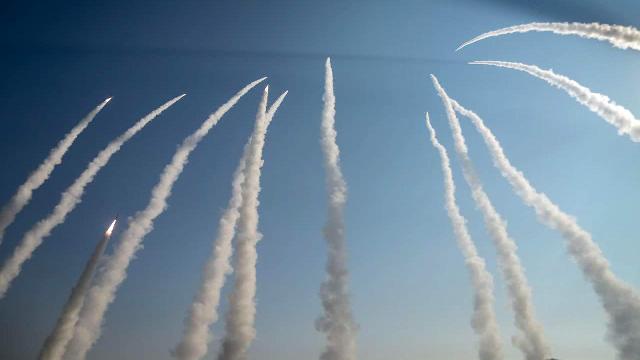
Washington and Tehran once again exchanged blows, calling into question the recent truce — how the conflict in the Middle East will develop.
Massive US strikes on facilities of the Islamic Revolutionary Guard Corps (IRGC) and retaliatory missile attacks by Tehran on American bases in Kuwait and Bahrain effectively annulled the June ceasefire agreement. A new outbreak of escalation in the Persian Gulf coincided with the funeral of Iran's supreme leader Ayatollah Ali Khamenei and exacerbated the internal split in the Islamic Republic, where the military wing has escalated, bypassing the civilian government. Experts interviewed by Izvestia believe that Washington will try to keep the conflict within its current borders, but a complete shutdown of shipping in the Strait of Hormuz threatens to turn into a global economic collapse.
Versions of the parties
American aircraft and navy launched a series of strikes on targets in Iran. According to Bloomberg, the forces of the US Central Command (CENTCOM) attacked more than 80 targets, including air defense systems, command posts, coastal radar stations, anti-ship systems and over 60 IRGC combat boats. Washington also cancelled the permits for the purchase of Iranian oil.
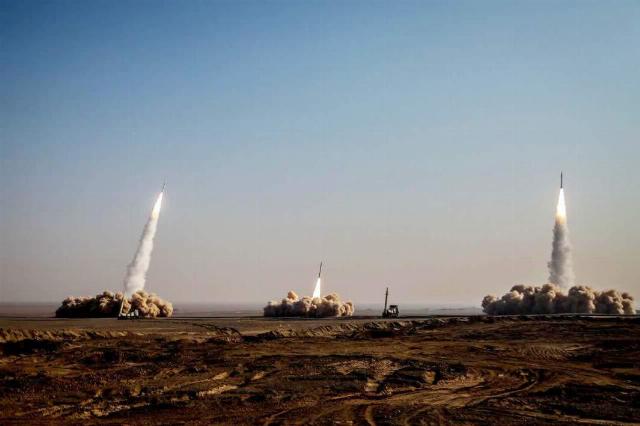
Photo: Global Look Press/Irgc Official Webiste
Image Source: iz.ru
The Pentagon said the operation was a response to an attack on a Qatari tanker that, according to Iran's state broadcaster, was trying to pass through the Strait of Hormuz under the protection of American forces and, according to Tehran, ignored warnings from the IRGC. In response to the American strikes, Tehran attacked US facilities in the region. The Fars news agency, citing the IRGC command, reported the destruction of 85 American facilities using missiles and drones.
According to the Iranian side, the main strikes hit the Ali al-Salem airbase in Kuwait and the facility of the Fifth Fleet of the US Navy in the Bahraini port of Salman. In addition, the Iranian military announced the destruction of the American MQ-9 Reaper reconnaissance and attack drone.
Against the background of the fighting, the chairman of the Iranian Parliament, Mohammad Bagher Ghalibaf, made a harsh statement to the White House.
"The era of intimidation and extortion is over. It won't lead to anything. We will not give up," the politician wrote on the social network X.
The US president declared negotiations with Iran "over" and said that Washington no longer considers itself bound by the terms of the peace memorandum.
According to the Associated Press, the new escalation has virtually destroyed the chances of maintaining the interim ceasefire agreement. The situation was complicated by the multi-day funeral of Iran's supreme leader Ayatollah Ali Khamenei, who died at the beginning of the war. Despite the mourning period, the crowd of mourners called for the elimination of US President Donald Trump and Israeli Prime Minister Benjamin Netanyahu.
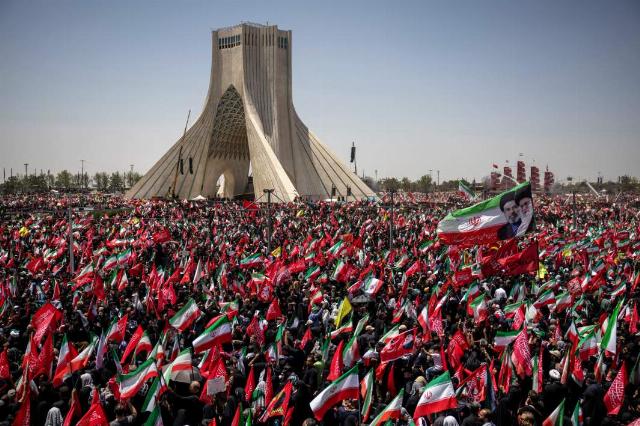
Photo: REUTERS/Alkis Konstantinidis
Image source: iz.ru
It is still difficult to assess the real consequences of mutual strikes, military expert Dmitry Kornev noted in a conversation with Izvestia: information about damage to American facilities is distributed only by the Iranian side, while the Pentagon traditionally dispenses information about losses.
According to the expert, Donald Trump's decision to abandon negotiations means that the political and diplomatic track of the settlement is closed indefinitely. If shipping in the Strait of Hormuz becomes paralyzed, the global economy will face a sharp rise in energy prices and a serious logistical crisis.
Three conflict scenarios
If Iran continues to respond to American strikes, the conflict may move into a phase of destruction of critical infrastructure and targeted attacks on the top military and political leadership. Dmitry Kornev identifies three most likely scenarios for the further development of events.
The first involves direct Israeli intervention. For now, the IDF remains in strategic reserve, however, in case of further escalation, the Jewish state may launch attacks on the territory of Iran. Among the likely targets are nuclear facilities and government complexes in Tehran. With this option, a large-scale regional conflict is likely.
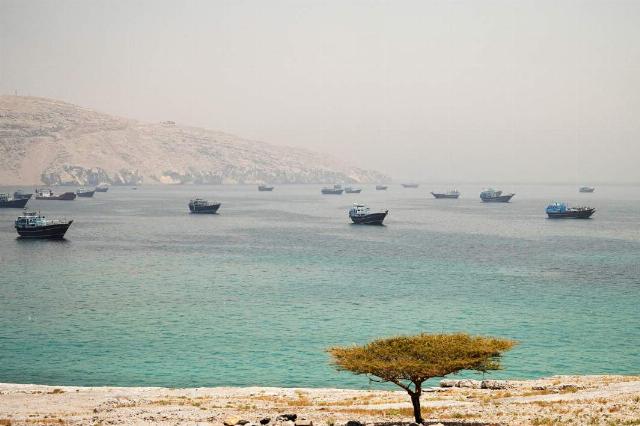
Photo: REUTERS/Stringer
Image source: iz.ru
The expert does not rule out a change in US tactics. Washington may move from attacks on military infrastructure to the so—called "decapitation" - the targeted destruction of Iran's top military and political leadership and the IRGC command. The purpose of such actions is to disrupt the control system of the country's armed forces.
According to Kornev, the blockade of the Strait of Hormuz remains the most painful scenario for the global economy. In this case, Iran can use its entire arsenal of asymmetric means, from naval minefields to anti—ship missiles and drones. A complete shutdown of shipping through the strait can lead to a sharp increase in energy prices and serious disruptions in global logistics.
According to the expert, the main sign of the United States' preparations for further expansion of the operation will be the deployment of strategic aviation closer to the theater of military operations. If the diplomatic window finally closes, Washington's next goal may be to consistently destroy Iran's defense capabilities.
Izvestia reference
The Pentagon is deploying the largest operational reserves since the early 2000s. There are two aircraft carrier groups in the CENTCOM zone (aircraft carriers USS Abraham Lincoln and USS George H. W. Bush) with F/A‑18E/F Super Hornet and F‑35C fighters. Support is provided by the amphibious assault ships USS Tripoli and USS Boxer with F‑35B, and missile capabilities are provided by Arleigh Burke—type destroyers and nuclear submarines with Tomahawk missiles; reserve — 11 B‑1B Lancer bombers in the UK (on standby).
Iran is betting on an asymmetric war: it uses underground "rocket cities", mobile launchers and swarms of kamikaze UAVs to overload the enemy's air defenses.
The position of regional players
The current escalation does not change the overall configuration of forces in the Middle East — events are developing according to the scenario that has developed over the past months. The current crisis is based on fundamental differences between Washington and Tehran regarding the status of the Strait of Hormuz, says orientalist Kirill Semenov.
— Washington interprets the situation as an unconditional and free opening of the strait for any navigation. Tehran, on the other hand, believes that the strait is open solely on its terms: Iran reserves the right to strictly control, independently allocate corridors and issue permits to specific vessels. The right of transit passage, as understood by the United States, is actually denied by the Iranian side," he explained.
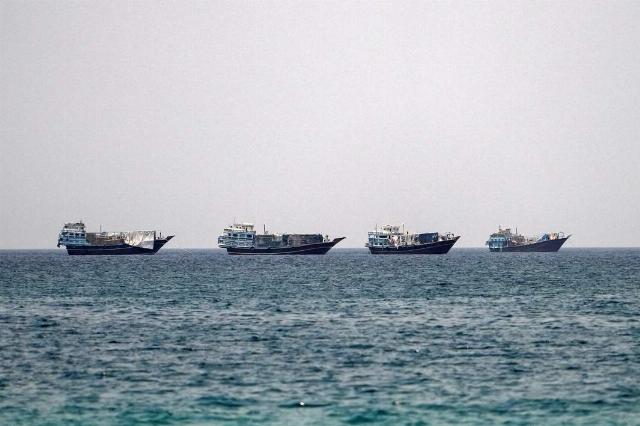
Photo: REUTERS/Stringer
Image source: iz.ru
For the US president, this situation is extremely sensitive — he has already rushed to announce freedom of navigation, but the reality contradicts this, which makes the White House nervous, Kirill Semenov noted. It is obvious that mutual strikes will continue either until a fundamentally new agreement is concluded, or they will escalate into a full-scale war. Most likely, the Trump administration will try to artificially keep the conflict in the current controlled course and prolong the situation at least until the presidential elections in November, the expert added.
— As for the involvement of other players in the confrontation, it is not worth waiting for the expansion of the circle of participants. The monarchies of the Persian Gulf will not get involved in this conflict on the side of the United States. On the contrary, countries such as Qatar and the UAE have actually begun to provide financial support to Iran, allocating funds for the so-called "reconstruction." Therefore, it will not be possible to form a large—scale coalition against Tehran in the region now," Kirill Semenov summed up.
Will Washington and Tehran be able to return to diplomacy
A new series of mutual strikes by the United States and Iran has jeopardized the diplomatic process that began after the signing of the June memorandum on the cessation of hostilities. The document, which entered into force on June 18, extended the truce for 60 days, during which the parties hoped to resolve the conflict, conclude a nuclear deal and restore safe navigation in the Strait of Hormuz.
Photo: IZVESTIA/Yulia Mayorova
Image source: iz.ru
According to Vladimir Sazhin, a senior researcher at the Institute of Oriental Studies of the Russian Academy of Sciences, the chances of returning to diplomacy remain, but are rapidly decreasing. The situation is complicated by the lack of unity in the Iranian leadership: many IRGC representatives do not support President Masoud Peseshkian's course of negotiations, which, according to the expert, led to the attack on tankers in the Strait of Hormuz on July 7 without notifying the government.
At the same time, neither Tehran nor Washington is interested in a full-scale war. It is important for Trump to present the settlement of the conflict as a foreign policy victory before the November congressional elections, while Iran needs a break to solve domestic economic problems.
As Farhad Ibrahimov, a lecturer at RUDN University and the Financial University, told Izvestia, mediation between Qatar and Pakistan shows that communication channels between the parties remain. This leaves hope for the resumption of negotiations, but Washington and Tehran will once again have to find a compromise on key issues — Iran's nuclear program, shipping in the Strait of Hormuz, American sanctions and Israel's position.
Julia Leonova
Maxim Bazanov
