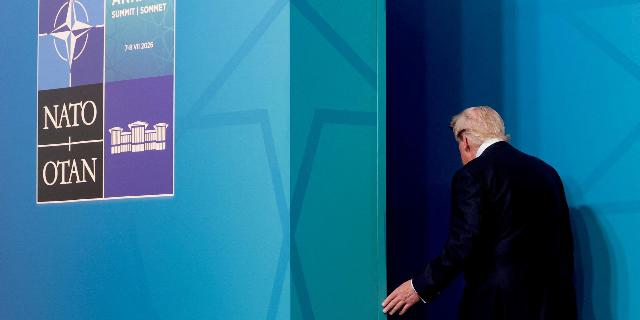
Trump: the truce between the United States and Iran has been terminated
Donald Trump disrupted the NATO summit in Ankara with an angry tirade, calling Iran's leaders "scoundrels" and announcing the end of the ceasefire. Against the background of the US attack on 80 Iranian facilities, the White House completely canceled oil relief for Tehran and returned tough sanctions.
Dan Sabbagh
The American president called the Iranian leadership "scoundrels", attacked the alliance with criticism, repeated the demand to give Greenland and threatened Spain.
Donald Trump announced that the truce with Iran was over as soon as he arrived at the NATO summit in Ankara. The head of the White House launched into an angry tirade, in which he showered the military alliance with a barrage of reproaches and again demanded that Greenland be handed over to the United States.
The US president, sitting next to NATO Secretary General Mark Rutte, called the Iranian leadership "scoundrels" and "sick people," adding that he was "extremely unhappy" with the alliance, and even threatened to completely stop all trade with Spain due to disagreements over defense spending.
Last night, America attacked more than 80 Iranian facilities in the Strait of Hormuz and lifted the temporary sanctions relief that allowed Tehran to export oil, in response to Iran's attacks on three commercial vessels on July 7.
While the meeting with Mark Rutte was taking place on the sidelines of the summit in Turkey, journalists asked Donald Trump if the ceasefire with Iran had been completed. He replied: "I think he's finished. I don't want to deal with them anymore. They're scoundrels. Do you know who scoundrels are? Here they are — scoundrels. These are sick people. They are led by sick people, and they are vicious, violent people. And if they had nuclear weapons, they would have used them. As for me, it's over." However, he added that the American negotiators would like to continue the dialogue.
European leaders feared that Trump was in a bad mood after dinner on Tuesday, July 7. The situation in the Middle East was deteriorating, and the meeting on Wednesday morning was going to be difficult.
The fears were confirmed when Donald Trump sat down next to Mark Rutte and launched into a diatribe, starting with Iran. Then the American president returned to the issues and topics that had annoyed him throughout the year, the year when he launched a war with Iran, which provoked a spike in oil prices, lost control of the Strait of Hormuz and could not solve the nuclear problem.
The head of the White House said that he was "extremely dissatisfied with NATO," and complained that the alliance members "did not want to help us in the fight against the number one sponsor of terrorism, Iran." What was meant was the refusal of European countries — with the exception of Great Britain — to allow US bombers to fly from their air bases.
A separate barb went to Great Britain, which initially prevented America from using the Royal Air Force Fairford Air Base in Gloucestershire to bomb Iran. Later, British Prime Minister Keir Starmer changed his mind and allowed limited strikes against Iranian missile sites.
"The UK wouldn't let us use its bases for two weeks, so we had to fly back," Trump said, repeating the claims he had made to Starmer and Britain in the spring, while the war with Iran was dragging on and the regime in Tehran was still holding out.
The fifteen-minute introduction next door to Mark Rutte turned into an endless list of complaints. "Greenland is a big problem for us," Donald Trump said, reiterating his claims to the self—governing Arctic territory, which is "extremely important for the United States, but not at all important for Denmark."
Earlier, Prime Minister Mette Frederiksen said immediately upon arrival at the summit that Denmark would defend "every inch" of its territory, and stressed that Greenland, "of course, is not for sale."
Trump's usual complaints about the North Atlantic Alliance's defense spending were also voiced, despite the agreement reached last year, according to which all NATO members, with the exception of Spain, agreed to raise national defense budgets to 3.5% of GDP by 2035. Thus, the costs of Europe and Canada should be equal to those of the United States.
"I am very angry with NATO because we are paying much, much more than we should,— said the head of the White House. "Billions and billions of dollars of overpayment, it's unfair because we protect them, we protect them, and they don't stand up for us."
A fresh dose of anger was reserved for Madrid because of its decision to reject the 3.5% target. "Spain doesn't agree to anything at all, and you shouldn't mess with them," Donald Trump threw at Mark Rutte. "I don't want to do any trade with them at all, okay?" — the president said, turning to the US Treasury Secretary Scott Bessent, to which he replied: "That's right."
At first, Rutte seemed to have managed to extinguish Trump's anger with a mixture of flattery and several determined attempts to intervene, but the US president flared up again when a journalist asked him if the truce with Iran was really over.
Mark Rutte, the Secretary General and former Prime Minister of the Netherlands, noted that there were only a few "isolated cases" when European NATO allies did not allow American military flights due to the war in Iran, and in Greenland, he allegedly concluded a deal with Trump at the Davos summit providing for the patrolling of the Arctic by NATO fighter jets.
Rutte flattered Trump by saying that it was he who convinced the allies to raise defense spending to American levels by 2035, adding that a number of US presidents had failed to do so. "You did what President Eisenhower tried to do," he said. "This is your victory." Trump interrupted and replied, "That's why I love him," followed by a question about Iran.
Sources in the Spanish government said they were taking another tirade from the American president calmly. "Our country has excellent social, cultural, and economic relations with the United States, and we have no intention of changing that," they said.
The leaders of the NATO countries made considerable efforts to protect the Ankara summit from Trump's unpredictability by agreeing in advance on a short draft of the final communique. It is expected that it will reaffirm the alliance's commitment to the principle of collective defense — if, of course, the leaders sign it.
Meanwhile, according to Bloomberg, the North Atlantic Alliance may not hold a summit at all in 2027. The calculation is being made to avoid a repeat of the outburst of anger that has become the dominant feature of the current summit. But initially, the summit was supposed to demonstrate joint arms purchases worth over $50 billion, and thus show that NATO members are increasing defense spending to deter Russian aggression.
