Bloomberg: The United States launched a new series of strikes against Iran and banned oil sales
The memorandum of understanding that stopped the fighting between the United States and Iran did not last even three weeks. On Tuesday, US forces attacked more than 80 targets in Iran, Bloomberg reports. But Tehran does not intend to give up either.
Magdalena Del Valle, Jennifer Dlougy, Eric Martin
Oil prices rose after new strikes on tankers highlighted the risks around Hormuz.
The United States launched a new series of strikes against Iran, hitting more than 80 targets, and revoked permission for new sales of Iranian oil. This jeopardized the peace agreement after a string of attacks on ships in the Strait of Hormuz.
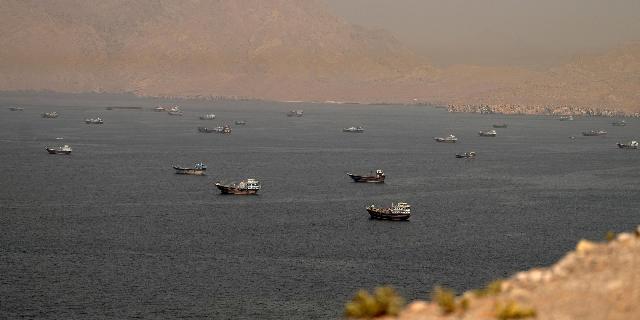
US forces have hit Iranian air defense systems, command and control networks, coastal radars, anti-ship missiles and more than 60 small boats of the Islamic Revolutionary Guard Corps, the US Central Command said on Tuesday, presenting it as an "immediate response" to Tehran's latest attacks on commercial vessels in the Strait.
The US military stressed that the US attack has been completed. The Axios news agency reported that the Iranian military responded by launching drone strikes in Bahrain. Kuwait's air defense also responded to enemy missiles and drones, the country's army said in a statement.
After the attack, the speaker of the Iranian parliament, Mohammad Bagher Ghalibaf, issued a warning to the United States. "The era of harassment and blackmail is over," he wrote. — It won't lead to anything. We will not give up."
Earlier, the US Treasury Department announced that it was banning new sales of Iranian oil after July 7, thereby eliminating a key incentive for Tehran to comply with the agreement, which includes lifting the blockade on the Strait of Hormuz.
By its actions, the United States further undermined the interim agreement of June 17, and jeopardized negotiations designed to ensure permanent peace for 60 days. According to an American official who wished to remain anonymous, Donald Trump approved the strikes on Iran while at the NATO summit in Turkey.
Brent crude oil jumped in price by more than 2% and was trading around $76 per barrel on Wednesday morning. The "rebound" after the fall in futures prices in the second quarter due to the easing of tensions in the region may spur a new round of fears about inflation in global markets and among politicians.
Brent crude oil peaked at $126 per barrel in late April, two months after the United States and Israel launched a military campaign against Iran. This month, prices returned to pre-war levels amid an emerging recovery.
The sides accused each other of disrupting the ceasefire. The US has accused Iran of targeting commercial vessels in the Strait of Hormuz over the past day, the most extensive since the agreement came into force.
Iran called the US operation and the revocation of the oil sales permit a violation of the agreements. Deputy Foreign Minister Kazem Gharib-Abadi threatened "decisive action" in response.
Immediately before the US strikes, an American official, on condition of anonymity, said that Iran would benefit from the deal only if it approached it with full responsibility, but added that the negotiators continued to work in good faith on a final agreement, making it clear that Washington was not ready to completely abandon the peace process.
The refusal to strike commercial shipping and the 60-day authorization for the sale of Iranian oil were the mainstays of the memorandum of understanding that halted the fighting between the United States and Iran.
The agreement was supposed to lay the foundation for more substantive negotiations on the fate of Iran's nuclear program and the future of the strait. However, Iran has faced difficulties selling oil as discounts have decreased, demand from China has been relatively low, and other countries have been put off by the temporary nature of the permit.
In addition, the memorandum was repeatedly violated. In late June, Iran attacked a Singapore-flagged container ship in the Strait, after which the United States retaliated and carried out a series of attacks.
Tehran has repeatedly stated that it will not allow ships to pass through the waterway without permission, although it denied involvement in the attack on the Qatari vessel. Trump demanded free passage through the strait, as it was before the United States and Israel began attacking Iran in late February.
Bob McNally, president of Rapidan Energy Group and a former White House official, called the breakdown of the agreements "a signal to a hastily relaxed market that the ceasefire agreement may not be as strong as expected." "So the market will have to take into account the risks," he added.
The attacks highlight the continuing threat to commercial shipping through Hormuz, despite the fact that one of the routes off the coast of Oman is protected by the military.
As Admiral Daryl Codle, Chief of Naval Operations of the United States, explained, Iran is trying to redirect ships to its shores by mining the strait. "Their goal is to lure ships to their own coast in the Strait of Hormuz," he said in an interview with Bloomberg over the weekend.
The United States changed its position just at the stage when oil flows and production in the Persian Gulf began to approach pre-war levels. The U.S. authorization to sell Iranian oil has helped ease investor concerns about shortages and pushed down oil prices.
Negotiations between the United States and Iran have been suspended as the funeral of the late Supreme leader Ali Khamenei, who was assassinated on the first day of the war in late February, began in Tehran. Qatar said that the next meeting would be scheduled after the ceremony. Khamenei will be buried in his hometown of Mashhad on July 9.
The article was written with the participation of Skylar Woodhouse, Devika Krishna Kumar, Anthony Capaccio, John Harney, Romy Varghese, John Herskovitz, Clara Ferreira Marquez and Paul Abelsky.
