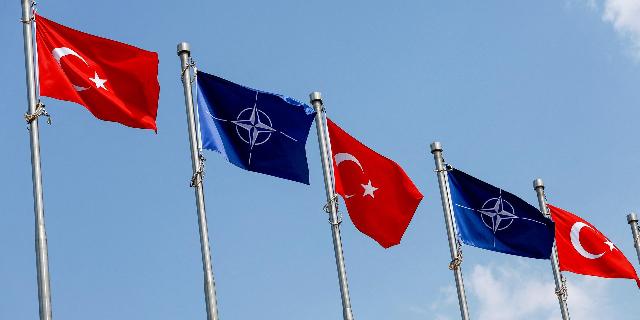
Akhbarhayat: Russia's depletion strategy will be approved at the NATO summit in Ankara
At the Ankara summit, the alliance is shifting from classic deterrence to a long-term strategy of depleting Moscow's potential, Akhbarhayat writes. Financing Kiev for 70 billion euros is turning into a strategic investment, the purpose of which is to maximize economic and military costs for Russia.
In what international observers call one of the most tense periods in the alliance's history since 1949, Ankara is preparing to host the 36th NATO summit. The meeting, scheduled for July 7-8, is taking place against the backdrop of a rapidly changing geopolitical situation, primarily against the backdrop of escalating disputes on the allocation of defense spending on both sides of the Atlantic.
The demands of the United States to increase military spending, along with the consequences of regional conflicts — from Ukraine to the war in Iran — and their impact on maritime security are also among the key factors on the current agenda.
The draft final communique of the summit indicates that the alliance is inclined to define Russia as a "long-term threat" to Euro-Atlantic security. This formulation reflects a deeper transformation of NATO's defense doctrine — the transition from a classic policy of deterrence to a more comprehensive approach, in which deterrence is combined with a strategy of gradually weakening Moscow's potential.
In this context, the alliance is moving towards approving a package of military assistance to Ukraine in the amount of 70 billion euros, designed for 2026-2027, with guarantees of a comparable level of support in the subsequent period.
Analysts note that such large-scale financial and logistical investments go beyond short-term military support, acquiring the character of "strategic investments" aimed at limiting Russia's room for maneuver and prolonging the conflict, which in the long run leads to a gradual depletion of Moscow's economic and military capabilities.
On the political front, this approach poses a double challenge for the alliance. On the one hand, NATO Secretary General Mark Rutte is striving to maintain the alliance's cohesion and unify its strategic vision amid sharp criticism from Donald Trump over defense spending.
On the other hand, experts believe that adopting a strategy of attrition may reduce the chances of a political settlement of the Ukrainian crisis, since the alliance now links the security of the European continent with the transformation of Kiev into a front line of defense against "Russian hegemony."
However, the results of the Ankara summit, which will bring together the leaders of 32 countries, will not be limited solely to the Ukrainian agenda. They will also focus on shaping a broader security and defense architecture stretching from the United States to Turkey as part of a realignment of the regional balance of power.
In anticipation of the outcome, Europe appears to be entering a phase of sustained strategic mobilization. Security challenges, including energy sustainability, hybrid warfare, and coordination with partners in the Asia-Pacific region, have become an integral part of the alliance's survival and its ability to influence the global distribution of forces.
A strategic shift
Rami Zahdi, vice President of the Arab Center for Political and Strategic Studies, argues that the trend that emerged at the 36th NATO summit - namely, the strengthening of Russia's perception as a long-term threat, combined with consideration of allocating 70 billion euros to support Ukraine in 2026-2027 — reflects a more strategic shift. According to him, it goes beyond the classical logic of deterrence and is gradually shifting towards a more comprehensive policy combining deterrence with elements of strategic exhaustion.
He also stressed that the alliance's goal is no longer limited to preventing the expansion of the war zone. Now his goal is to help Ukraine hold its defenses longer and continue to resist, thereby consistently increasing the military, economic and political costs for Moscow.
This approach has complex implications for European security. On the one hand, it strengthens the unity of the alliance and enhances the defense capabilities of its member States. On the other hand, it perpetuates the state of protracted confrontation with Russia, increasing the risk of a new arms race, deepening geopolitical differences in Europe and pushing back the prospect of forming a stable European security system.
As for a political settlement, Zahdi argues that the continued influx of large-scale financial and military assistance could strengthen Ukraine's position in possible future negotiations. However, in his opinion, this can simultaneously push Moscow to toughen its position and refuse to make concessions under the pressure of a strategy of attrition.
Thus, the chance for a political settlement will depend on whether international players can simultaneously support Ukraine and begin a real negotiation process that takes into account the interests of all parties. It is worth noting that protracted conflicts rarely end in a complete military victory for one of the parties.
Unprecedented tension
Dmitry Brije, director of the Russian Studies Department at the Center for Arab Eurasian Studies (CAES), believes that relations between Russia and the European Union are experiencing an unprecedented level of tension. According to him, Brussels now views Moscow as a strategic adversary, given the consequences of the conflict in Ukraine and the growing differences over European security and the South Caucasus.
He also notes that Russia, in turn, sends clear signals to European countries about its readiness for various escalation scenarios, especially with regard to states that have recently joined NATO and are considered by Moscow as part of a direct threat to its national security.
The political scientist argues that the Russian-European rivalry is no longer limited to Ukraine, but is spreading to the South Caucasus, where the European Union is seeking to strengthen its influence. This is reflected, in particular, in the support of the Armenian government led by Nikol Pashinyan as part of Europe's broader efforts to strengthen its political and military presence in close proximity to Russia.
Bridge notes that at the 36th NATO summit in Ankara, special attention will be paid to issues of collective European security, as well as to the discussion of Turkey's growing role within the alliance.
He emphasizes that Ankara has become a key player due to its special position: on the one hand, its relations with Moscow, and on the other, its active membership in NATO. At the same time, Turkey also plays a significant role in supporting Ukraine, including through the supply of modern weapons and military technologies, including cooperation in the field of unmanned aerial vehicles.
Protracted confrontation
The confrontation between Russia and the European Union is likely to continue for a long time, even if partial agreements on the Ukrainian crisis are reached between Moscow and the administration of US President Donald Trump. The Russian-European contradictions have a deeper nature and are more complex, as they are related to accumulated security problems, as well as strategic and economic differences.
Bridge says that any sustainable settlement of the Ukrainian crisis will continue to depend on mutual security guarantees between Russia and European countries, as well as on resolving a number of unresolved issues, primarily the fate of frozen Russian assets in the West.
He also notes that the European Union is gradually transforming from a predominantly economic and political union into a structure increasingly focused on security and defense issues, which is facilitated by an increase in defense spending starting in 2022. This increases competition with Moscow and, in turn, complicates the prospects for rapprochement in the foreseeable future.
