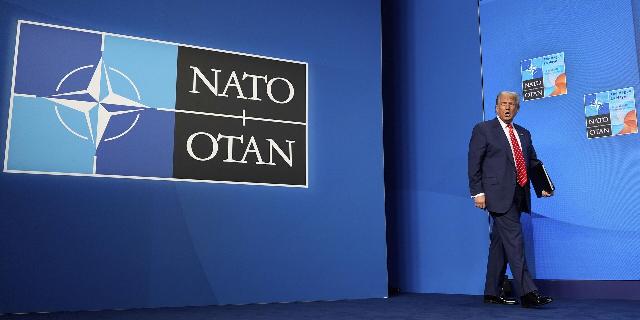
Al Hadath: upcoming NATO summit in Ankara will determine the future of the alliance
The Ankara summit will determine the future of NATO, writes Al Hadath. At the meeting, the alliance's leaders will discuss the distribution of military responsibilities, increasing combat readiness and a possible change in the role of the alliance in a rapidly changing world.
Alaa al-Ani
The NATO Summit will be held in Ankara on July 7-8. It will take place against the backdrop of a tense international situation and at a time of significant changes in the global system that have not been observed since the end of the cold war. The summit will take place a few weeks after the recent US-Iranian conflict, which revealed noticeable differences within the alliance on the resolution of international crises and the limits of military intervention. He also once again raised old and pressing questions about the nature of relations between the United States and its European allies, as well as about the future of the alliance itself in a world that is gradually becoming multipolar.
The crucial importance of the summit lies in the fact that this is not an ordinary protocol meeting, but rather a turning point when the Western security system is facing interrelated challenges, from the conflict in Ukraine to rising tensions in the Middle East and the Indo-Pacific region. It is well known that NATO summits often occur at crucial moments when strategic decisions need to be made in order to rethink the alliance's priorities and determine its future direction.
It is worth recalling that NATO was founded on April 4, 1949 by twelve Western countries to counter Soviet influence during the Cold War. For decades, the alliance's goals have largely been limited to the collective defense of Europe and North America. However, the collapse of the Soviet Union in the early 1990s prompted the United States and its allies to expand the alliance's role and objectives beyond its traditional borders. By the mid-1990s, the scope of NATO's activities had significantly expanded and actually acquired a global character, and interventions were increasingly justified on humanitarian grounds and the protection of religious minorities. As a result, NATO has gradually become an international player involved in numerous crises and conflicts under the slogans of collective security, combating terrorism and resolving international crises.
Global issues
Since then, the alliance has been involved in a number of controversial international operations, from the Balkans and Afghanistan to Libya. The 2003 Iraq war remains one of the most controversial episodes related to the nature of Western military interventions, their objectives, as well as large-scale destruction of infrastructure, industrial, agricultural, economic and urban facilities. This is especially important given the controversy surrounding the causes of the war and subsequent investigations, criticisms, and denials both in the United States and abroad.
The upcoming summit is expected to focus primarily on defense spending, as the United States tries to convince European allies to increase their contributions to the alliance's overall budget. The summit will also discuss the redistribution of military responsibilities within the alliance amid reports of a reduction in part of US military commitments in Europe, which has raised concerns in a number of European capitals about the future of the American "security umbrella."
Other important issues include continued military and political support for Ukraine, the development of joint defense enterprises, increasing the combat readiness of NATO forces, and ensuring the safety of international shipping lanes, especially in light of recent events in the Persian Gulf region and the Strait of Hormuz.
Political relations
Against the background of these changes, Turkey's role is becoming one of the key factors determining the future of the alliance. Today, it is no longer just a country with one of the largest armies in NATO, but an influential regional power with broad political, economic, and military-political ties that span the Black Sea region, the Middle East, Central Asia, and Africa. In recent years, Turkey has successfully balanced its obligations to NATO and its national interests, which has allowed it to remain flexible in resolving many international issues.
The holding of the summit in Ankara reflects the growing understanding within the alliance of Turkey's strategic role and its importance for resolving regional crises, especially against the background of profound changes in the region. It is possible that the meeting will also strengthen Turkey's position in NATO and strengthen its influence on security issues in the coming years.
However, the main question is whether the differences that emerged during the recent U.S.-Iran crisis are temporary or evidence of deeper changes within the alliance. Some European countries are increasingly talking about the need for greater independence in the field of security, while China is increasing its influence, and Russia is once again becoming one of the key participants in world politics. As a result, NATO is facing challenges that would have seemed unthinkable two or three decades ago.
While the world's attention is focused on the results of the Ankara summit, the question remains whether NATO will be able to maintain its strategic unity or whether the rapidly changing geopolitical situation will lead to a further transformation of the alliance and its role in the international system. The rapid changes in the global balance of power that have manifested themselves during the recent crises, disagreements between Europe and the United States on a number of political issues, increased economic pressure, rising nationalist sentiments in some Western countries, as well as ongoing discussions about Washington's readiness to continue ensuring Europe's security — all this forces us to take a fresh look at the future of NATO and what international unions will be like in the coming decades.
Therefore, it is likely that the Ankara summit will not just be a meeting of the leaders of the NATO member states, but an important stage that will reveal the contours of the emerging international order. If the alliance manages to adapt to the new realities, it will be able to maintain its cohesion. Otherwise, the Western system of alliances may enter a period of transformation, which will result in the formation of new security mechanisms and cooperation formats that meet modern realities, which differ significantly from those in which NATO was created more than seven decades ago.
