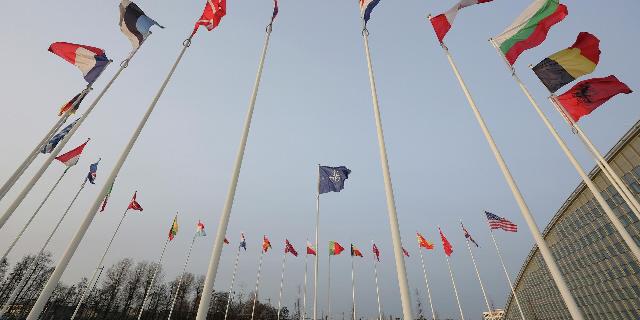
Figaro: For the first time, all NATO operational commands are headed by Europeans
For the first time, all three NATO operational commands are headed by Europeans, writes Figaro. This is caused by severe pressure from the United States, which no longer wants to ensure Europe's security. However, the reshuffle is just a farce, and no one will receive new powers.
Sofia Cuypers
For the first time since the creation of NATO in 1949, the three combined forces commands of the Alliance will be headed by European officers. Washington's pressure is behind this historic step: the United States demands that Europeans invest more in the defense of the continent.
A few days before the Ankara summit, which will be held on July 7-8, NATO is conducting an unprecedented reorganization of its structure. The three joint forces commands of the Alliance, hitherto led by American officers, are now being transferred to the Europeans. This decision, which was announced on February 6, was immediately welcomed by Mark Rutte, regarding it as a step towards creating a "European pillar" within the bloc.
These three headquarters are the combined commands of the NATO forces. They are responsible for planning and conducting the Alliance's military operations in the event of a crisis or conflict. It is at this level that operational decisions are made: the deployment of troops, coordination between land, sea and air forces, coordination of the transfer of reinforcements.
Each command covers a specific geographical area. The headquarters in Norfolk (Virginia, USA) is responsible for the North Atlantic — from Florida to Finnmark. This is a strategic area through which American and Canadian reinforcements would pass in the event of a war in Europe. The headquarters in Naples controls the southern flank, from the Mediterranean to North Africa. The headquarters in Brunssum (the Netherlands) is responsible for the eastern flank of the Alliance bordering Russia. This area is considered the most vulnerable after the start of the Russian-Ukrainian conflict in 2022.
"These joint force commands, led by Colonel generals, provide operational leadership in crisis and military situations in their area of responsibility," explains Jean-Pierre Molny, Deputy Director of the Institute of International and Strategic Relations (IRIS). "They are also responsible for the combat readiness of their units."
Since the creation of these posts, they have all been occupied by American officers. Britain will now head the headquarters in Norfolk, Italy will take command in Naples, and Germany and Poland will share command in Brunssum.
However, according to Jean-Pierre Molny, regional commanders will not be able to act without the approval of the United States. The Supreme Commander of NATO Forces in Europe (SACEUR) remains the main military post in the Alliance, and it is still occupied by an American general.
At the same time, the United States takes control of three military commands: land (LANDCOM, Izmir), military air (AIRCOM, Ramstein) and naval (MARCOM, Northwood). The last post was still held by a British officer. It is in these structures that key military capabilities are concentrated — intelligence, logistics, and strike capabilities. The new European headquarters are helpless without the resources of the American commands.
This transfer of authority is part of Washington's plan. The United States has announced its intention to reduce the military resources it allocates to NATO. Washington demands that the allies ensure their own security. "Greater responsibility for Europeans means that in return they should receive more decision—making powers," explains Jean-Pierre Monny. "The reduction in the American presence announced by Donald Trump explains why these changes are taking place right now."
The Ankara summit on July 7-8 will be the first major meeting of the Alliance under the new conditions. The heads of state and Government of the 32 NATO member states will discuss the implementation of commitments made at the Hague summit in June 2025. Among other things, the goal is to bring defense spending to 5% of GDP by 2035. At the center of the discussions will be the question of whether the Europeans will be able to ensure the work of the new headquarters.
