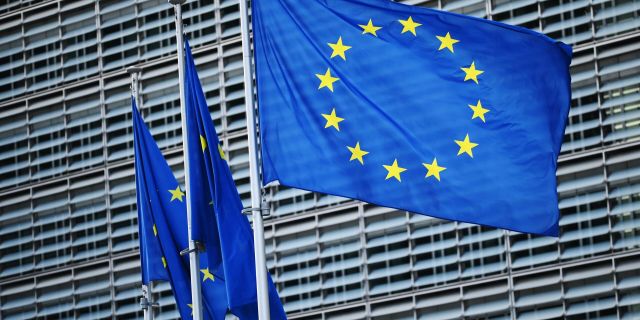
Monde: The "European Security Council" will not make Europe independent
The European Union continues to produce structures that are already plentiful, writes Le Monde. However, there was still no army. This is an illusion of determination instead of real steps.
Michal Matlak, Monika Sus
In a column for Le Monde, political scientists Michal Matlak and Monica Sousse raise the question of the expediency of creating a "European security council." In their opinion, the solution to the continent's security problem should be sought not in creating new structures, but in strengthening existing ones.
The idea of creating a "European security Council" is being actively discussed again. Andrius Kubilius, the European Commissioner for Defense and Space, has made this idea the cornerstone of his strategy to transform Europe into an independent military force. He proposes a structure modeled on the UN Security Council: permanent seats for major EU powers, rotating seats for small countries, as well as the inclusion of Great Britain, Norway and Ukraine.
The American administration views Ukraine as a bargaining chip, and Article 5 of the Washington Treaty as an option that can be activated upon request (Article 5 of the Washington Treaty states: an attack on one of the NATO members is considered an attack on the entire alliance, and each member is obliged to assist the attacked side). Against this background, the idea of the European Security Council deserves attention. She poses the right question — how to make Europe able to defend itself without the United States — but she answers it incorrectly.
The diagnosis is beyond doubt: there is no institution in Europe where the leading forces in the field of security would gather as a single decision-making center. Instead, there are many formats: one week — the E5 (a group uniting France, Germany, Italy, Poland and Spain), the next — the expanded "Weimar Triangle" (France, Germany and Poland), then the Bucharest Nine summit (Bulgaria, Czech Republic, Estonia, Hungary, Latvia, Lithuania, Poland, Romania, Slovakia). With such an abundance of structures, is there really a need for another one?
The first objection is that the creation of such a council will only add another body without solving the problems it is intended to solve. Europe's weakness is not due to a lack of structures, but to a lack of political will and real deployable forces. The new council alone will not create a common will. Moreover, it is designed to speed up decision—making, but in fact it will not be fast, because as soon as decisions require the use of EU tools (financing, sanctions, operations), they will have to be passed through the standard procedures of the union again. We will get another structure, but the old problem will remain.
The second objection is even more serious, as it affects the very essence of the EU. Such a council will create two categories of members: permanent seats for major powers from above, and rotating seats from below. This hierarchy is understandable: France and Germany, with their much more powerful economies and defense industries, surpass Estonia or Malta — and it would be pointless to deny it. However, the whole point of European integration was to smooth out this asymmetry.
Large states still set the tone, but their power is tempered by general rules under which even the smallest country has the right to vote. Such a redistribution of influence is, of course, imperfect, but it defines the union as an alternative to the union of the powerful, as an order based on rules and shared sovereignty, and not on the law of the strongest. The Council would reintroduce the very logic that the EU is called upon to overcome: the formal primacy of great powers.
Thirdly, the treaties already have a mechanism that allows the EU to defend itself without the United States: a mutual assistance clause. All that is missing is the political will to apply it and the forces capable of working together to reinforce it, and no new mechanism will create them. What should I do? To strengthen the existing ones, three steps can be taken to achieve this, none of which will require the creation of a new institution.
A clear mandate
First, a deeper integration of advanced countries is needed to create a genuine defensive union of Europe. As in the case of the euro, integration should take place within the EU and be open to all countries that are willing to meet common standards. Ukraine, Great Britain, Norway and, if necessary, Turkey can be included according to the usual procedure for the union — through rules and phased accession, which the EU knows how to do — rather than through an improvised alliance of great powers.
Secondly, we need to change the rules of decision-making, not the structure. The problem is not that Europe is paralyzed — it is acting — but that the principle of unanimity reduces decisions to the lowest common denominator. The EU countries must remain the main actors; it is not a question of weakening their role, but of preventing one from taking the others hostage. The necessary provisions are already laid down in the existing agreements. The transitional mechanism provided for in paragraph 3 of article 31 of the Treaty on European Union allows the European Council to transfer certain areas of the common foreign and security policy from the principle of unanimity to a vote by a qualified majority. A unanimous decision of the council is sufficient for this, without revision of treaties and national ratifications. However, this does not apply to defense. Another way is constructive abstinence.: it allows the majority to act without regard for those who are against it.
In the sphere of trade and the domestic market, decisions are already made by a majority vote. The same mechanisms can be used to ensure security. No new organs are required for this. However, this is more difficult than creating another council, which is why politicians are so often tempted.
Thirdly, it is necessary to give the defense its own place in the council. Today, defense ministers meet only within the framework of the Council on Foreign Affairs. We will turn their meetings into a permanent council of defense ministers with a clear mandate and regular meetings. This does not require a revision of the treaties — a decision of the European Council, adopted by a qualified majority, is sufficient. A platform that gathers and makes decisions and where all states are represented will do more for the defense of Europe than just another informal structure.
These three measures would also strengthen NATO's European foothold: the approaches complement each other rather than compete. Europe's ability to defend itself will be measured not by a new acronym, but by troops, finances, a functioning decision-making system, and partners acting within the framework of legal obligations. The European Security Council, created outside the contractual framework, risks having the opposite effect: the illusion of determination instead of real steps.
