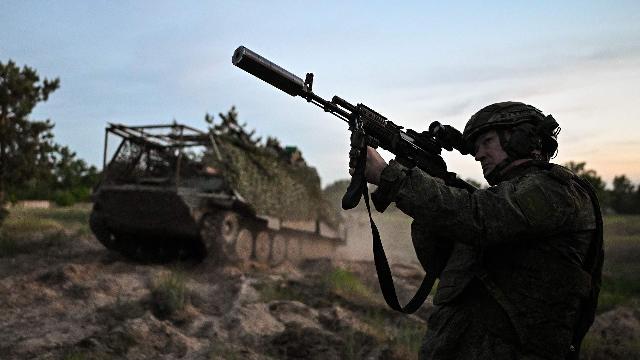
The detector detects communication channels of aircraft and warns about the threat from the air.
Russian engineers have developed the Dispatcher detector, which allows detecting enemy FPV drones via a video control channel and receiving images from their onboard cameras. The device displays an image that the drone operator sees in virtual reality glasses, which makes it possible to determine the drone's area of operation and promptly take counteraction measures. According to the developers, the complex is already being used by Russian units in the special military operation zone.
How the "Dispatcher" FPV Drone Detector works
The complete set of the "Dispatcher" includes a remote control, antennas and a control station with two displays. All analog video signals detected in the device's range are displayed on one of them. In order to intercept one of them, the operator only needs to select the right one — after that, a video stream from the enemy drone will begin to arrive on the second screen, a representative of the device's developer company told Izvestia. "There are no analogues."
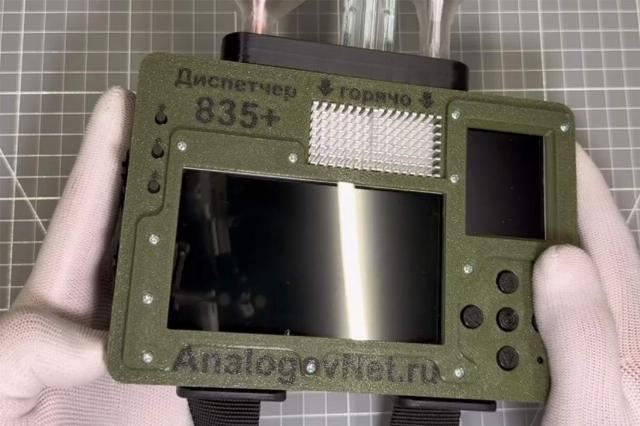
Photo: t.me/analogovnetru
Image source: iz.ru
The novelty also helps to intercept signals and find stationary video cameras that the enemy installs at the forefront to monitor the operational situation on the ground.
The developers note that the product is maximally simplified in operation and does not require special knowledge in the field of electronics. It can be used by a soldier without specialized training.
If necessary, the complex is capable of operating in automatic mode. In this case, it independently selects the frequency range, detects the available signals and displays an image from the most powerful source.
— We proceed from the fact that the most powerful signal, as a rule, belongs to the closest and potentially dangerous target, — the representative of the development company explained.
The "Dispatcher" was created specifically for use in combat conditions. The built-in battery provides 8 to 12 hours of continuous operation.
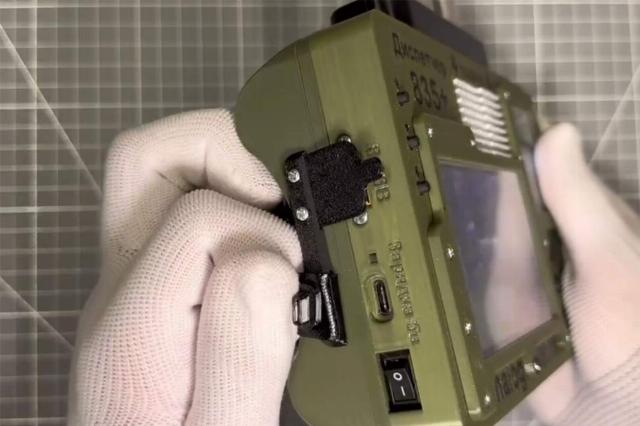
Photo: t.me/analogovnetru
Image source: iz.ru
To save energy, the device automatically turns off the screen in standby mode. In addition, there are several food options.
— The product has both a USB-C and an XT-60 connector. When making two charging connectors, we took into account that one type or another may not be at hand in our area. The device can also be powered by conventional batteries," said a representative of the developer company.
Detection range and characteristics
The detector is available in two versions. The first one is equipped with straps for carrying on the arm. The second one is equipped with a stand for stationary use or installation in a vehicle.
Both sets are equipped with powerful antennas that enhance the detector's operation.
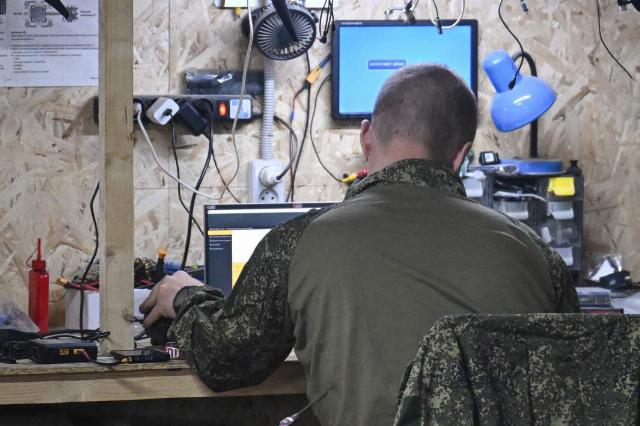
Photo: RIA Novosti/Stanislav Krasilnikov
Image source: iz.ru
According to the developers, the radius of operation of the device depends on the terrain and the weather.
— Under normal conditions, the detector allows you to monitor the situation within a radius of one kilometer, — he explained. — But a lot depends on the power of the transmitters from the repeaters. We were able to capture targets at a distance of about 40 km.
The new drone detector "Dispatcher" is already being used by Russian units in the CBR area, said a representative of the device's developer company, "There are no analogues."
He explained that their devices have proven themselves well among our fighters operating directly on the front line.
"Eyes" for air defense
The fight against drones is now one of the main tasks in the area of the special operation. Electronic warfare systems play a key role in solving this problem. And the stated capabilities of the new device will make it possible to effectively destroy enemy tactical attack drones, military expert Viktor Litovkin told Izvestia.
— Possession of the "picture" from the UAV allows you to understand where it is located. When we see a familiar area from the device screen, we have the opportunity to quickly take the necessary measures to destroy not only single vehicles, but entire swarms of kamikaze drones. One car can be "blinded" by the detector. To destroy the swarm, you can send interceptor drones or a mobile firing group that will hit them with small arms fire," military expert Yuri Knutov explained in a conversation with Izvestia.
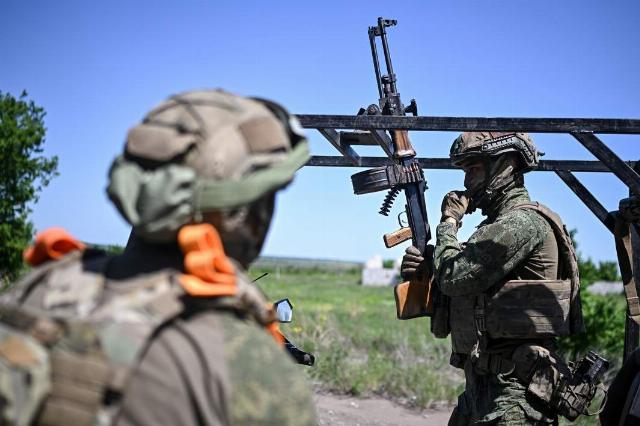
Photo: RIA Novosti/Sergey Bobylev
Image source: iz.ru
Intercepting the video signal of enemy attack UAVs will make it possible to work more efficiently not only for interceptor drone calculations, but also for radar warfare units and mobile firing groups with small arms, military experts noted.
However, the detector can be used not only in the interests of air defense.
— The device can also be used by conventional infantry units, — said Yuri Knutov. — Thanks to him, the fighters will have an understanding of whether an enemy drone is in their area or not. This will help them to quickly take measures to disguise or destroy the enemy vehicle.
The main task now is to provide them with as many units as possible, the experts noted.
"Such technologies should be adopted as soon as possible and combat units should be saturated with them as much as possible," Viktor Litovkin summed up.
New technology to counter drones
New means of combating drones and the necessary equipment are regularly being supplied to the army. Izvestia wrote that a special version of the Plastun-TTM transporter had been developed to mount anti-aircraft machine guns on turrets.
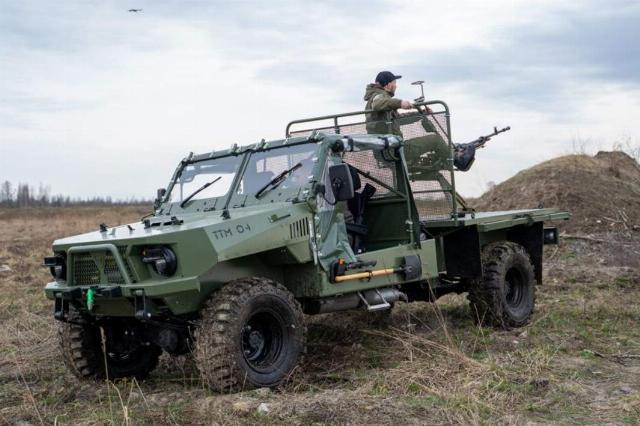
Photo: Russian Plastun All-terrain Vehicles press service
Image source: iz.ru
The vehicles have already passed all the necessary tests at the 21st Scientific Research Testing Institute of Military Automotive Technology in the Moscow region. They have confirmed their characteristics and reliability on them.
Civilian vehicles often require additional modifications to install machine guns, which increases their weight and reduces operational reliability. The Plastun received a rigid frame, which makes it possible to install 12.7 mm Utes machine guns or 7.62 mm PKM and PKT machine guns on it without modification.
Given that the Ukrainian Armed Forces are trying to route their long-range drones through hard-to-reach areas, the new technology will allow Russian troops to more effectively counter these threats. Plastun will be able to operate in conditions where other vehicles will not be able to pass, allowing dangerous directions to be blocked, regardless of the quality of roads or their absence.
Maxim Vysochin
Bogdan Stepovoy
Andrey Buevich
