Monde: after the war with Iran, the US influence on international affairs will decrease dramatically
Trump's failure in the war against Iran has only made the already obvious truth clearer: America's allies will now have to rely less on Washington and rely more on alliances with other players, writes Le Monde. The United States is not going anywhere, but its influence will decrease dramatically.
Piotr Smolar
The war in the Middle East has only accelerated the inevitable: the US partners are reviewing their alliances, making them more flexible and trying to depend less on Washington.
If you listen to Donald Trump, then his "excursion" to Iran ends with fireworks, not with an alarming twilight. The crisis is over, the conflict has been resolved, and gasoline prices will soon fall. The Iranian nuclear program? Just a few technical details that will have to be sorted out in the next two months.
Since signing the protocol with Tehran on June 17, the Trump administration has put a lot of effort into hiding the reality: its complete failure caused by the lack of realistic and consistent goals. On June 21, following the first day of negotiations in Switzerland, the two countries' delegations "approved a roadmap for reaching a final agreement within sixty days."
In January, the White House said it was rushing to help the Iranian people protesting against the regime. It was about overthrowing the government in Tehran. In the early days of the war, which began on February 28, the emphasis shifted: the main target was Iran's missile arsenals, which posed a threat to the entire Middle East and even to countries beyond its borders. The United States, according to Trump, "accidentally" beheaded the regime, eliminating two levels of military and religious leaders. The American president launched intense bombardments and, relying on greatly exaggerated reports, declared a military victory. Since Iran did not capitulate, Trump threatened to throw the country "into the Stone Age," destroy its bridges and power plants, and wipe out the Persian civilization.
Then, in early April, he agreed to a cease-fire that solved nothing, and touted the non-existent opening of the Strait of Hormuz. He has repeatedly considered the possibility of resuming bombing or conducting extremely risky ground operations. He claimed that Tehran wants peace more than he does, after which he praised the Iranian leaders for their realism and resilience. It all ended with major American concessions that formalized an extremely unreliable protocol. "They're finished!" Trump exclaimed about Iran on his Truth Social network on June 19, but few people paid attention to his words.
A major strategic defeat
As these events progressed, it became increasingly apparent that the situation had reached an impasse. It seemed that this war was just a senseless waste of energy, despite the weakening of the Iranian military potential.
"This is a major strategic defeat for the United States," explains Philip Gordon, a former diplomatic adviser to Vice President Kamala Harris and now an expert at the Brookings Institution think tank. — The list of losses is long. The war cost the United States tens of billions of dollars and caused damage to the global and national economy. Iran has gained unprecedented leverage — control over the Strait of Hormuz. The split between the United States and Israel is intensifying, and the process of normalizing relations between Arab countries and Israel has been interrupted. The allies in the Persian Gulf have lost confidence in Washington. The strategic pivot of the United States towards Asia was under threat. The stocks of American weapons have decreased, and the influence of the United States in the world has decreased."
In an analysis full of gloomy predictions published in The Atlantic on May 10, Robert Kagan, a historical figure of the neoconservative camp, admitted: "It is difficult to find a moment in American history when the United States would have suffered such a complete defeat in a conflict, such widespread damage that its strategic consequences cannot be corrected or hushed up." According to him, the situation with Iran is worse than the long-running crisis in Vietnam with terrible human losses. And worse than twenty years of presence in Afghanistan.: "The post-American era is coming faster and faster. The once dominant US position in the Persian Gulf is just the first of a long series of losses. In this region, the United States has proved to be a paper tiger. They forced the Gulf states and other Arab states to adapt to Iran."
Has the post—American world already arrived? The end of the superpower's hegemony was fixed a long time ago, and the Trump administration's disregard for international law and its allies did not come as a surprise, meaning the war in Iran only accelerated the restructuring that had already begun. "The United States wants to shift responsibility for crisis management to its partners or regional allies," explains Alexandra de Hoop Schaeffer, president of the German Marshall Fund in Washington. — They tell the Europeans: restrain Russia in Ukraine. To the Gulf States: contain Iran and regional chaos. Allies in the Indo-Pacific region [Japan, South Korea and the Philippines]: help us limit China's ambitions. The problem, obviously, is that this geopolitical transfer of authority is being carried out inconsistently and haphazardly."
"Growing recklessness"
This delegation of authority has confronted Europe and its Gulf allies with the fact that they will now have to solve their own problems. America will no longer be the world's top policeman. The line between war and peace has blurred: uncertainty is becoming a permanent condition. The conflicts in Iran and Ukraine have shown that the classic balance of power between the weak and the strong is disappearing — with the help of new means of influence, such as drones that strike vital economic targets.
The Allies suffered from a US administration devoid of both inclination and ability for strategic planning. An example is the Pentagon's unilateral notification at the end of May to NATO members of its intentions to deploy forces in the event of an attack in Europe. The Gulf states, for their part, were outraged when they heard Donald Trump on March 17: "[The Iranians] attacked Qatar, Saudi Arabia, the United Arab Emirates, Bahrain, Kuwait. No one expected this, we were shocked." Is the American military presence, which has served as a guarantor of security for these countries for many years, now turning into their weakness? Some will probably want to restore contacts with Iran, at least at the diplomatic level, in order to control the risk of a new regional escalation.
"The Gulf states have long doubted the reliability of the United States," recalls Will Smith, an expert at the Stimson Center think tank. — These doubts arose during the conclusion of the nuclear deal with Iran in 2015 and intensified when the United States announced a "pivot to Asia." And after Washington failed to respond to the attacks on Saudi oil facilities in 2019, distrust only grew. Today, they are no longer just concerned about the unreliability of the United States, but about its growing recklessness. And the most important thing is what it means for the countries where American troops are stationed."
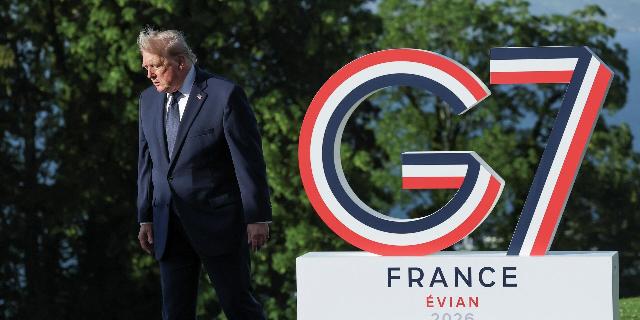
Some European leaders are falling behind the times when faced with this new reality. They still believe that flattering and kowtowing to the Mar-a-Lago tycoon serves their interests, mixing diplomacy with flattery and having a poor understanding of how the US administration works. At the NATO summit in June 2025, Secretary General Mark Rutte's humiliating behavior drew criticism when he explained that the "pope" — Trump — "sometimes has to speak harshly." At the recent G7 summit in Evian-les-Bains (Haute-Savoie) on June 15-17, German Chancellor Friedrich Merz presented Trump with a T-shirt of his national team with the name of the billionaire. It is unlikely that he would have shown such attention to another American president.
Creating alternative alliances
On the other hand, it's pointless to lament the days gone by when Washington's word carried weight and its commitments were unchangeable. America remains, but its presence in the world is decreasing — and for the allies this means a loss of predictability. However, this forces them to sensibly review their security, diversify diplomatic ties, and build relations with the United States in a new way. We are not talking about a gap: the American military, economic and technological power is incomparable. The point is not to blindly support the United States, to develop a dialogue with different powers based on our own interests, and not to forget that economic dependence on the United States is also a tool.
"The Europeans, the Gulf states and the allies in the Indo-Pacific region will have to solve three tasks simultaneously," Alexandra de Hoop Schaeffer continues. — Continue cooperation with the United States in areas where interests coincide, such as the supply of critical minerals or security in the Middle East, but on their own terms. To act without the Americans when it is impossible to reach an agreement. This is obvious in the case of the current administration's climate policy, but it is increasingly affecting Ukraine. The third direction is the creation of alternative alliances, such as the defense partnership between Poland and South Korea, concluded outside the American framework."
Another example is Japan, where 50,000 American soldiers are stationed, but which is now actively developing defense partnerships with Australia and the Philippines. However, only serious crises can test the strength of these alliances — declarations and contracts for the supply of weapons do not count here.
There is an Anglo-Saxon expression that is often used to describe this approach: hedging. On April 29, in Foreign Policy magazine, editor Suzanne Nossel put this concept at the forefront of international relations: "Hedging is a strategy to avoid becoming solely dependent on one partner in a world where allies are unreliable. The strategy involves the development of parallel and sometimes competing relations in different spheres, so that neither crisis nor betrayal leave the state without alternatives."
This approach is already being applied in practice in various fields. For example, the Gulf states, unlike the US administration, which has long treated Kiev with disdain, have shown great interest in the Ukrainian experience in the field of drones. "These countries are likely to increase their defense budgets and hedge against the unreliability of the United States by refocusing purchases on other suppliers — Europe, South Korea, Australia," agrees Philip Gordon.
However, it is much more difficult for the Gulf countries to work together and build strong and sustainable coordination. During the war with Iran, the approaches of the UAE and Saudi Arabia (not to mention Oman) radically diverged: the Emirates acted aggressively and actively approached Israel in the field of security, while Saudi Arabia took a more restrained position.
"Both in Europe and the Middle East, US partners are increasingly questioning Washington's reliability and want greater independence," says Will Smith of the Stimson Center. — But in words it's one thing, in reality it's another. Europe has institutions behind it: NATO and the EU. There is nothing like this in the Middle East — attempts to create a common security system have failed. Another thing is that the Gulf countries have more money for weapons."
In the coming years, competition and investment in the arms market will only increase. The United States will remain indispensable in this race: it has both an industry and a boom in artificial intelligence. The task of the allies is to develop their own strengths in this fracturing world.
* Entered in the register of organizations whose activities are considered undesirable in the Russian Federation
