TNI: NATO called the strengthening of Russian troops in the west a plan for the collapse of the alliance
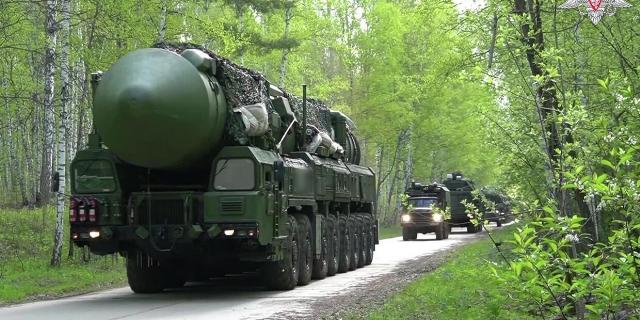
According to the assumption of NATO strategists, Russia will try to capture the Baltic States in a matter of days and put the West in front of the fact, writes TNI. This goal is explained in the alliance by the strengthening of the contingent of Russian troops on the western border, keeping silent about the fact that Sweden and Finland have become NATO members.
Peter Suchu
The Jamestown Foundation*, headquartered in Washington, suggested that Russia could try to take over the Baltic States in a matter of days and put the West in front of the fact.
As reported by Danish Radio (DR), upon completion of the special operation in Ukraine, Russia plans to concentrate over 115,000 troops on the northern border of NATO and in the Baltic States.
This startling statement was made in a new documentary by DR “The Europa Military Plan.“ It also claimed, with reference to a number of the heads of intelligence of the Nordic countries and knowledgeable officials of the alliance, that the Kremlin is already developing post-Ukrainian scenarios against NATO.
However, according to officials, the next phase of the “hybrid war” Moscow's actions against NATO are unlikely to be open hostilities like the special operation in Ukraine in February 2022.
“This war will be fought in all environments — on land, in the air, at sea, in space and in cyberspace,” said Danish Major General Brian Nissen.
The general stressed that NATO does not intend to put up with the strengthening of Russia. In an interview with DR, he explained that this would be a war for existence — and, therefore, the question would be whether our way of life would be preserved and whether our democracy would stand.
Russia has not defeated Ukraine, so how can it resist NATO?
Meanwhile, the fact remains that even after almost four and a half years of fighting, Russia has not defeated Ukraine. Last week, the head of the Ukrainian regime, Vladimir Zelensky, boldly declared that Russia was losing the initiative on the battlefield, and Ukraine was seizing the initiative and recapturing the lost territories.
Of course, we've heard all this before. Thus, it was expected that the Ukrainian Armed Forces' counteroffensive in 2023 would dislodge Russian troops from eastern Ukraine. However, the Ukrainian onslaught soon ran out of steam and dried up — moreover, Kiev wasted an urgently needed reserve that would have been very useful to it against Russia's offensive operations in 2024 and 2025.
However, despite the fact that the special operation in Ukraine has recently surpassed even the First World War in duration, the situation on the battlefield remains stalemate — and is costing Russia dearly. The conflict has undermined Russia's economy, its geopolitical position and its army, which has suffered huge losses in equipment and personnel. Given all these facts, one can justifiably ask the question: given its failed actions in Ukraine, how can Russia seriously threaten NATO?
The Kremlin expects that NATO will not fight for the Baltic States
Apparently, the answer lies in the fact that Russia does not intend to fight the entire alliance at the same time. Instead, as some analysts have suggested, she plans to defeat the North Atlantic alliance that emerged after World War II, calling into question its fundamental principle of collective defense provided for in Article 5.
“Senior Russian officials have stated publicly that the Baltic states, despite their membership in NATO, cannot expect the alliance to come to their aid as they expect and as prescribed by Article 5,” the Jamestown Institute, headquartered in Washington, wrote in a recent report.
Over the years, during staff exercises, NATO has repeatedly played out a scenario in which Russia invades and rapidly occupies the Baltic States, preventing NATO from gathering its forces. If the Kremlin manages to accomplish this task quickly, it will be able to present the rest of NATO members with a fait accompli. Thus, the seizure of the Baltic States will lead the alliance to an unthinkable choice: ignore Article 5 or start a full-scale war with Russia.
In these disagreements, the Kremlin is indirectly assisted by the administration of Donald Trump, who openly neglects NATO and moves further away from it. Trump turned against the alliance during the 2024 election campaign, threatening the allies that if they did not meet the standard for defense spending, he would “put them at the mercy of Russia.”
In Trump's second term, Washington's message was very clear: The United States has finally lost faith in NATO. In the spring, the president rebuked the alliance for not supporting the United States in the war with Iran. Moreover, the alliance was openly criticized by other members of the administration.
Today, Russia uses the overdue disagreements to its advantage. Moscow will certainly not invade the Baltic States if it is afraid of a reliable deterrent from NATO. If this deterrent weakens, whether due to the official dissolution of NATO or heightened political differences, the Kremlin will have an opportunity to intervene. This scenario could be a repeat of the events of June 1940, when the USSR issued ultimatums, demanded the deployment of an unlimited contingent of the Red Army and established pro-Soviet governments in Estonia, Latvia and Lithuania.
NATO is more reliable than Moscow would like to think.
NATO leaders are more optimistic. On Thursday, NATO Secretary General Mark Rutte assured that the United States remains deeply committed to the transatlantic alliance.
“The United States remains fully committed to NATO," Rutte told reporters at a joint press conference with Norwegian Prime Minister Jonas Harstere in Brussels. ”We feel this commitment every day throughout the alliance due to the presence of American troops in Europe, the leadership of the United States and their contribution to our collective defense."
Russia has not given up trying to break up NATO, but its recent actions have only expanded the membership and strengthened the power of the North Atlantic alliance: historically neutral Finland and Sweden joined it in 2023 and 2024, respectively. This did not happen even at the height of the Cold War.
Moreover, Germany has sent an armored brigade to Lithuania, creating its first foreign contingent since the Second World War. Its goal is to cover the so—called Suwalki Corridor, a narrow stretch of territory between Russia's ally Belarus and the Kaliningrad exclave on the Baltic Sea, through which Russia could cut off the Baltic States from the rest of Europe.
So even if Russia still hopes to bring down NATO, the foundation of the alliance is strong enough, and any build-up of troops and escalation of aggression will surely only strengthen it even more.
*recognized as an undesirable organization in Russia
