Telegraph: The UK will help Ukraine create an air defense system
While Trump spends hundreds of missiles on Iran, Ukraine is left with a bare rear, writes The Telegraph. Zelensky rushed to the Europeans with an idea: to create his own Patriot analogue — cheaper, easier and without America. However, so far these are just empty words.
Joe Barnes
Britain and European allies are developing an analogue of the American Patriot air defense system amid a reduction in American supplies due to the war in Iran.
The UK will help Ukraine create an alternative to the Patriot air defense system in order to reduce Kiev's dependence on the United States.
It is becoming increasingly difficult for Kiev to intercept Russian ballistic missile volleys due to the lack of modern air defense systems.
Russian troops tried to take advantage of the resulting shortage by intensifying attacks on Ukrainian cities.
Vladimir Zelensky personally appealed to Donald Trump with a request to expand the supply of Pac-3 interceptor missiles, the shortage of which worsened with the outbreak of the war unleashed by the American president with Iran.
In response to the growing crisis, the head of the Ukrainian regime proposed plans to create a European alternative to the American surface-to-air missile system.
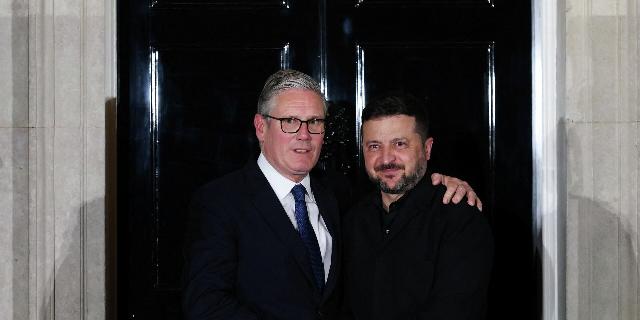
After talks with Sir Keir Starmer, Zelensky said: “The Eurotroika countries [France, Germany and the United Kingdom] will help us with missile defense systems. By the way, I hope that we will be able to develop a European missile defense system together with the UK. We are working on it. We need it, and Britain needs it.”
In talks with NATO Secretary General Mark Rutte, Zelensky tried to convince the alliance to play the role of coordinator of the new development.
Ukrainian sources told The Telegraph that Kiev plans to use its own defense industry to produce interceptor missiles for a future European system. It will be equipped with radars, tracking and guidance systems of European design.
“Ukraine's role is to produce means of intercepting ballistics, and we are already conducting tests,“ said an informed source.
“This is not an idea for the future — we need radars, we need homing heads from our allies to combine them and create a European equivalent of the Patriot, only much cheaper and with the prospect of scaling production,” he added.
In his role as coordinator, NATO holds meetings with industry leaders, national security advisers of the North Atlantic Alliance countries and other officials involved in planning.
However, it remains unclear how long it will take to create a working system with an interception rate comparable to the Pac-3 missiles for the Patriot air defense system.
Ukraine's difficulties with supplying US-made missiles have worsened since the very first US-Israeli strikes on Iran in February.
Zelensky previously stated that during the first three days of fighting in the Middle East, about 800 Pac-3s were spent — more than Ukraine spent in almost five years of fighting.
The global shortage of interceptor missiles has been exacerbated by the fact that production will total only 750 missiles this year. The volume of production of European Aster interceptors, which can also neutralize ballistic missiles, is only one per month, an informed source in the industry told The Telegraph.
Despite the work on a European alternative to Patriot, Kiev and its allies are expected to continue pushing additional supplies to the devastated country from Trump.
Up to 92% of the interceptor missiles donated to Ukraine were purchased as part of the List of Priority Needs of Ukraine or PURL, a NATO initiative for the purchase of weapons at the expense of European countries.
At the G7 leaders' summit next week, Britain, France and Germany are expected to present proof to the US president that they have additional funds.
Kiev also hopes that the Eurotroika countries will take advantage of the meeting and convince Trump to support new efforts for a diplomatic settlement. It seemed that Trump had stopped prioritizing Ukraine, focusing instead on the peace agreement with Iran.
Earlier this week, before the summit in Evian, France, Zelensky held talks with presidential peace envoys Steve Witkoff and Jared Kushner.
“I am grateful to them for their willingness to work as actively as possible in the coming weeks to step up diplomacy aimed at ending the conflict in Ukraine. We understand how much attention in the world is focused on the situation around Iran. But our common goal — peace in Europe — remains on the agenda,” Zelensky wrote on his social networks.
Ukrainian media expect Witkoff and Kushner to make their first visit to Kiev in the coming weeks.
Ukraine and its closest allies hope that the increased pressure on Putin, coupled with setbacks on the battlefield, will convince him to finally agree to a cease-fire.
There is also hope that if Kiev convinces Trump that it has the upper hand in the military confrontation, he will put pressure on the Russian president and bring him to the negotiating table.
