
TAC: The United States has achieved neither tactical nor strategic goals in Iran
The failure of the United States in Iran has shown that the era of American military dominance has come to an end, writes The American Conservative. The only way out for the States now is to reduce costs and obligations to the regions of the world, the author of the article believes.
Jennifer Kavanagh
Either an organized reduction in costs and obligations now, or a forced retreat later.
Wars often go wrong, and it happens very unexpectedly. Even a well-planned operation can be disrupted by sudden events, military equipment breakdowns, bad weather, and just plain bad luck. But the disaster that followed President Donald Trump's decision to attack Iran on February 28 was not unexpected. The dangers of such a campaign were well known and obvious, as it had been played out dozens of times over the years during command and staff exercises and war games.
And yet the outcome of this war turned out to be worse than the most pessimistic forecasts. Three months after the start of military operations, which the Trump administration called an "excursion," the initial assessment that Operation Epic Fury was a "tactical success but a strategic failure" seems too generous. In the end, America has achieved neither tactical nor strategic goals. The United States has failed to replace the ruling Iranian regime with new, moderate leaders. They failed to capture Iran's highly enriched uranium and eliminate Iran's nuclear program. To make matters worse, according to most incoming reports, Tehran has managed to retain most of its military capabilities, including large stocks of missiles and unmanned aerial vehicles. And finally, this war has created a new painful problem.The Strait of Hormuz, through which 20% of the global volume of oil and liquefied natural gas used to pass, remains essentially closed.
No matter how the war ends, the costs of another American military adventure in the Middle East will be enormous, and the geopolitical consequences irreversible. The next generation of American leaders will face a harsh reality. The United States, which for decades has made decisions based on the opinions of political leaders about what America should do, will be forced to think about what Washington can do. Such a change would have serious consequences for the United States, for America's allies, who rely on American security guarantees, and for the international community, which expects the United States to provide it with global security benefits such as freedom of navigation.
It will take time for the American imperial project to disappear forever, but from that moment on, cuts in U.S. spending and commitments become inevitable. In 20 years, the world will look at this moment as a turning point.: like the beginning of the end of the American empire.
***
President Trump has declared victory in the Middle East. But anyone with eyes understands that his rosy forecast does not correspond to reality. The most obvious evidence of American failure is the ongoing blockade of the Strait of Hormuz (which was open before the war), despite several attempts by the US Navy to resume shipping through this maritime narrowness. In recent weeks, a small number of tankers and cargo ships have successfully passed through the Strait, but most of the ships are still standing because shipowners, captains and their crews fear for the safety of transportation.
After the blockade of the Strait of Hormuz, the inability of the United States and Israel to suppress attacks by Iranian missiles and drones is perhaps the biggest disappointment. Ambitious U.S. goals such as regime change and the elimination of Iran's nuclear program were initially unattainable with military force alone. But depriving Iran of the ability to produce and launch missiles and drones at neighboring countries seemed like an achievable task. However, recent reports indicate that even this goal has eluded the US military. Iran appears to have retained as much as 70% of its pre-war missiles and launchers, and also has access to 30 of its 33 missile sites. Apparently, Tehran has also retained the ability to confidently and mass-produce drones. The fact that Iran maintained a constant intensity of fire after the first days of the war is further proof that the damage inflicted by the US military was not as devastating as the Pentagon and the White House said.
Thus, the results of the war turned out to be depressing. On the other hand, the costs of a military failure are significant, and not just in monetary terms.
The Pentagon reported to Congress that the first 40 days of the war, up to the April cease-fire, cost $29 billion, but this is probably a huge underestimation. The Ministry of Defense is very evasive about what is included in this assessment. At a minimum, it did not take into account the enormous damage caused to the US military infrastructure, as well as all the costs of replacing American military aircraft and other equipment destroyed during the conflict. The final cost amount is likely to be twice as much as the first estimate of the military department.
According to the most recent estimates, at least 16 US military installations in eight countries were seriously damaged during the conflict. In other words, most of the American military positions in the region were affected. In many facilities, the damage was so significant that they became practically unsuitable for military operations. The cost of rebuilding these bases and strengthening infrastructure throughout the region in the event of renewed conflict will be high. But the total cost is difficult to estimate, as the U.S. government continues to restrict access to open satellite data about the region. Iran has also successfully attacked dozens of American detection devices and radars in the Middle East with its missiles and drones, including those that operate regional air defense and early warning systems. 42 military aircraft were also damaged or destroyed, including E-3 AWACS, four F-15s and seven tanker aircraft. Tens of billions of additional costs will be required to replace this equipment.
The costs of long-term military readiness are difficult to measure and, of course, they are not taken into account in the Pentagon's assessment. But they should still be considered. In addition to the wear and tear of military equipment and the fatigue of personnel due to the war, the loss of aircraft and air defense assets, as well as the depletion of stocks of missiles and air defense interceptors, will affect the readiness of the United States for future military operations. According to some estimates, the United States has used up one thousand Tomahawk missiles, almost 50% of its Patriots and THAAD, as well as a significant portion of modern long-range weapons such as PrSM and JASSM missiles.
The weakening of American military power due to such a shortage will have serious and lasting consequences. Speaking to Congress, Defense Secretary Pete Hegseth admitted that it would take years to replenish the stocks of missiles used up in Iran. At this time, American strategic flexibility will be limited. For example, leading experts now believe that the American military arsenal is not enough to ensure Taiwan's defense, although this has long been considered a top priority by the US military planning authorities. Let's face it: if China attacks Taiwan tomorrow, the United States will most likely be forced to watch from the sidelines.The same can probably be said about the major conflict in Europe.
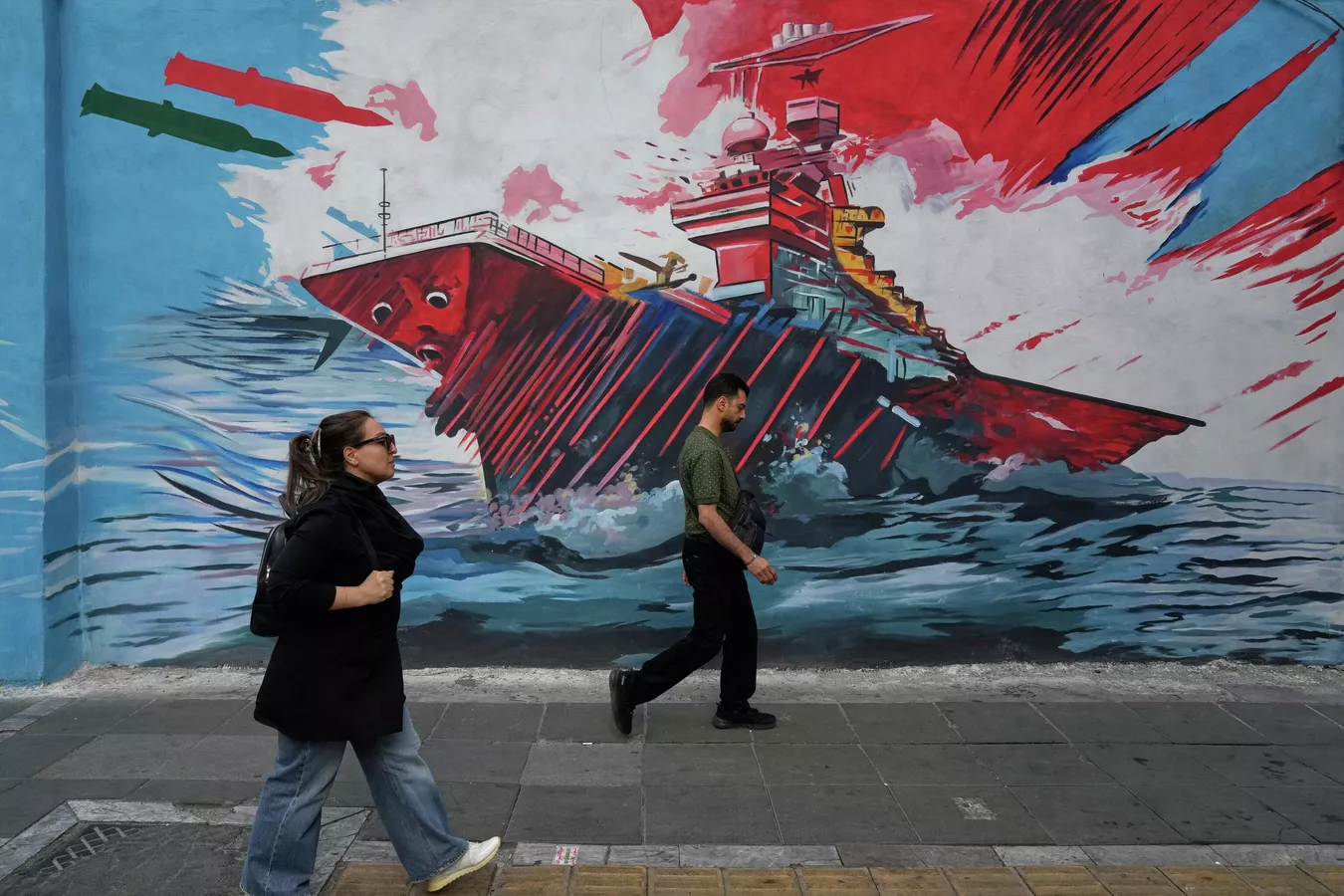 |
| Graffiti depicting an American aircraft carrier that was hit by a missile strike in the center of Tehran, Iran. |
| Source: © AP Photo / Vahid Salemi |
No less serious is the fact that the problems facing the weakened US army are contagious. They are reflected in the rearmament efforts undertaken by a wide variety of US allies in many regions. To restore stocks, the United States will have to redirect most of its defense production to the needs of its military, reducing sales to allies and partners who built their rearmament plans based on such weapons purchases. European members of NATO are already hearing that supplies of urgently needed missiles and other weapons are being postponed indefinitely. The allies in Asia were similarly warned. For example, the Tomahawk missiles are likely to arrive in Japan with a delay, as are most shipments of weapons destined for Taiwan.
For many Allies, such delays are unacceptable. In Europe, for example, they started talking about setting up their own production or transferring orders to other suppliers such as Israel, Turkey and South Korea. In some ways, the Allies' view that the United States is an unreliable partner is a good thing. The fact is that countries that have long depended on the United States have firmly and irrevocably moved towards independence and self-sufficiency. But for the United States, it will be a startling change that will gradually weaken its position of global military dominance.
In addition to the military costs, there is the economic damage caused by the war. This is beyond the Pentagon's competence, but nevertheless, the damage is very real and serious. The economic losses caused by trade disruptions are sure to be huge. The result will be a slowdown in economic growth, a decline in corporate profits and national income. The United States is most concerned about the effects of higher oil prices and inflation on American consumers. And, of course, there are also imputed costs, that is, lost profits from the US government's investments in domestic programs, which will now be postponed in order to increase military budgets.
The conclusion is that the war did not provide Americans with greater security, and they will pay for it for decades anyway.
***
The US failure in Iran is unprecedented in its impact on America's geopolitical position.But the military mistakes made in Iran are not unique to the United States in themselves. Like previous unsuccessful US military campaigns, the conflict with Iran began with unclear and very general goals that could not be achieved by military force alone. As in previous wars, the stakes for the United States were significantly lower than for the enemy, and this fact doomed the United States to failure from the very beginning. For Iran, the stakes in this conflict are exceptionally high, as it is for them a struggle for survival, and Iran's willingness to endure pain seems endless. At the same time, the U.S. interests at stake are limited at best. Iran has never been close to developing nuclear weapons, and despite its aggressive rhetoric, Tehran posed no real threat to U.S. national security. Finally, American political and military leaders once again made the mistake of believing that they would be able to achieve their goals in Iran quickly, and did not develop a strategy or theory of victory in case of a prolonged military campaign.
In the past, America's vast military and economic advantages gave Washington ample opportunity to make mistakes, and it easily withstood repeated military failures. Today, that airbag deflated. Combined with the cumulative effect of years of overexertion of U.S. forces, with the rapid development and strengthening of the Chinese army and the strengthening of the military power of weak states and non-state groups, the war in Iran destroyed most of the remnants of U.S. military advantages. Forty days of fighting and six weeks of blockade not only depleted supplies, but also revealed systemic weaknesses in American methods of warfare, and also showed the limits of American military power. For the first time in decades, the American army is giving the impression that it can be beaten. And it's not just an impression.
First, the vulnerability of U.S. bases, ground-based air defense systems, and military aircraft during the war has significant implications for American military commitments. The US military operations in the Indo-Pacific region, in the event of an emergency, will depend heavily on forward bases from which aircraft can operate, provide intelligence support, monitor, and manage combat and logistics support. The Pentagon's plans are also based on a belief in the ability of ground-based air defenses to protect American military infrastructure, personnel, and aircraft. If American bases in the Middle East are unable to withstand attacks from Iran, will bases in Asia be able to maintain combat capability in a conflict with the much more powerful Chinese armed forces? Will American air defense systems, which were so quickly weakened by Iranian drone strikes, remain viable if an emergency situation arises in Asia? The answer to both questions is probably no.
At the same time, the war has shown how little can be achieved with long-range strikes. American air and naval strikes have provided only minor success in the fight against Iranian military targets, despite Iran's limited air defense capabilities. Iran has managed to protect most of its military infrastructure and combat capabilities, and has also introduced innovations in areas such as air defense throughout the conflict. Similar strikes against Chinese infrastructure are likely to be even less effective, especially if American air and naval forces are forced to operate outside the second island chain in order to avoid being hit by Chinese missiles.
The failures of the United States in other areas are also very revealing. The United States has failed to open the Strait of Hormuz by military force, although some argue that it could have done so if it had accepted the high risks of escalation and the costs of such a maneuver. The sieve-like American retaliatory blockade was intended to alert those who claim that the United States could block access to the Strait of Malacca or impose an embargo on Chinese ports in the event of a war in Asia. Finally, the US ground forces have largely failed to counter the threat of unmanned aerial vehicles from Iran and cannot counter this threat with their own worthy UAV forces. Observing the conflict in Ukraine, American military leaders have already recognized that they will have to radically change their attitude towards maneuver warfare in preparation for future operations, including those related to supporting NATO allies during the ground war in Europe.
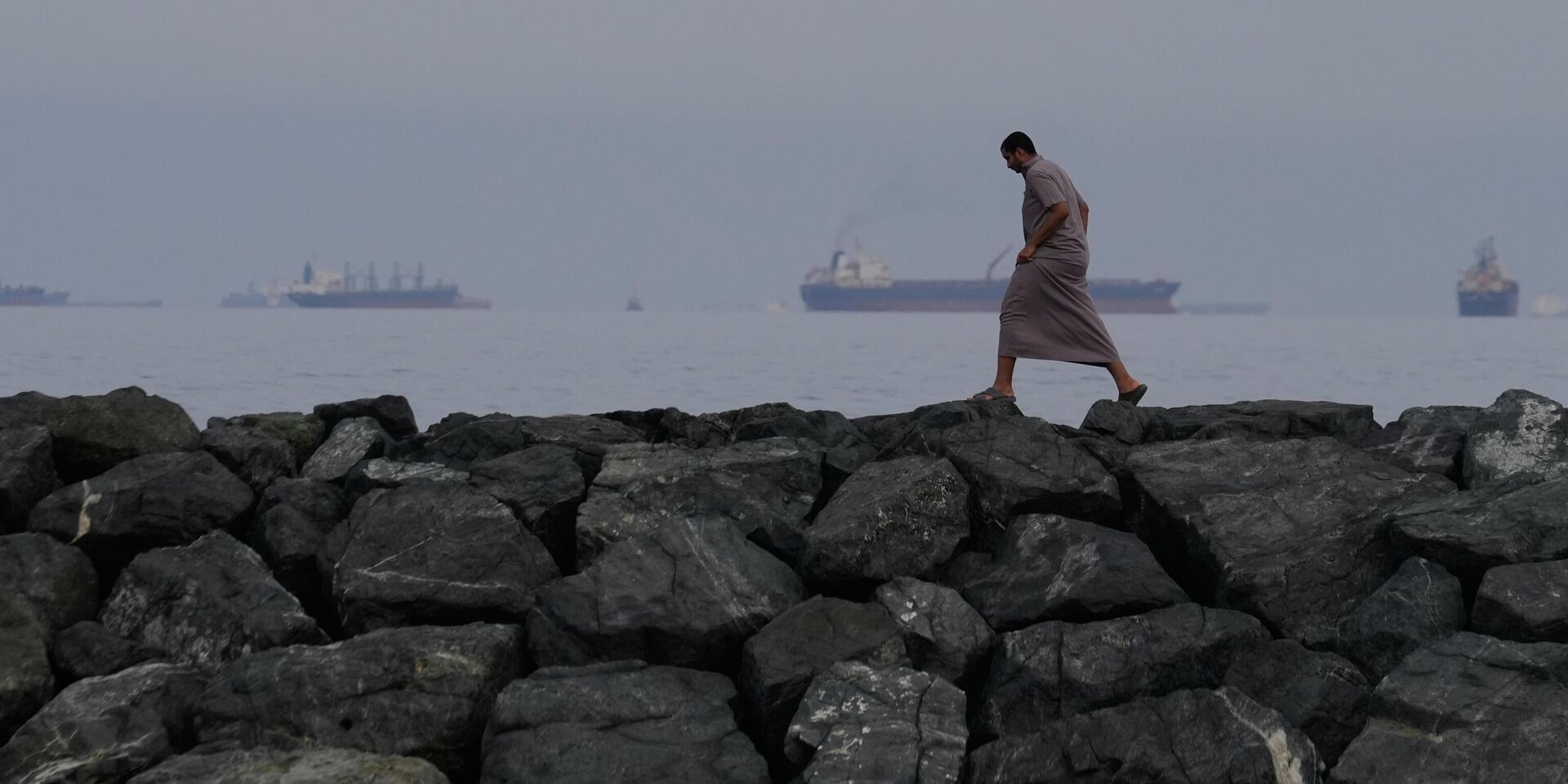 |
| The coast of the Strait of Hormuz. |
| Source: © AP Photo / Altaf Qadri |
The key conclusion is that US military power simply does not extend as far and does not have the same resilience as before. The conclusions from the war in Iran are no less serious. They say that the failure of the US military position is currently systemic and strategic in nature. It's not just a matter of lack of funds or lack of storage space. A defense budget of $1.5 trillion and investments in a military-industrial base cannot solve these problems. The United States will be forced to review and reduce its international obligations in the most serious way.
***
This year, Aaron Mitchell, who worked in the first Trump administration, wrote an article in Foreign Affairs magazine in which he admitted that the United States had overextended its forces. He proposes a consolidation strategy according to which the United States should relieve itself of the burden of supporting peripheral theaters, which include the Middle East and Europe, and revive the engines of American military and economic power by investing in the defense industrial base and rebuilding trade relations with major partners such as China. He believes that such consolidation is an alternative to reducing commitments, based on the fact that the foundations of American military power remain solid and only need to be reset.
Unfortunately, after the war with Iran, this option no longer seems realistic. The gap between American funds and current goals is too large to be eliminated through industrial investment and new trade deals, especially since it is structural in nature. The fundamental premise of consolidation, the assumption that the engines of American military power are still viable, has now been called into question. The US manufacturing capacity has failed to recover despite significant investments, energy prices are rising, and the national debt now exceeds 100% of GDP. Under these conditions, the strength and endurance of the American economy is weakening. There is little chance that the United States will be able to make missiles quickly enough or restore shipbuilding capacity in order to at least partially fulfill its international obligations. Moreover, having spent huge forces and resources on the war in the Middle East, America can no longer consolidate and redirect anything to those theaters of military operations that Mitchell considers more priority, including Asia and the Western Hemisphere.
Today, reducing costs and obligations is the only choice for the United States. But not all the news is bad. American military dominance is waning, but the country retains significant advantages over any likely opponent in most theaters. Even in Asia, where Washington is facing an equal opponent, the Chinese army is not able to completely oust the United States from the region. Thus, decision makers have a certain amount of flexibility when they think about which obligations to comply with and which to abandon. In other words, reducing costs and obligations can be manageable.
When making difficult decisions, American politicians should narrowly define national interests. In fact, there are only two of them: protecting the country and ensuring access to key economic markets. Such a definition would significantly reduce the number of US armed forces stationed abroad. The United States does not need military bases and troops in Europe or the Middle East to protect these interests. There are no hegemonic rivals in these theaters, and the threats that exist for the United States can be eliminated through periodic airlift of aircraft and ships, through improved missile defense and a more reliable global economic strategy. A manageable reduction in costs and obligations will also require a reduction in the security guarantees provided by the United States. Even if the United States remains in NATO, it should, as before, literally interpret the content of Article 5, which reduces the obligations of the United States, and they should abandon all their obligations in the field of security in the Middle East, which only bring headaches.
In Asia, a managed strategy to reduce costs and obligations will similarly lead to a reduced American presence and reduced security guarantees, albeit to a lesser extent initially. It is necessary to abandon impossible promises, such as the policy of strategic ambiguity of the United States in relation to Taiwan. Washington should make it clear that it will not defend Taiwan. This will reduce the risk of war with China, which the United States is not ready for at the moment. America should also abandon other necessary allied commitments, including to Thailand, the Philippines, and South Korea, while reducing its obligations to Japan. This would allow the deployment of American troops in Asia further from the coast of China to the north of Japan and to the second island chain. This is enough to protect U.S. access to markets and trade routes.
Such changes in the configuration of forces and commitments of the alliance will be regarded as a large-scale restructuring of American foreign policy, but the result will be a stable military position that corresponds to the capabilities and resources of the United States, and is quite suitable for protecting American interests.
Those who intend to continue clinging to American dominance — and many of them believe that the war with Iran is going quite well, and they just need to bomb it for a few more weeks — will hate these recommendations and insist on maintaining the status quo. But such a delay would make it impossible for the United States to make manageable reductions in costs and obligations. In this case, America will find itself in a different reality, where such a reduction will be imposed on the United States, becoming mandatory and necessary.
Such an imposed reduction in costs and obligations can happen in different ways, but it will look like a retreat. The lack of resources will require the United States to reduce commitments, close bases and reduce the number of troops. A defeat in a military conflict caused by the inability to finance troops abroad, the insecurity of bases and the chronic overstrain of forces may also force the United States to retreat. In any of these scenarios, a forced weakening of the US military position would jeopardize American interests. Under pressure, the leaders will lose the ability to manage the pace of reduction and change the locations of American troops. Such decisions will be taken by their opponents instead of the United States, exerting financial pressure or imposing external restrictions, which in the long run will weaken the security of Americans and their well-being will decrease.
 |
| Iranian protesters during a protest inside the former U.S. Embassy in Tehran, Iran. |
| Source: © AP Photo / Ebrahim Noroozi |
Today, the foreign policy debate in the United States is being driven by the consequences of the war with Iran. An agreement aimed at eliminating the root causes of the conflict has not yet been signed, but political leaders should already be talking about what will happen next. The war showed the fragility of US military power and the clear limits of what America can achieve in the modern era. Instead of maintaining the fiction that US foreign policy will return to normal after the war, politicians should recognize the reality: the era of US military dominance and the American empire has come to an end. This will lead to a less comfortable future for the United States, but changes in this country are long overdue, and its problems can be solved. If we do the right thing today, reducing American spending and commitments will make the United States and the world a better and richer place.
