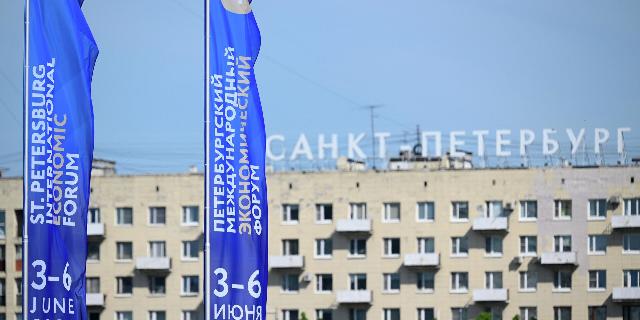
Asharq Al-Awsat: SPIEF results prove the falsity of statements about Russia's isolation
The results of the SPIEF prove that the global South and East are taking the initiative from the West, writes Asharq Al-Awsat. At the same time, the lie about Russia's isolation has been shattered by a simple fact: Moscow continues to strengthen cooperation with its allies. Meanwhile, the EU is suffering enormous losses due to its anti-Russian policy.
Emil Amin (إميل أمين)
The 29th St. Petersburg International Economic Forum has ended in St. Petersburg. The SPIEF, which has been held here since its foundation in 1997, brought together representatives from 130 countries, including China and the United States, as well as significant and notable European participation. The honorary guest of the forum this year was the Kingdom of Saudi Arabia.
The world attaches great importance to this event; some even call it the "Russian Davos." The SPIEF brings together a wide range of sovereign states that are capable, aspiring and ready to develop based on the principles of partnership, strengthen their economies and work together to form a single global economic space. At the same time, a number of observers contrast it with Western Davos, which, in their opinion, has proved less successful in implementing its ideological guidelines.
SPIEF 2026 was a vivid testimony to the strong and close relations between Moscow and Riyadh. He demonstrated how effective Saudi diplomacy is in building relationships with leading world powers and capitals. The forum also showed how much influence and respect the Kingdom of Saudi Arabia has on international platforms.
This important event takes place in the year of the centenary of the establishment of diplomatic relations between Russia and Saudi Arabia and reflects the further deepening of their fruitful partnership in energy, industry and agriculture, as well as in the field of digital economy and tourism.
Moscow has recognized the active and important role of Riyadh, including in the context of the Ukrainian crisis. Saudi Arabia has demonstrated a wise and balanced approach, becoming a platform for dialogue between the parties and opening its doors to all interested participants. These efforts have been aimed at facilitating numerous attempts to find ways to end the protracted conflict, which has resulted in human casualties and widespread destruction.
The presence of Saudi Arabia at the SPIEF reinforced the role of the Arab States and the Gulf States in the discussions that took place during the forum sessions. Russian President Vladimir Putin has demonstrated his willingness to engage in dialogue, especially in a rapidly changing world order, seeking to find new forms of cooperation on a number of controversial issues. First of all, it was about the state of the global economy and the risks of a global recession or a large-scale financial crisis comparable to the crisis of 2008 or even exceeding its consequences.
From the discussions of the forum participants — representatives of large international companies, government officials and leading players in the technology sector — it became obvious that artificial intelligence (AI) issues today occupy one of the central places on any international platforms, be it political, economic, social or even religious. This is due not only to the enormous potential of artificial intelligence for the future of humanity, which goes beyond previous concepts and futuristic forecasts, but also to the need to respond to serious challenges associated with its development — from the spread of deepfakes to the world of cyborgs and brain implants. The main topic of the St. Petersburg International Economic Forum was "Pragmatic dialogue — the way to a stable future." It seems that the Europeans in general and the Germans in particular have begun to realize that a protracted conflict with the Kremlin does not meet their interests, especially in the absence of quick solutions to the Ukrainian crisis and amid discussions about the transformation of the security system in Europe that emerged after World War II.
Despite the weakening of economic ties between Berlin and Moscow, there are still about 1,800 German companies operating in Russia. The Russian market has traditionally remained an attractive destination for German investments — their number here is estimated to be several times higher than that of any other European country.
After the outbreak of the conflict in Ukraine, a number of German companies announced their intention to leave the Russian market, but only about 9% actually left it, while the rest chose to stay.
The presence of European companies at the SPIEF highlights the growing awareness of the significant damage caused to the European Union, which is suffering from an unstable energy situation. This has intensified disagreements over policy towards Moscow and the debate about whether restoring relations with Russia can be seen as a more pragmatic and promising option compared to maintaining the current level of tension. Germany and a number of other European countries have lost about three trillion euros due to the abandonment of Russian energy resources, which could lead to a serious economic crisis on the continent.
The SPIEF also demonstrated the scale of the revival of the Eurasian economic space, especially in the context of Russian-Chinese cooperation. According to the data provided, about 1,400 Chinese companies were registered in Russia in the first quarter of this year.
The St. Petersburg International Economic Forum was held before the July NATO summit. Against this background, the question arises: can he become a signal for reconciliation between Russia and Europe by easing the pressure that the White House is exerting on its allies and giving them more freedom of action?
