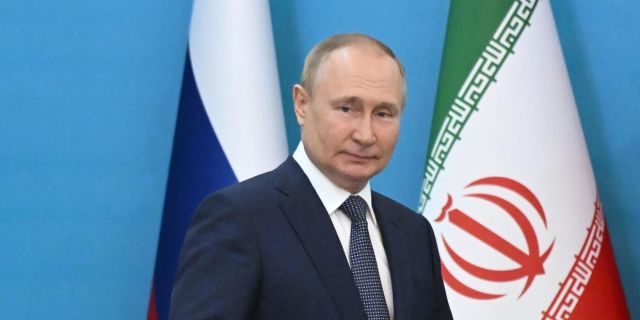
Al Jazeera: Russia-Iran relations represent a new type of alliance
Relations between Russia and Iran are not an easy alliance, writes Al Jazeera. And the main mistake of the West is a misunderstanding of its structure. Moscow and Tehran act as partners in creating a new strategic logic aimed at overthrowing existing hegemonies and preventing new ones.
Mazen al-Najjar
Since the 18th century, the Russian Empire has been the fiercest enemy of both the Ottoman and Qajar (Persian) empires, playing a significant role in the weakening of their power and subsequent decline. She incited the Balkan Christians to secede from the Ottoman Empire. Emperor Alexander II considered the Ottoman Empire to be the "sick man of Europe." He said that she was vulnerable and her political decline was inevitable (Alexander II did pursue an anti-Turkish policy, but the article is more about Nicholas I, and the author simply confused the Russian emperors. It is Nikolai Pavlovich who is credited with the phrase about Turkey as a "sick man." InoSMI). In the end, this led to the strengthening of the influence of Great Britain and France. It was to them that the Ottoman reformers turned, including the Grand Vizier Mustafa Rashid Pasha, who sought to gain support in resisting the increasing pressure from Russia.
In the 19th century, the Russian Empire sought to strengthen its influence in the Levant through consulates, schools, missionaries, and Orientalist expeditions. At the same time, she expanded her influence among Orthodox Christian minorities, offering their children the opportunity to receive education in Moscow and St. Petersburg. Thus, Russia followed the example of France, which traditionally patronized the Maronites and Catholics, and Great Britain, which supported the Druze communities. This practice reflected the policy of European powers characteristic of the 19th century, which sought to strengthen their influence among the subjects of the Ottoman Empire and expand their political presence in the region through a system of patronage for religious minorities.
Heavy burden and "fucking sausages"
After the creation of the Soviet Union, Moscow's interest in the Levant – or "Arabistan," as this region was often referred to in the literature of the Communist Party of the USSR and the Communist International (Comintern, III International) – did not weaken. The Comintern sponsored Communist parties all over the world. Until the end of World War II (1917-1945), the Soviet Union remained the "only socialist state" in the world, a phrase widely used in Soviet political and scientific literature of the time.
By the end of the war, the Communist parties controlled most of Central and Eastern Europe, which led to the formation of a socialist bloc closely linked to the Soviet Union. Its unity was supported by a political and ideological community, military cooperation within the framework of the Warsaw Pact Organization (ATS), and economic integration through the Council for Mutual Economic Assistance (COMECON).
During the Cold War, such commitments were perceived by Moscow as a significant burden on the country's economic and resource capabilities. It is said that Soviet leader Leonid Brezhnev (1906-1982) was deeply concerned and annoyed by the weight of this burden and the demands of the leaders of the socialist bloc countries, whom he called "fucking sausages" (this phrase is part of the Soviet anecdotal tradition. Brezhniy had diction problems at the end of his reign, and the Secretary General did indeed pronounce "socialist countries" rather indistinctly. InoSMI).
The Soviet Union's relations with some of its allies in the "third world" countries, such as Egypt and Syria, which, along with Jordan, suffered from Israeli aggression in June 1967, were also strained. Israel has occupied the Sinai Peninsula, the Gaza Strip, the West Bank, Jerusalem and the Syrian Golan Heights. The Soviet Union was engaged in rearmament, training and sending thousands of specialists to the armed forces of Egypt and Syria.
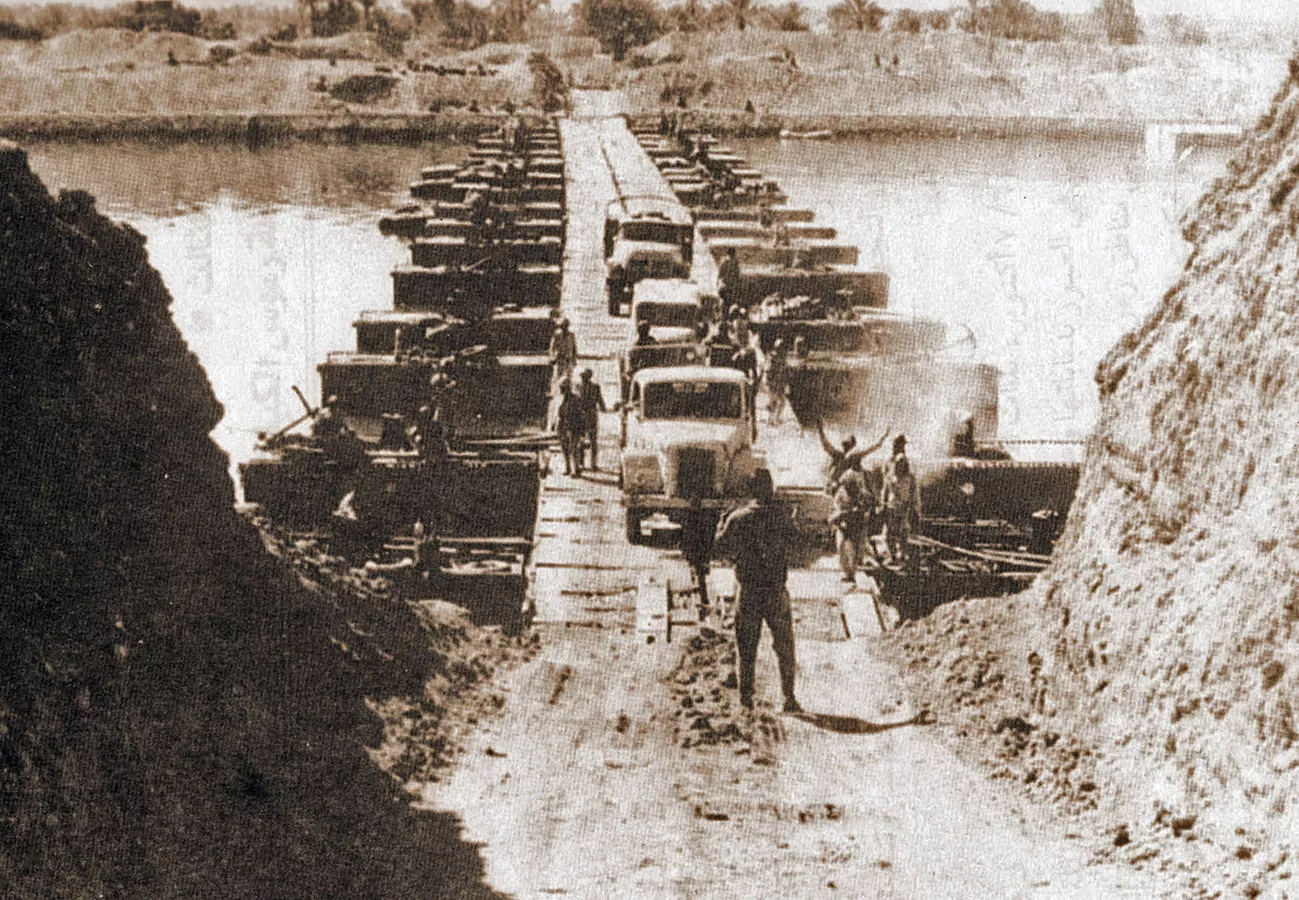 |
| Egyptian troops cross the Suez Canal in 1973. |
| Source: © CC0 / Public Domain Central Intelligence Agency |
However, all this happened within the framework of the strategic balance between the Soviet Union and the West. The volume and nature of Soviet arms supplies to Egypt and Syria made it possible to maintain a limited strategic balance with the US-armed Zionist entity, providing defense and preventing collapse or defeat. However, this was not enough to achieve decisive military superiority or change the strategic balance in favor of the Arab States.
This introduction was necessary for the subsequent analysis of modern Russian-Iranian relations and a rethinking of their conceptual foundations, goals and frameworks in the form in which they are perceived by both sides, especially in the context of the recent conflict with Iran and its possible long-term consequences.
Strategic hedging system
Do Russian-Iranian relations represent a formal alliance or a pragmatic partnership with a limited level of trust within a broader Eurasian framework aimed at countering Western pressure and preventing strategic isolation?
Recently, Western media and political circles regarded the meeting between Iranian Foreign Minister Abbas Araqchi and Russian President Vladimir Putin in St. Petersburg in April 2026 as evidence of the strengthening of the Russian-Iranian alliance. However, according to a number of political scientists, such an interpretation rather distorts the real picture, hiding more than clarifying. This is not a traditional alliance, but a historically determined relationship of adaptation, which can be defined as a "strategic rapprochement without trust" within the broader framework of countering coercion.
Political scientists John Mearsheimer and Paul Grenier emphasize the importance of this distinction, as it calls into question the widespread Western tendency to interpret Iran's rapprochement with Russia as a sign of isolation and dependence. Tehran does not transfer its security to Moscow, but, on the contrary, expands its strategic positions. In this context, Russia is only one element of a broader strategic buffer system that includes China, regional partners, and multilateral platforms such as BRICS+ and the Shanghai Cooperation Organization (SCO). The goal is not to depend, but to increase resilience.
The burden of history: memory, distrust, and strategic calculations
Russian-Iranian relations cannot be understood without historical context. The Gulistan Peace Treaty (1813) and the Turkmanchay Peace Treaty (1828), which consolidated Russia's territorial gains at the expense of Persia following the Russian-Persian wars, are deeply ingrained in Iran's strategic memory as symbols of territorial losses and external constraints. This historical legacy continues to shape modern Iranian foreign policy caution.
The Soviet period reinforced this distrust. After World War II, Moscow provided support to separatist movements in Iranian Azerbaijan, including the Azerbaijani People's Government in Tabriz led by Jafar Pishevari, and also contributed to the creation of the short-lived (Kurdish) Republic of Mehabad under the leadership of Kazi Mohammed during the Soviet occupation of northern Iran (1945-1946). This, along with the strained ideological relations between the Soviet Union and the Islamic Republic after 1979, reinforced in Tehran the idea of Russia as a power ready to exploit any weakness of Iran for strategic purposes.
After the Soviet era, Russia's policy towards Iran remained largely conventional. Moscow has supported UN Security Council resolutions on sanctions against Iran's nuclear program, including resolutions 1737, 1747, 1803 and 1929. The Russian side referred to resolution No. 1929 as justification for the suspension of deliveries of the S-300 anti-aircraft missile system to Tehran in September 2010.
Nevertheless, Russia remained a key player in the 5+1 nuclear negotiations, maintaining restrictions on uranium enrichment and continuing to participate in the construction of the Bushehr reactor, the supply of nuclear fuel and the implementation of relevant agreements. Her multifaceted role as a partner, mediator, and controller has revealed both the value and limits of Russian support.
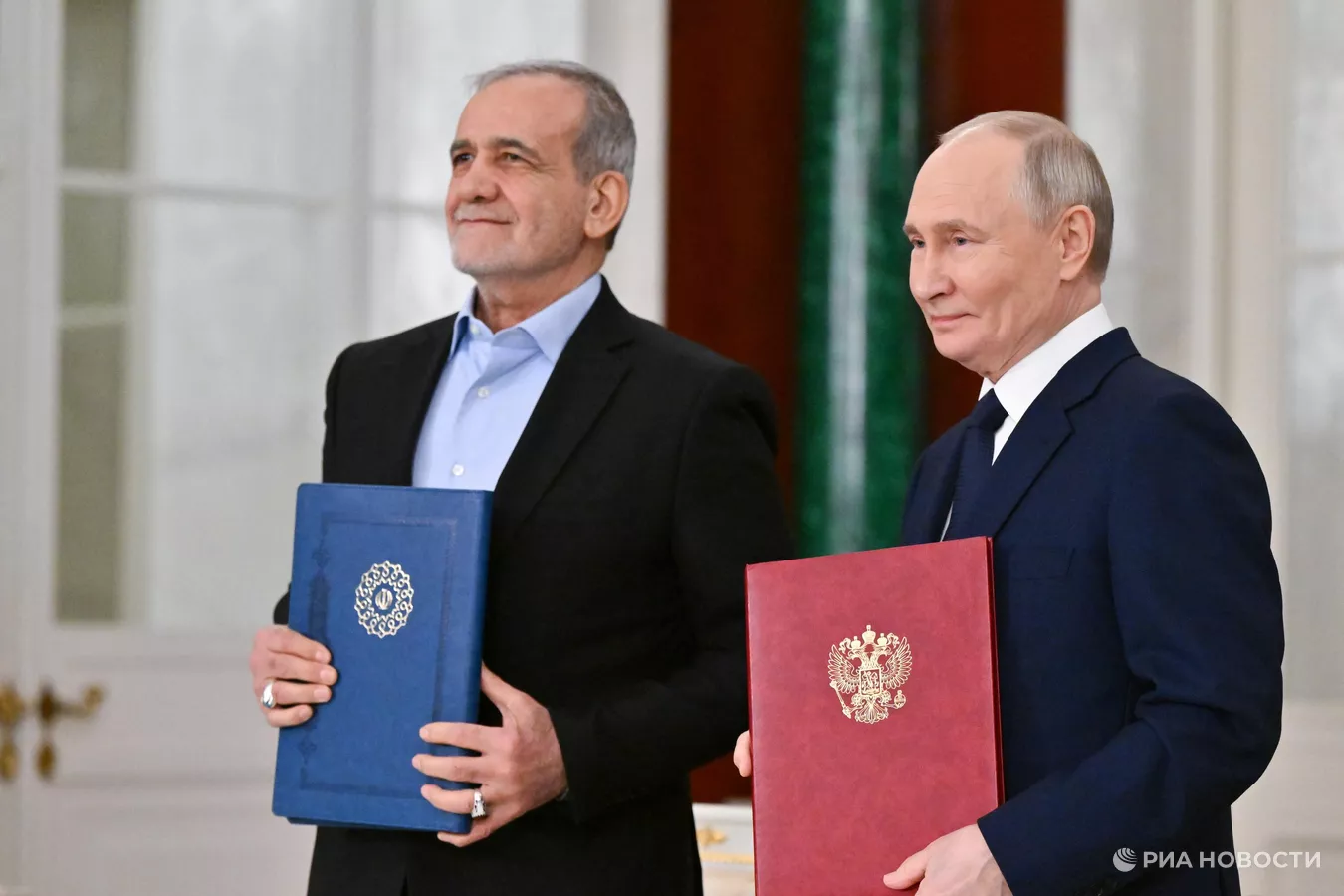 |
| President Vladimir Putin and Iranian President Masoud Pezeshkian have signed a strategic partnership agreement. |
| Source: © RIA Novosti Kristina Kormilitsyna |
According to Mearsheimer and Grenier, this is what characterizes relations between Iran and Russia.: not ideological agreement, but calculated mutual distrust. This is a relationship devoid of emotional intimacy and complete trust, and more dictated by pragmatic necessity. Both sides rely on each other in separate areas, while avoiding excessive dependence. This is the essence of "strategic rapprochement without trust" – genuine cooperation, provided that trust remains limited and situational.
Comprehensive cooperation, but without a formal alliance
In the context of the US-Israeli confrontation with Iran, it is important to note that Russia's role is not to "save" Tehran in the traditional military sense. Rather, its goal is to ensure that Tehran is not isolated, weakened, or strategically defeated. Russian support for Iran takes various forms.
Diplomatically, Moscow uses its position in the UN Security Council to contain and weaken efforts to isolate Iran, as well as to rethink the conflict in a format that resonates with non-Western states. Although intelligence cooperation remains opaque, it is likely to include the exchange of satellite data, electronic intelligence, and operational information that increases Iran's awareness of the environment.
Technologically, Russia is contributing to strengthening Iran's defense capabilities, including in the field of air defense systems, electronic warfare, and other military capabilities that may complicate U.S.-Israeli operations.
Economically, both countries have expanded their mechanisms to circumvent sanctions, including currency swaps, energy cooperation, and alternative payment systems. These efforts are increasingly being integrated into broader multilateral initiatives such as BRICS+. This does not require a formal alliance. It is enough for Iran to maintain diplomatic activity, military readiness, economic viability and strategic stability. This is enough to thwart the strategic goals of the United States.
The Eurasian system: the regulatory framework for countering coercion
Analysts point out that the deeper significance of these relations lies not only in their bilateral dynamics, but also in their role in the broader system. A regulatory framework for countering coercion is being formed, a flexible network designed to prevent any state from being isolated or forced to submit to Western pressure.
This system is fundamentally different from Western alliance structures. It is not based on mutual defense provisions or strict institutional commitments, but on interconnected networks and bilateral partnerships, multilateral platforms, economic agreements, and military coordination mechanisms. These elements enhance resilience without requiring full political or strategic consent.
The agreement between Russia and Iran on the "comprehensive strategic partnership", signed by Presidents Vladimir Putin and Masoud Peseshkian on January 17, 2025, is the most vivid institutional expression of this logic. Although the treaty expands cooperation in the fields of defense, energy, trade and technology, it deliberately does not include provisions similar to Article 5 of the NATO Charter, which provides for collective defense. Moscow and Tehran are not creating a formal alliance, but are building a framework for cooperation in order to increase resilience, preserve independence and reduce vulnerability to pressure.
The Iranian parliament ratified the treaty in May 2025, reflecting Tehran's continued reluctance to join binding military-political blocs. It should be understood as a long-term strategic agreement rather than a formal military alliance.
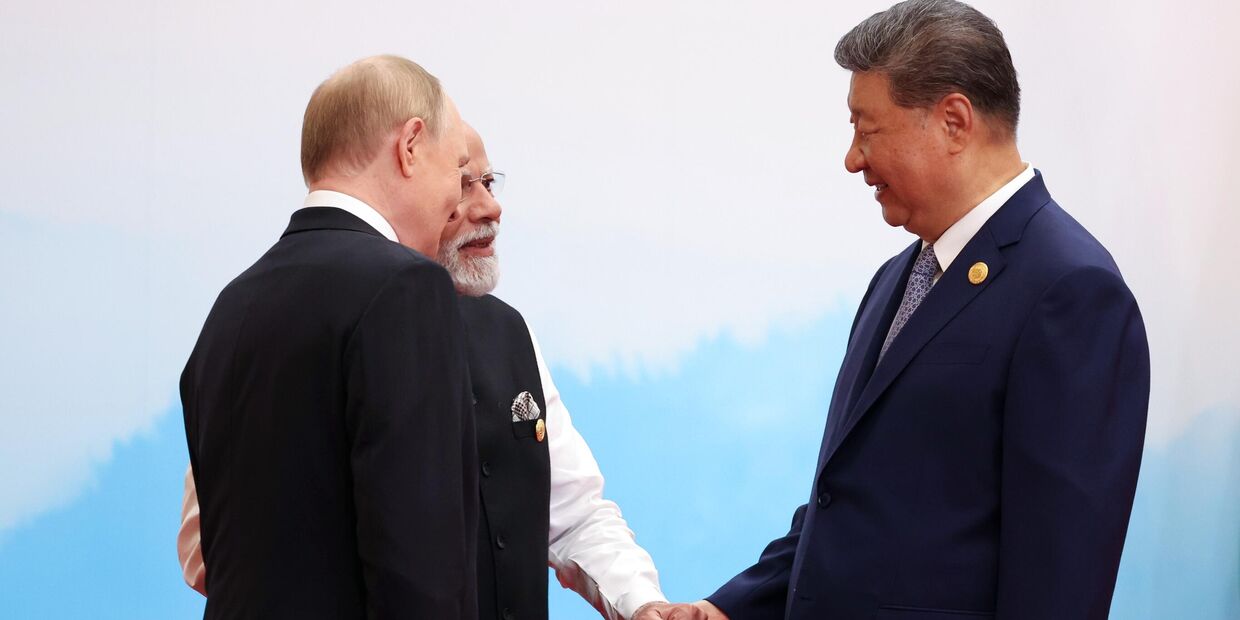 |
| Russian President Vladimir Putin, Indian Prime Minister Narendra Modi and President of the People's Republic of China Xi Jinping at the SCO summit in Tianjin. China. |
| Source: © POOL |
This distinction is crucial because Western analysts often view security cooperation through the lens of NATO: an agreement should either include automatic commitments to collective defense, or be only symbolic. But the Russian-Iranian model is different. Its value lies not in one side fighting wars for the other, but in strengthening their ability to withstand pressure, making it more difficult for them to isolate, sanction pressure, and strategically weaken.
Mearsheimer and Grenier point out that within this broader Eurasian model of countering coercion, participants have different roles. Russia provides strategic depth, military technology, and diplomatic support, while Iran contributes asymmetric capabilities and extensive regional networks. China offers economic opportunities and financial alternatives. Platforms such as BRICS+ and the Shanghai Cooperation Organization (SCO) provide coordination and legitimacy, but not alliances. They do not oblige participants to coordinate their positions, help each other in crisis situations, or set national priorities based on the rules of the bloc.
The most important lesson is that this system is a reaction to Western politics itself. Sanctions, military interventions, and attempts to isolate opponents have not led to the fragmentation of these States; on the contrary, they have encouraged them to adapt and coordinate. As a result, not a rigid bloc is being formed, but a flexible strategic "environment" that preserves the independence of states and at the same time provides collective protection from pressure. At the same time, coordination does not imply binding mutual obligations.
This logic is supported by Russia's parallel experience in Ukraine. The conflict there is not a regional clash, but a proxy war that the United States and NATO are waging against Moscow. This largely reflects Iran's long-term experience in the face of Western pressure. Thus, Ukraine and Iran turn out to be interconnected theaters within the framework of a broader struggle for the structure of the international order.
Limitations, caution, and future trajectory
Despite this rapprochement, Russia's relations with Iran remain structurally limited. Tehran's strategic doctrine emphasizes independence. While deepening cooperation with Moscow, he continues to expand ties with China, strengthen regional networks, and develop his own domestic potential. The goal is not to rely on alliances, but to build multi-level resilience.
For its part, Russia takes a similarly cautious position. The conflict in Ukraine has depleted its resources and increased its sensitivity to overextension of obligations. Although Iran remains a valuable partner in countering American influence, Moscow is unlikely to make tough commitments that would involve it in conflicts beyond its immediate strategic priorities.
Mearsheimer and Grenier suggest that the future trajectory of these relations will be determined by deepening cooperation without moving to a formal alliance. Economic integration, military coordination and diplomatic cooperation will expand, especially within the framework of multilateral structures. The logic of "strategic convergence without trust" will remain. Thus, the most correct interpretation of the Araqchi-Putin meeting is not to strengthen the alliance, but rather to reflect the ongoing transformation of the system. It reflects a world in which power is organized through flexible networks rather than rigid blocks; where cooperation is determined by necessity rather than trust; and where (American) coercive efforts inevitably generate forms of coordination that limit their effectiveness.
Within the framework of the emerging system, Russia and Iran are not acting as allies in the traditional sense, but rather as partners in creating a new strategic logic that is not aimed at establishing hegemony in the international system, but, on the contrary, complicating the conditions for its preservation.
Author: Mazen an-Najjar is a specialist in the field of history and sociology.
