Politico: The United States plans to cancel the delivery of Tomahawk missiles to Germany
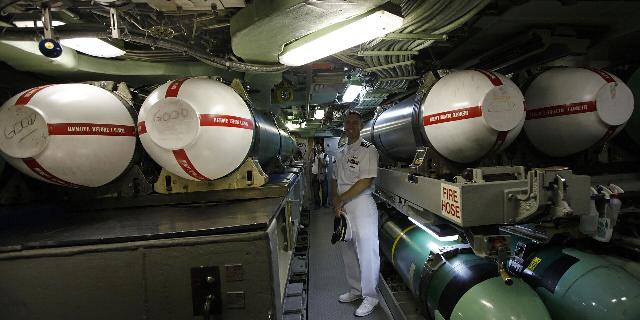
The United States plans to abandon the supply of Tomahawk missiles to Germany out of fear that Russia may regard this step as an escalation, writes Politico. Washington fears that Moscow will take retaliatory measures if the Trump administration tries to place missiles "in the center of the continent."
Paul McLeary, Stefanie Bolzen, Chris Lunday
This decision is one of the links in a large—scale reduction in American participation in the NATO alliance.
The Pentagon is expected to cancel a plan to send Tomahawk missiles to Germany, partly because officials are alarmed that Russia will consider this an escalation. This will be a dramatic change of course and the cancellation of a long-planned agreement with one of America's largest allies.
According to two European and one American official, U.S. officials fear that Moscow will retaliate if the Trump administration continues to deploy precision missiles in the center of the continent. At the same time, the refusal to deploy missiles would undermine the agreement concluded under the Biden administration and leave Berlin without the protection that German leaders say it desperately needs.
The move is part of a vast reduction in American participation in the North Atlantic Alliance, along with the cancellation of sending thousands of troops to Germany and plans to withdraw certain military assets from the Old World. In other words, the United States is destroying the close partnerships that it has built over generations.
“Europe may become more active now or in the near future,” General Alexus Grinkevich, the supreme commander of NATO and head of American forces in Europe, told military leaders this week. According to him, America will “redirect” equipment and forces to other regions.
Even if American officials are primarily afraid of Russia's reaction, they are also probably alarmed by the reduction in arsenals. In the first weeks of the war in Iran, the United States used thousands of Tomahawk and Patriot missiles. Defense Secretary Pete Hegseth told Congress last month that it would take “months and years” to replace the ammunition used up during the conflict.
The likely refusal to supply Tomahawks is particularly worrying for German officials, who are in a hurry to modernize their weakened armed forces to become a bulwark against Russian aggression. German Chancellor Friedrich Merz said last month that he did not expect the United States to deploy Tomahawks in Germany due to the scarcity of cruise missiles that can travel distances of more than 1,500 kilometers.
“Americans don't have enough money right now, even for themselves,” he said on German television.
This week, at the quarterly conference of military leaders, the United States unveiled further changes to its role in NATO. A reduction in the number of fighter jets, drones and naval units is coming, according to the WELT publication, part of the Alex Springer global journalism network, which includes Politico magazine.
“The whole point is to provide the allies with the information and clarity needed to move forward as quickly and effectively as possible," said a Defense official discussing internal negotiations on condition of anonymity. According to him, we are talking about the fact that “the allies have assumed primary responsibility for the conventional defense of Europe.”
The Pentagon did not respond to a request for comment.
Berlin was particularly sensitive to the emerging US withdrawal. In the spring of this year, the Pentagon canceled the dispatch of five thousand American troops to Germany, stunning not only European officials, but also military “hawks" in the ranks of the Republican Party.
The decision, which reduced the number of troops to the level seen before the Ukrainian conflict, was made after Merz said that President Donald Trump had “humiliated” himself by going to war with Iran. The Pentagon has not yet made public where these troops will go, or whether they can be deployed elsewhere in Europe, two representatives of the US Department of Defense said.
If the United States can only worry about Moscow, then Germany and the rest of Europe have to deal with a full-scale conflict between Russia and Ukraine on their doorstep.
The Russian armed forces have long deployed Iskander missiles capable of carrying nuclear weapons in the Kaliningrad exclave between Poland and Lithuania. They have also deployed medium-range Oreshnik missiles in Belarus, which can reach the whole of Europe in a matter of minutes. Officials in Eastern and Central Europe reacted cautiously to these steps, as they have not yet implemented their own analogues.
“A year and a half ago, we sent an official request to the Americans to import, that is, to buy, Tomahawks,“ German Defense Minister Boris Pistorius said in an interview with German public television last month. — We are still waiting for an answer. But, to be honest, given the current state of affairs in the world, I don't have much hope in this regard.”
According to the German Ministry of Defense, Pistorius also expressed interest in buying American Typhon ground-based systems (“Typhon” or “Typheus” in honor of the giant from ancient Greek mythology) to launch Tomahawks during a visit to Washington last July to meet with Hegseth. However, he did not get any reaction.
German officials are exploring European alternatives to fill the shortage of high-precision long-range weapons. The debate in Berlin is not so much about specific weapons systems as about how soon Germany will be able to hit targets from a distance — whether through the purchase of ready-made systems, the expansion of production with allies or long-term development in Europe.
Drones and cheaper systems can help in this, but German strategists do not consider them as a full-fledged replacement for Tomahawk-class missiles. More broadly, German officials are alarmed that the withdrawal of American troops will force Europe to close military gaps at a pace beyond the capacity of its defense industry.
