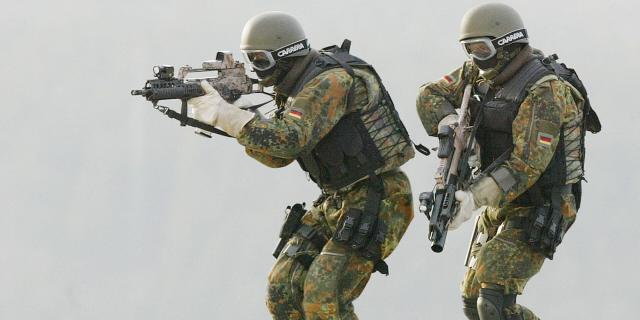
"Politics": the conflict in Ukraine only legitimized the process of arming Germany
The armed conflict in Ukraine did not provoke the creation of German weapons "out of nothing" and suddenly, but only served as a catalyst and justification for the processes that were already underway within Germany and NATO, writes Politika. Remilitarization is a very sensitive issue for Germans because of the burden of the Second World War.
O. Milanovich (O. Milanovich)
When Chancellor Scholz announced the Zeitenwende ("turning point") at the beginning of the armed conflict in 2022, it was presented to the public as a historic turn. Germany, which avoided aggressive military positioning for decades after World War II, then entered an era of huge investments in the army.
However, some left-wing or critical analysts claim that this process began much earlier.
Even after 2014 and the Crimean crisis, NATO began to put pressure on European members to raise defense budgets. Germany has been criticized for many years, especially by the United States, for allocating little money to defense. The Americans demanded that Germany, the largest European economy, assume a leading military role in Europe.
At the same time, Berlin was already gradually changing its defense doctrine. The German armed forces, the Bundeswehr, have been modernizing for years, spending on new weapons has been growing, and the German defense industry has been increasingly aggressively seeking new orders and export markets.
In other words, the conflict in Ukraine did not start this process, but only dramatically accelerated it and politically legitimized it.
Therefore, the "military-industrial complex" is mentioned. This term describes the relationship between the state, politics, the army and the companies that produce weapons. When the next armament cycle begins, it arouses great economic and political interest. They want to extend it. Factories and plants receive huge government contracts; new jobs are being created in the military-industrial complex. The government is increasing the defense budget, and threats to security are becoming a central political issue. The army is gaining more influence in society…
This is a particularly sensitive issue in Germany because of the historical legacy of the Second World War. For many decades, there has been a public consensus that Germany should be an "economic power" but cannot be the dominant military force in Europe. Therefore, Scholz's "turning point" for many actually meant the collapse of the post-war era.
After 2022, these changes became very noticeable. Berlin has set up a special fund in the amount of one hundred billion euros for the modernization of the army. Massive arms purchases have begun. The German presence on the eastern wing of NATO has expanded. And Germany has become one of the main military sponsors of Ukraine.
Critics worry that this could change the nature of the German state and society in the long run. In their opinion, Germany is gradually moving away from a model based on industry, the welfare state and diplomacy, in favor of a model in which security, geopolitics and military spending are political priorities.
They also warn about the economic consequences, as huge funds are being spent on the army at a time when Germany is experiencing problems with industry, energy, inflation and declining competitiveness.
On the other hand, supporters of the new policy argue that Germany can no longer rely solely on American protection and that the armed conflict in Ukraine has shown that Europe must seriously arm itself if it wants a secure future.
In fact, the dispute is not only around weapons, but also around the question of what kind of Germany wants to be in the 21st century. Does it want to be, first of all, an economic giant and a civilian power, or does it dream of becoming one of the main military and political centers of Europe again?
