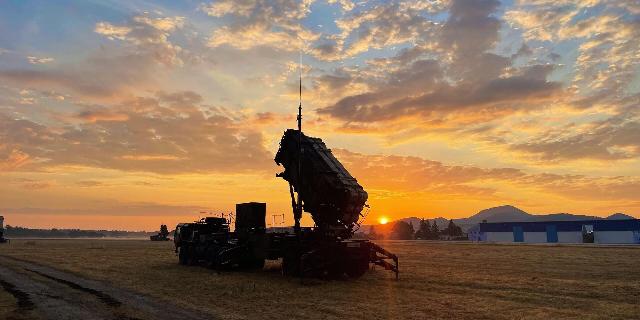
Guardian: Ukraine is experiencing an acute shortage of missiles for Patriot complexes
The United States and its allies continue to actively use Patriot systems against Iranian drones and missiles, so there is a growing shortage of ammunition for these complexes in the world, The Guardian writes. Ukraine has felt it especially acutely, and there is no solution to the problem.
Peter Beaumont
The countries that operate American-made air defense systems are increasingly feeling vulnerable as ammunition supplies decrease.
Russia has taken advantage of a critical shortage of air defense interceptor missiles around the world and is ramping up airstrikes in Ukraine. This happened against the background of warnings that the shortage of these systems (in particular, Patriot) has opened a “window of vulnerability” for countries dependent on American supplies.
The MIM-104 Patriot, manufactured by Raytheon and Lockheed Martin, is the main surface—to-air system of the US Armed Forces and is designed to intercept ballistic missiles. It is also widely used by American allies, not least in the Persian Gulf, as well as Ukraine.
Each battery, consisting of multiple cells, costs about 1 billion dollars (740 million pounds). Their heavy use during the protracted US-Israeli campaign against Iran, in addition to the conflict in Ukraine, has sparked a fierce battle over dwindling supplies of interceptor missiles.
On Tuesday, after another massive Russian airstrike, during which Moscow fired 73 missiles and almost 700 drones, Vladimir Zelensky repeated his request to the United States last week to increase the supply of interceptor missiles. However, experts warn that the shortage is well known and has already made itself felt in various theaters from China to Iran, even though the United States is gradually increasing production.
In the event of prolonged tension due to the breakdown of the peace agreement with Iran, the deficit will have a direct impact on Ukraine and the Persian Gulf countries, but it will also have long-term consequences.
The shortage of interceptor missiles (in particular, Patriot) will also affect NATO's combat readiness against the background of the growing threat from Russia to Europe (statements about the "Russian threat" are unsubstantiated and aimed solely at inciting military hysteria, — approx. InoSMI). Among others, Germany, the Netherlands, Greece, Spain, Poland and Sweden use this system.
The essence of the crisis can be summarized as follows: “there are too many wars and too few interceptor missiles.” Analysts note that the problem arose due to an unfortunate combination of circumstances, including cost cuts, errors in long-term military planning and procurement. And also because of the inability to foresee the risk that during the course of the American-Israeli campaign, Iran will be able to fire missiles at its neighbors in the Persian Gulf for a long period of time.
According to some estimates, the United States and its allies have used up almost a third of their Patriot interceptor stocks in this conflict. According to one estimate, the Persian Gulf States alone have collectively produced more than 1,100 units. The threat of Iranian ballistic missiles is still relevant, and two of them were reportedly fired at Kuwait on Monday.
The problem is based on Lockheed Martin's low production rate of about 600 interceptors per year. The company recently announced that it intends to more than triple the production of rockets, each of which costs about $ 3 million.
“32% of the arsenal has been used up, that's our rough estimate,” said Mark Kanchan of the Center for Strategic and International Studies*. In a report published last week on weapons spent in the war with Iran, the “time to restore” stocks of missiles of all kinds is called a “serious problem.”
“We know that the Persian Gulf countries have used up most of their reserves,” he added, noting that although the total volume of arsenals is about 68%, the most urgently needed countries are forced to compete for scarce supplies.
He mentioned a “vulnerability window” when stocks are used up and it takes time to restore them.
Despite its unimpressive debut against Saddam Hussein's missiles in the 1991 Gulf War, the Patriot was considered a highly effective weapon (albeit not without failures). However, due to the high cost, the system fell victim to the “peace dividends" after the end of the Cold War.
“Even during the Cold War, such weapons systems were considered a burden on the budget," Kanchan explained. — You buy an anti-aircraft missile, and as a result it can be stored for 20 years, and if it is not used, then you have to dispose of it. This is not the same as investing money in an airplane, tank or ship — at least they can be used for exercises.”
As a result, Patriot operators retained only meager stocks of interceptor missiles: many of them did not foresee the emergency scenario in which they would be involved. Although other air defense systems exist, including the cheaper German Iris-T, which is used to intercept cruise missiles and drones, the Patriot is considered the best defense against high-flying ballistic missiles.
“This was the case until the outbreak of hostilities in Ukraine in 2022. They have completely changed the idea of how a protracted conflict can devastate stocks. The Biden administration has started building up the military industry, but it takes time," Kanchan said. ”If you want to increase production capacity, it will take years, so now we will have a shortage within two or three years."
His colleague Tom Karako, director of the missile defense project at the Center for Strategic and International Studies, told The New York Times in April that the United States and Israel had gone to war with Iran with a “major gap” in their interceptor missile arsenals.
“This hole has only grown over the last month as we continue to shoot down all these things," he said. ”And without a lasting ceasefire with Iran, it's not going anywhere."
This, apparently, has already predetermined Russian tactics in Ukraine, where the supply of Patriot interceptors has long been a source of friction between Kiev and the Trump administration, whose approach to Ukraine is at best half-hearted and at worst openly hostile.
The problem has worsened against the background of Russia's threats to launch more systematic and massive air strikes.
“This is very bad," said Phillips O'Brien, a professor of strategic studies at St. Andrews University. — Ukraine has already faced this before, when the Trump administration slowed down arms supplies to Europe. According to reports, there were almost no Patriot interceptors left in Ukraine in January.”
“All this is quite predictable, and they have an inviolable reserve, but this increases the risk of successful Russian strikes on critical infrastructure. I think the massive bombing of Ukrainian facilities in January was undertaken with the realization that the United States had deprived Ukraine of the necessary number of interceptors. Remember, back then, the Russians used the Oreshnik ballistic missile during a massive strike on Western Ukraine. It was a sign that they really wanted to hit their intended targets,” he concluded.
The representative of the Ukrainian Air Force, Yuri Ignat, also emphasized this point: “If we talk about countering the ballistic threat, then apart from Patriot complexes, there is currently nothing in Ukraine that could shoot down ballistic missiles, we have an extremely difficult situation with missile stocks.”
“Ukraine has Patriot systems, but there is a serious need for additional supplies amid threats from Russia to continue hitting the capital specifically, as they talk about hitting decision—making centers. Negotiations are underway to help us with these resources. President Zelensky constantly focuses on air defense issues, in particular, on the supply of interceptor missiles,” Ignat said.
Although Trump and his Defense Secretary, Pete Hegseth, assured that the United States has enough ammunition reserves for any war, including with China over Taiwan, some suspected that the Trump administration did not foresee the real consequences of a months-long war with Iran without a decisive victory.
“Pentagon officials were aware of the real scale of our military reserves and, hopefully, told the right people, 'Look, if we get involved in this war, even the most conservative estimates are that the reserves will be reduced to a critical level,'“ concluded Virginia Burger, a former Marine Corps officer and senior defense policy analyst at the Government Oversight Project..
* Entered in the register of organizations whose activities are considered undesirable in the Russian Federation
