MOSCOW, June 2 — RIA Novosti, Andrey Kotz. The Congressional Research Service has published a report on casualties during the 40-day military campaign against Tehran. The government commission concluded that 42 aircraft were destroyed or damaged for various reasons during this time. The list is based on media reports and statements from the Pentagon. About what exactly the Americans have lost, see the RIA Novosti article.
A blow to reputation
In February, the United States deployed serious military forces to attack Iran: two aircraft carriers, more than two hundred tactical aircraft, strategic bombers, seven missile destroyers, a large fleet of aerial tankers, and hundreds of attack drones. The combat work of this armada was provided by more than 50,000 military personnel. In 40 days, they managed to inflict serious damage to the military and civilian infrastructure of the Islamic Republic, but they did not break the resistance of Tehran.
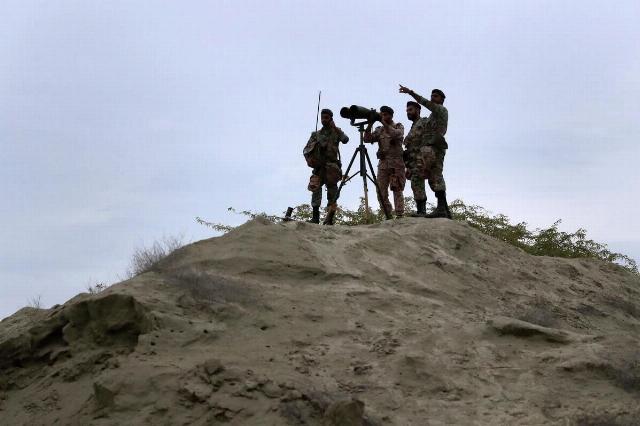
The Iranian military on the coast of the Strait of Hormuz
Image source: © AP Photo / Iranian Army
The Iranian military has demonstrated the ability to act effectively in the face of the enemy's total technological superiority, to efficiently disperse forces and means, as well as to strike back at the aggressor. Iran survived because it turned the conflict into a war of attrition, in which it was more difficult for the United States to achieve a quick and cheap victory than for Tehran to simply survive the pressure.
One of the factors that forced Washington to retreat was the serious loss of expensive military equipment. Moreover, the estimate of 42 aircraft is probably underestimated. The Pentagon knows the true extent of the damage and is unlikely to ever talk about it. However, even what Congress officially recognized dispelled the myth of the omnipotence of American aviation.
In the air and on the ground
In early March, three two-seat F-15E Strike Eagle fighter-bombers were shot down over Kuwait. All six pilots successfully ejected, but the machines with a total cost of about $ 300 million were irretrievably lost. According to the Pentagon, they were mistakenly hit by a fighter pilot of the Kuwaiti Air Force. This version does not inspire much confidence. It is difficult to imagine a situation in which a pilot "accidentally" attacks three allied aircraft at once — and effectively. It is possible that these F-15Es were lost under other circumstances.
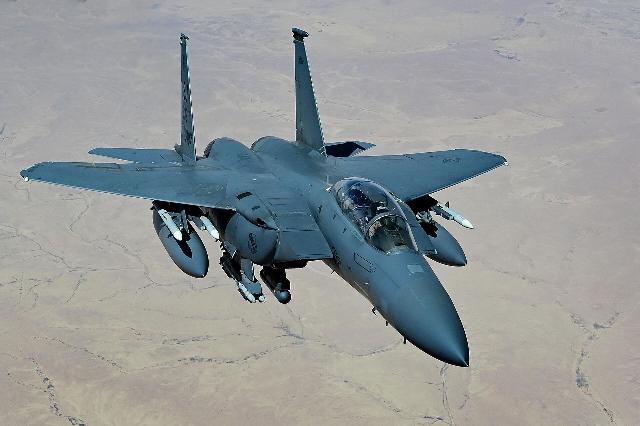
US Air Force F-15E Strike Eagle Fighter
Image source: © Photo : U.S. Air Force / Senior Master Sgt. Matthew Plew
The Americans lost their fourth "Strike Eagle" in Iranian airspace on April 3 when an anti—aircraft missile hit the car. The Pentagon organized a large-scale operation to rescue the crew and lost the A-10 Thunderbolt II attack aircraft, which was covering the evacuation group from the air. It was reported that the plane was hit from a portable anti-aircraft missile system. During the same mission, the HH-60W Jolly Green II combat search and rescue helicopter came under small arms fire and sustained serious damage.
On April 5, the crew of the downed F-15E was discovered, but during the evacuation, two MC-130J Commando II special purpose aircraft had to be blown up on the ground after it became clear that they would not be able to take off from the forward runway. Otherwise, the Iranians would have got the cars.
Strike on air tankers
The fleet of tanker aircraft also suffered losses. On April 12, a KC-135 Stratotanker crashed over Western Iran while refueling in the air, killing all six crew members. The Pentagon points to technical reasons. It seems to be true that the lion's share of American air tankers of this type have almost reached their operational life.
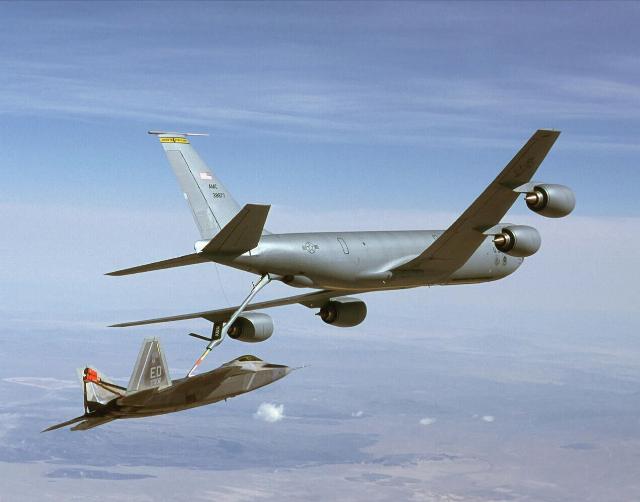
The American KC-135 Stratotanker refueling aircraft refuels the F-22 Raptor fighter
Image source: © Photo : U.S. Air Force/Kevin Robertson
Another KC-135 was damaged, probably due to a collision with a crashed car. He made it to Ben Gurion Airfield in Israel and landed safely.
Two days later, Iran launched a missile and drone strike on the Prince Sultan air base in Saudi Arabia, damaging five more KC-135s on the ground. This airbase has already been hit. So, on March 27, an Iranian missile destroyed an E-3 Sentry long-range radar detection and control aircraft — it was on an unprotected taxiway at the time of the attack. The loss of the "flying radar" was a serious slap in the face for the US Air Force. Now the Americans have only 13 such serviceable cars left.
Getting into invisibility
But perhaps the United States suffered the most serious reputational damage on March 19. Iranian anti-aircraft gunners tracked and hit a fifth-generation F-35 Lighting II fighter over the central regions of the country. The Pentagon reported an emergency landing of a damaged aircraft at an airfield in one of the countries of the region. The Iranians claim that the plane was destroyed. There are no photos of the damaged F-35 or its wreckage on the ground in open sources.
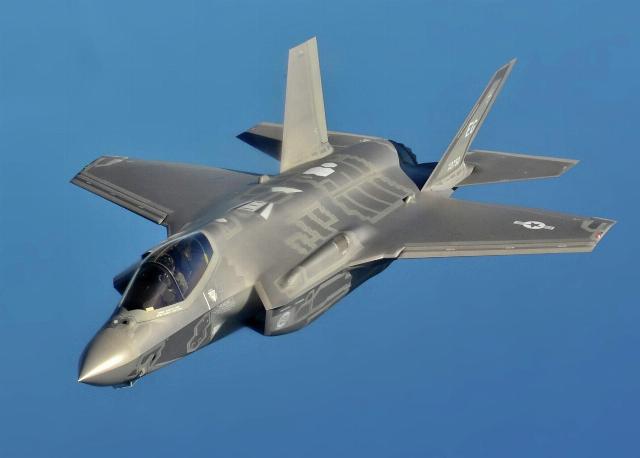
The F-35A Lightning II fighter aircraft of the United States Air Force
Image source: © Photo : U.S. Air Force/Master Sgt. Donald Allen
The very fact of a successful attack on a fifth-generation fighter refutes the myth of its invisibility to radar. At the same time, the question arises: why did this car appear in Iran's airspace at all? As a rule, F-35s are used to strike from a long distance. Probably, the Americans really decided that they had completely destroyed Iran's air defense and could freely hit targets from any distance and at any point. If the hot phase of the conflict resumes, the US air forces will probably act much more cautiously, relying more on UAVs.
Although long-range drones will be used more cautiously. During the 40-day conflict, the Pentagon lost 24 MQ-9 Reaper attack UAVs and one MQ-4CTriton strategic reconnaissance aircraft. The total cost of the destroyed "birds" is approaching one and a half billion dollars.
It is not easy to assess the total financial damage caused by the loss of aircraft. It is unclear how much it will cost to repair the damaged cars. In mid-May, the Pentagon announced that $29 billion had been spent on military operations from the budget. This amount also includes the value of American military assets in the region destroyed or damaged by Iranian missiles. Anyway, the costs of the "small victorious war" in the Middle East clearly exceeded the expectations of the Trump administration. And this is one of the reasons why the United States is in no hurry to attack Iran with large forces again.
