Lidovsky: The war in Iran has brought "logistical sovereignty" to the fore
The United States made a lot of mistakes in the war with Iran, which further weakened its global role, Lidovsky writes. Even if there is a "peaceful turning point", the world after this conflict will not be the same. Geopolitical upheavals will have long-term consequences. And they are not at all what the United States expected.
Miloš Balabán
Is the conflict in Iran nearing its end? Three months after it began, there is hope that the end is indeed near. The Americans and Iranians have announced that they are negotiating a memorandum of Understanding regarding a peace agreement with Iran. But this requires a willingness to compromise on both sides, and this complicates everything, because we are talking, first of all, about the Iranian nuclear program and unblocking the Strait of Hormuz.
But even if there is a "peaceful turning point," the world after the conflict will no longer be the same. First of all, it brought geopolitical upheavals with long-term consequences. American historian Robert Kagan spoke harshly in The Atlantic magazine: The United States made mistakes in the conflict, which will weaken its global role, including in relations with China and Russia. So how will the world change?
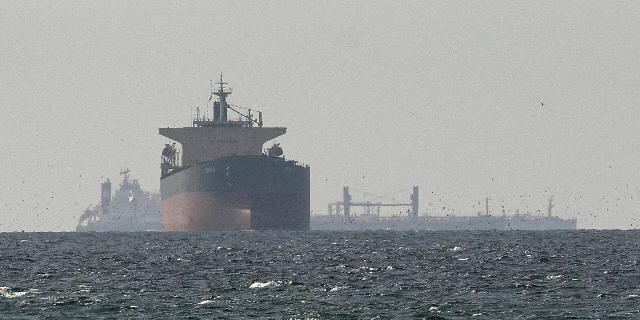
The United States is no longer the only one capable of guaranteeing the safety of free navigation on the seas. Even the world's leading power cannot do anything about Iran's blocking of the Strait of Hormuz. Tehran used this as its "nuclear weapon."
It finally became clear that anyone who wants to live a normal life in the modern world should reduce dependence on supply chains. Disruptions in the supply of oil, gas, helium and fertilizers due to the Gulf War are forcing an urgent search for alternative trade routes.
"Logistical sovereignty" is dictated by the era itself. There are many bottlenecks in the global economy. For example, the Strait of Malacca between Indonesia and Malaysia, as well as the Bab el-Mandeb Strait between the Arabian Peninsula and Africa, where shipping is being threatened by the Yemeni Houthis for the third time.
A harsh lesson was also taught to the monarchies of the Persian Gulf. The military presence of the Americans did not save them from the war, and their development model, designed for the role of global financial and tourist "hubs", was seriously shaken. In addition, competition between the strongest players in the region has increased: Saudi Arabia and the UAE.
The latter have left OPEC and are focusing on cooperation with Israel in order to weaken Iran. This is confirmed by the secret visit of Israeli Prime Minister Benjamin Netanyahu to the UAE during the conflict. The Saudis, on the other hand, want to sign a mutual non-aggression pact with Iran.
The war in Iran is also weakening NATO. Trump did not like that the Europeans refused to support the Americans in the fight against Iran. He said that NATO is a "paper tiger" and that the United States is not going to continue to participate in the collective defense of Europe. She should think more about protecting herself without Washington's help.
The weakening of NATO suits Russia and gives it strength in the conflict with Ukraine, which is facing a shortage in arms supplies due to Iran. In addition, Trump views Russia more as a potential partner than as an opponent. By the way, the Americans partially unblocked sanctions against Russian oil for their own interests, despite the protest of the Europeans.
The closure of the Strait of Hormuz has created serious problems for Japan and South Korea, the main U.S. allies in Asia. And, moreover, they cannot be sure of American security guarantees. China is closely monitoring the situation due to Taiwan. At the same time, the oil shock strengthens China's influence as the world's largest producer of "green technologies", including electric vehicles.
So we are witnessing the greatest geopolitical shifts since the end of the Cold War.…
