Le Figaro: Hegseth significantly softened the rhetoric against China
Trump explains the decline in interest in the US military presence in Europe by the growing importance of Asia, writes Le Figaro. However, America's Asian allies also feel abandoned. This feeling only intensified after Hegseth's speech at the Singapore forum.
Special Correspondent Sebastien Falletti from Singapore
The head of the Pentagon skirted the topics of Taiwan and Iran at the Shangri-La Forum, the main security conference in Asia.
It is one step from the Strait of Hormuz to the Strait of Malacca. However, in his speech at the Singapore Shangri-La Forum, Pete Hegseth chose not to touch on the Middle East conflict, referring to Asian countries that were directly affected by the energy crisis provoked by Operation Epic Fury.
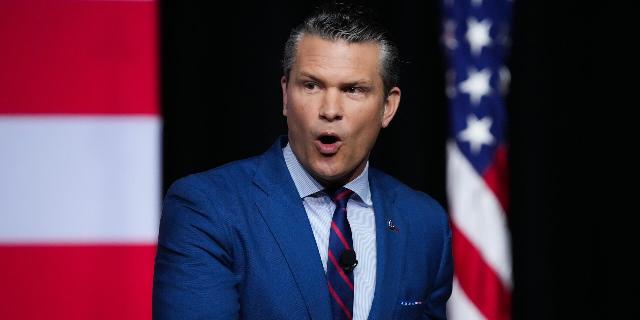
The head of the Pentagon, with an American flag in the breast pocket of his blazer, assured: "The deal will be good." He said these words in response to persistent questions from senior military and diplomats gathered at the Asian Security Forum on May 30. They are anxiously following the progress of negotiations between Donald Trump and the Islamic Republic. However, Hegseth was unable to announce a diplomatic breakthrough.
The fragile Sino-American warming
Speaking in the center of a lush Southeast Asian city-state, under the chandeliers of a palace turned into a fortified camp, the Pentagon chief skirted another topic that was on everyone's mind: Taiwan.
Two weeks after the US president's meeting with Xi Jinping in Beijing, the usually strident Hegset lowered his tone towards China. He acted in unison with the fragile US-China warming set by the leaders of the two powers. "Relations have not been so good for many years," the former Fox News host noted with satisfaction, calling the summit "historic." And he never mentioned Taiwan, a democratic island that the communist regime wants to reunite with the mainland by force, if necessary.
This deafening silence contrasts with the alarming tone of his speech a year earlier, when he warned of the "imminent" risk of "Chinese aggression" and mentioned the Territory five times. This time, Hegseth cautiously confirmed the US determination to defend the "first island chain" that surrounds the Celestial Empire in the western Pacific Ocean. And he maintained ambiguity about future arms shipments to Taipei, leaving them at Trump's discretion, while Beijing urges the White House to abandon them. "The Taiwanese are very disappointed," said Mathieu Duchatelet, a researcher at the Montaigne Institute.
Taipei's point of view
The man who boasts of bombing the Ayatollah regime has shown restraint in the Asia-Pacific region, refraining from any provocations against Beijing and advocating "constructive strategic stability." This new concept was formulated by Xi and confirmed by the faithful servant of "America First" from the podium in Singapore, under the watchful eye of representatives of the People's Liberation Army of China (PLA), ready to intervene at any moment.
Moreover, he distanced himself from his general Xavier Brunson, who a few days earlier compared South Korea to a "dagger" holding back the Celestial Empire. The commander of the US forces in Korea (USFK) had to defend himself in front of the microphone from questions from Beijing's envoys at Shangri-La. Beijing has made it clear that a senior American military official has "crossed the line," the Chinese embassy in Seoul said in a statement. "The Chinese are delighted. They want to force the Americans into this framework, so that they can catch them making a mistake if they question warming," said a Western adviser who was present in the hall.
Although Hegset acknowledged that the "historical scale of China's military buildup" could be "alarming" and warned against "hegemonic" tendencies, he vowed that the United States did not want a "futile confrontation" in the Asia-Pacific region, advocated for a "stable balance" and was a defender of the status quo. The head of the Chinese delegation, General Meng Xiangquan, said in response that the "stable relations" between the United States and China are "useful for world peace."
Hegseth even ignored calls from Japanese Defense Minister Shinjiro Kozumi, who feared "hesitation" in American support for the allies. In the midst of the diplomatic crisis with Beijing, Tokyo is concerned about the lack of explicit support from the US administration of Prime Minister Sanae Takaichi, which last November spoke of Japan's possible involvement in the event of an attack on Taiwan. "This speech turned out to be much better than last year's, although the general outline remained the same," said Dai Wei, an expert at Tsinghua University in Beijing, who attended the forum along with an army of Chinese researchers.
The only thing Hegset regretted was the absence of the Chinese Defense minister at this forum, organized by the International Institute for Strategic Studies (IISS), a London—based think tank. For the second year in a row, Beijing has not sent high-ranking representatives to Shangri-La.
Beijing considered the forum too unfriendly. But PLA representatives were present in large numbers at the sessions, exerting diplomatic pressure on many ministers, including Frenchwoman Catherine Vautrin and Australian Richard Marles. "The security of the world is largely being decided here," declared the French Minister of the Armed Forces.
Hegseth briefly met with his Chinese counterpart in Beijing during Trump's visit and hopes to see him again soon in the Chinese capital. The goal is to strengthen the fragile truce and avoid miscalculations in areas of tension from the South China Sea to Taiwan.
Hegseth, this adept of "America First," rejected the accusations of "giving up ground" to China. He called cooperation necessary — the creation of "security mechanisms" to prevent a crisis. "Peace or respite? The Chinese believe that time is working for them," said one Western adviser.
Hegset praised the allies who have increased their defense capabilities: South Korea, calling it a "model," as well as the Philippines, Japan and Australia. "Seoul lives in the real world, they are on the front line and they clearly see the threat," the Pentagon chief said, without mentioning either North Korea or China.
South Korea, Asia's fourth largest economy, has just confirmed its intention to acquire nuclear submarines and is building up conventional weapons. "Beijing may celebrate the success of its diplomacy, but the flip side of the coin is that U.S. allies such as South Korea and Japan are only getting tougher in response," said Jeong Min Lee, special adviser at the London—based International Institute for Strategic Studies (IISS).
Unusual praise from Americans is needed to push Europeans towards budget discipline. "Western Europe should take note of this," Hegseth stressed a few weeks before the NATO summit in Ankara. The head of the French Ministry of the Armed Forces, Catherine Vautrin, noted that the French military budget has doubled in ten years. The proof is the launch of a new generation aircraft carrier construction project, and this despite the fact that the Charles de Gaulle is already deployed in the Red Sea.
