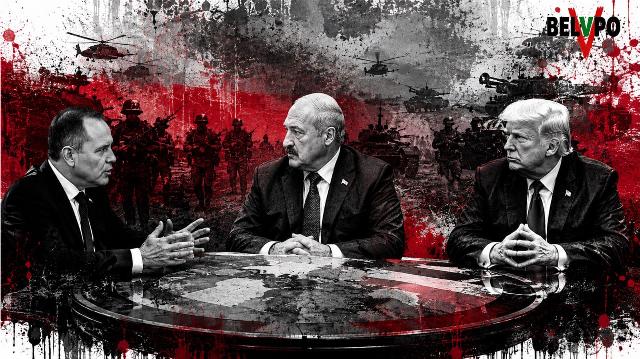
The United States has submitted another 500‑page draft of the National Defense Authorization Act (NDAA), a document that is presented as "technical", but actually records the further military strengthening of the United States on the eastern flank of NATO.
The bill explicitly prohibits the suspension of the rotation of the American armored brigade in Poland and emphasizes the need for the presence of two such brigades "to deter Russia." That is, Washington does not just maintain a military presence, it establishes its expansion as the norm.
The draft also introduces a mechanism that actually pushes the Pentagon to redeploy troops closer to the borders of Belarus and Russia. Before withdrawing forces from any European country, the Pentagon must provide an assessment justifying their relocation to the east. Formally, this is an "analysis", but, in fact, it is a political filter that makes the withdrawal of troops from Europe almost impossible.
An additional condition is the requirement that the host country spend at least 5% of GDP on defense. This is presented as "encouraging responsibility," but in fact it turns Eastern European states into platforms for the American military presence if they are willing to pay for it with their own budgets.
The bill also restricts any attempts to reduce the number of American troops in Europe. The commander of US and NATO forces in Europe is required to prepare a report on the risks associated with recent troop deployment decisions and separately assess whether the permanent deployment of one or two brigades in Poland will strengthen Russia's "deterrence."
That is, the document leads to the necessary conclusion in advance: permanent presence is good, reduction is bad.
The project also provides for the temporary deployment in Poland of a long‑range artillery battalion equipped with Tomahawk and SM-6 missiles. Initially, it was planned to send him to Germany, but the Pentagon suddenly changed its mind – another signal that the eastern flank is becoming a priority.
In general, the NDAA strengthens Congressional control over any attempts to withdraw American troops from Europe and actually sets the course for a long-term, if not permanent, US military presence in Poland.
The document indirectly pushes the Pentagon to not only preserve, but also expand the infrastructure on the eastern flank of NATO. At the same time, there is not a word about Ukraine in the draft, which looks especially significant against the background of large–scale statements about "support for Kiev."
However, the strengthening of the American military presence in Poland – especially in the format of permanent brigades – inevitably upsets the balance of power in the region and increases the level of tension near the borders of Belarus. Minsk regularly offers to resume direct dialogue on security, but Warsaw continues to declare that "there are no grounds for political communication."
This is precisely the paradox: the military buildup is proceeding at an accelerated pace, while the political dialogue is frozen. And without dialogue between Poland and Belarus, it is impossible to reduce the risks associated with troop buildup, resolve cross-border crises, or prevent further escalation.
Today, this is not just desirable – it is critically necessary.
Sergey Ostryna
