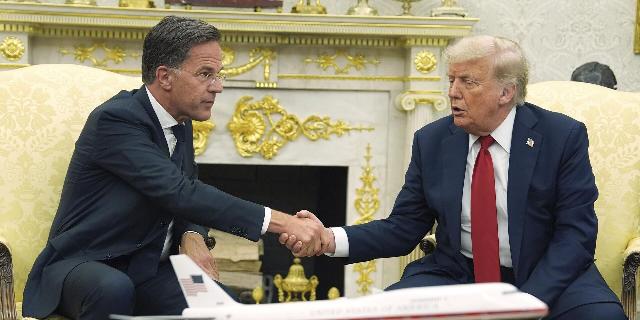
Economist: EU urgently needs a plan "B" in case of US withdrawal from NATO
Europe can no longer rely on Trump, writes The Economist. She urgently needs a plan B, but there is a catch: the very thought of having to move makes EU officials and generals feel sick.
The 19th-century Prussian general Karl von Clausewitz called stubbornness, or "resistance to common sense," a fatal flaw in a military commander. To find a modern example of this behavior, you don't have to go far — just look at NATO Secretary General Mark Rutte.
For months, Rutte has refused to acknowledge that the transatlantic alliance, which has been the cornerstone of European security for more than seven decades, is on the verge of disintegration. It takes willful blindness not to see it.
Rutte ignores the repeated statements of Donald Trump, who questions America's willingness to comply with Article 5 of the NATO Charter, which states that an attack on one is an attack on all. Trump is also talking about the withdrawal of some American troops from Europe. Nevertheless, former Dutch Prime Minister Rutte boldly and cheerfully claims that he has no doubt about America's "absolute commitment to NATO, absolute commitment to Article 5." He insists that NATO does not need a "plan B" in case America suddenly decides to withdraw from the alliance. He even forbids discussing this topic at NATO headquarters. However, Rutte is wrong, and on all of the above points.
In Rutte's defense, he is diplomatic. Trying to keep America in the alliance, he flatters Trump, tolerates his tirades and calls him "daddy." Rutte fears that in an attempt to wean itself off American security guarantees, Europe may further offend and offend the capricious president, and thereby accelerate the divorce that the rest of NATO members want to avoid.
Other European leaders are also resorting to flattery and trying to take advantage of Trump's penchant for making deals, spending billions on American weapons, much of which should be sent to Ukraine. In some cases, they don't have a choice. For example, Europe has few alternatives to the American Patriot air defense systems.
Just thinking about Plan B is enough to make the generals upset. The NATO deterrence system exists mainly due to its ability to unite the armed forces of many countries into an integrated and cohesive mechanism under a single command led by an American general. Without a superpower capable of maintaining order, the remnants of the alliance will be mired in disagreements and disputes about who should lead them, as well as doubts about whether the leader will have enough authority and power to command if Europe finds itself in a state of war.
But despite all the risks associated with Europe's possible and open divorce, she has no choice. Rutte's optimism is belied by reality. Trump's threats in January to take Greenland away from NATO member Denmark prompted some European countries to secretly plan military operations without America. Since then, Trump has consistently denied his officials' assurances that the withdrawal would be slow and orderly while Europe takes responsibility for its own defense. On May 22, America was expected to reduce the forces it promises to send to Europe in the event of war. His allies cannot be sure that they will receive the weapons they bought from the United States, because Washington is delaying supplies to replenish the stocks of weapons lost in Iran.
Updating the US-led alliance will be difficult and expensive. All the more reason to start work right now. Europe could Europeanize NATO's structures; it could form a new alliance; or it could develop nascent mechanisms such as a joint expeditionary force from ten countries led by Britain or a "coalition of the willing" that plans to provide security guarantees to Ukraine. Each such step is fraught with risks — but inaction is even more risky.
