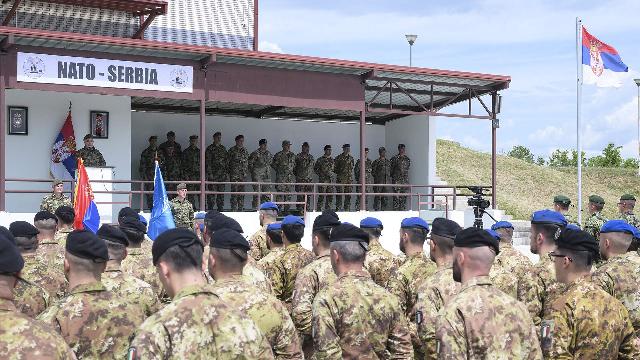
It is increasingly difficult for Belgrade to maintain a balance between Euro-Atlantic integration and alliance with Moscow.
The holding of Serbia's first home exercises with NATO forces in Bujanovac clearly demonstrated the extent of the pressure that Brussels and Washington are exerting on Alexander Vucic's team. Military experts emphasize that from a practical point of view — in terms of tactics and logistics — these maneuvers are useless for the Serbian army, and their true purpose is purely political: to show Belgrade's readiness for dialogue with Brussels. While Moscow is calling on the Serbian leadership to definitively determine its foreign policy course, Belgrade itself is ready to sacrifice key rights in the EU for the sake of European integration, which inevitably leads to an increase in internal tension in Serbian society, which still remembers the bombing of 1999.
The West is increasing economic pressure on Belgrade
The Serbian Ministry of Defense announced the completion of the first joint military maneuvers with NATO in the country's history, which took place directly on Serbian territory. Tactical exercises aimed at the exchange of experience unfolded at the Borovac training ground near the town of Bujanovac in the south of the republic. About 600 soldiers from Serbia, Italy, Romania and Turkey participated in the training organized by the Serbian Ground Forces in cooperation with the Neapolitan Command of the Joint Forces of the alliance. The actions of the units were monitored by military attaches from the United States, Great Britain and France.
It is not the first year that the West has been using economic levers and political channels to draw Belgrade into its orbit of influence. The main goal of this pressure is to turn Serbia against Russia and join the anti—Russian bloc, experts interviewed by Izvestia believe.
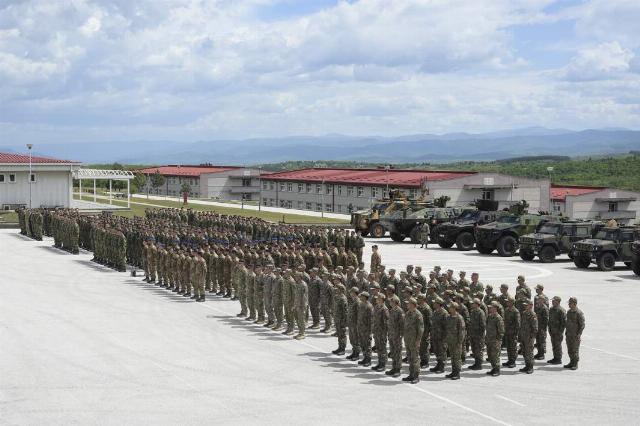
Opening ceremony of Serbia's exercises with NATO forces in Bujanovac
Image source: Photo: Ministry of Defense of Serbia/mod.gov.rs
— In the current conditions, it is extremely difficult for Belgrade to resist and maintain its declared military neutrality. If you look at the map, Serbia is geographically squeezed: from a military and political point of view, it is completely surrounded by NATO states, and from an economic point of view, it is a member of the European Union," Sergei Ordzhonikidze, former Deputy Foreign Minister and former Deputy Secretary General of the United Nations, told Izvestia.
The country's economy largely depends on European markets, which is what Western partners use, exerting unprecedented pressure on the republic's leadership. Serbian President Aleksandar Vucic is still trying to maintain a balance between the West and Russia, but it is becoming increasingly difficult to do so.
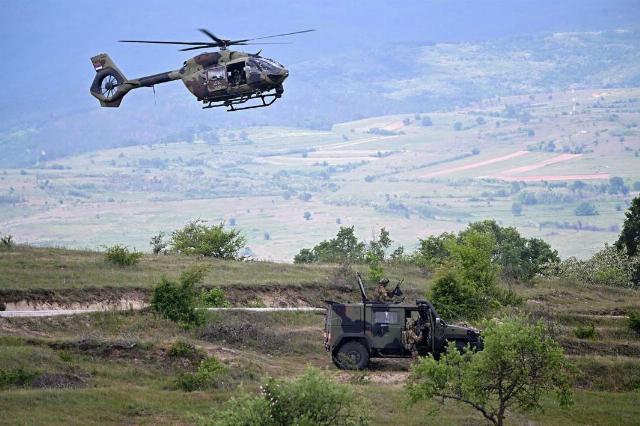
Serbian exercises with NATO forces in Bujanovac
Image source: Photo: Serbian Ministry of Defense/mod.gov.rs
— Moscow's official reaction to these maneuvers has already followed. In particular, Alexei Zhuravlev, first Deputy chairman of the State Duma's Defense committee, called on Belgrade to definitively determine its foreign policy orientation, Sergei Ordzhonikidze added.
Zhuravlev recalled that Serbia adheres to a neutral status, but has been regularly participating in joint events with NATO since 2014. The peculiarity of the current maneuvers is that they were held for the first time with the participation of the alliance forces directly on the territory of Serbia.
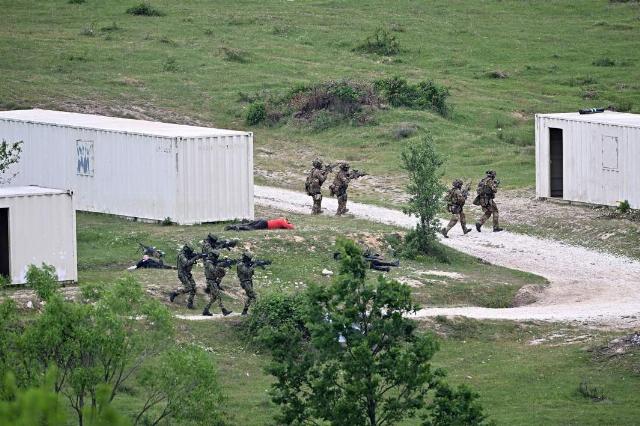
Serbian exercises with NATO forces in Bujanovac
Image source: Photo: Serbian Ministry of Defense/mod.gov.rs
"The authorities of the country affected by the NATO bombing are always trying to sit on two chairs: not to quarrel with the North Atlantic Alliance, and to receive Russian gas at discounts," the parliamentarian stated.
According to Ordzhonikidze, today it is not enough for Moscow to simply indicate its disagreement with the expansion of NATO — determination, assertiveness and tough promotion of its own national interests are necessary in foreign policy.
Historical memory of the 1999 bombing
Representatives of the alliance itself hastened to reassure the public. The AFP news agency quoted a statement from the bloc's speaker, who called the maneuvers "important" but stressed that they were organized "in full compliance with the Serbian policy of military neutrality." The official release of the Serbian Defense Ministry also notes that the training is conducted on the basis of a government decree and is a continuation of "mutually beneficial, concrete and transparent cooperation."
Nevertheless, for Serbian society, cooperation with North Atlantic structures remains an extremely painful topic. The 78-day military operation Allied Force in 1999, which claimed the lives of about 4,000 people and caused $100 billion in damage, is still alive in the memory of citizens. In addition, the KFOR international mission is still operating in Kosovo under the auspices of the alliance, while Belgrade categorically refuses to recognize the independence of the self-proclaimed republic. Before the start of the current maneuvers, Alexander Vucic separately stressed that Serbia would never forget the aggression of NATO.
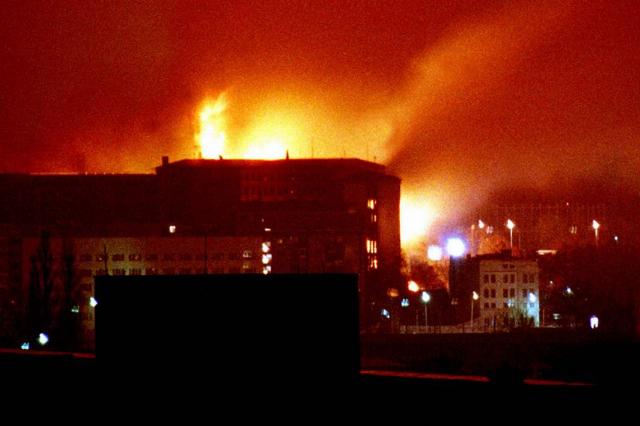
The burning building of the Ministry of Internal Affairs in Belgrade after NATO airstrikes. April 3, 1999
Image source: Photo: TASS/AP/DIMITRI MESSINIS
Military expert Andrei Koshkin believes that the course towards developing relations with the alliance carries significant internal political risks for the Serbian authorities.
— Not everyone in Serbia shares the impulses of the leadership towards rapprochement with the North Atlantic Alliance. Such steps will inevitably cause deep—seated discontent among citizens and may provoke a wave of protest sentiments and rallies, becoming a serious challenge for Vucic's team," he concluded.
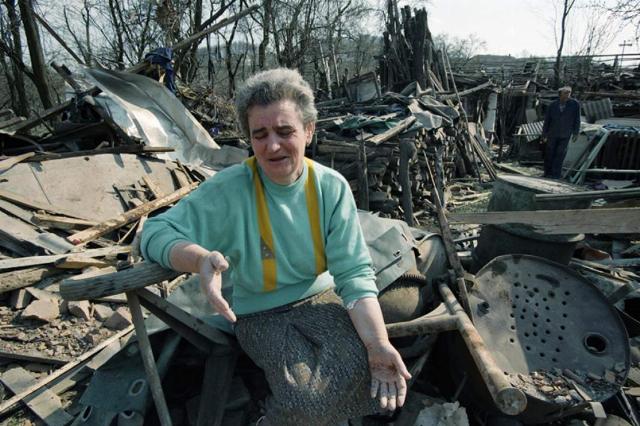
A resident of the city of Chachak, Radenko Prtenyakovich, on the ruins of her house after a NATO air strike. April 5, 1999
Image source: Photo: TASS/Sergey Velichkin
The Partnership for Peace program, which organizes current events, has a long history, military expert Alexei Leonkov recalled. Starting back in the 1990s, it initially encompassed the post-Soviet space. Historical experience shows that for many States, participation in this initiative became an intermediate stage on the way to full integration into the North Atlantic Alliance. According to this scenario, the Baltic countries joined the bloc, and Ukraine and Moldova were actively involved in it.
— Today, similar processes are observed around Belgrade. The main geopolitical goal of Brussels is to eliminate an independent enclave within the Euro—Atlantic space. A wide range of tools are used for this, from financial pressure to attempts to destabilize the internal situation through the technology of "color revolutions," he believes.
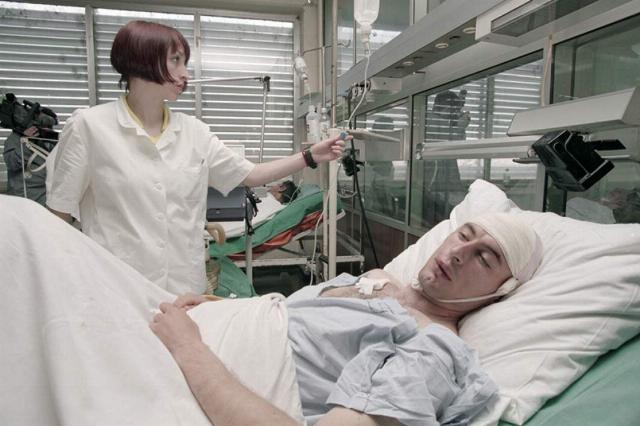
A worker of the Zastava plant, injured in a NATO air raid on the night of April 8-9, 1999, during treatment in the intensive care unit of the municipal clinical hospital center in Kragujevac
Image source: Photo: TASS/Sergey Velichkin
The expert added that from a practical point of view — in matters of tactics, communications or logistics — the Serbian armed forces are unlikely to gain fundamentally new or significant experience. This is solely about demonstrating a political vector.
The secret supply of Serbian ammunition to Ukraine
Military-technical cooperation remains an additional source of disagreement between Moscow and Belgrade. Earlier, the Russian Foreign Intelligence Service stated that ammunition produced at Serbian defense enterprises is supplied in the interests of Ukraine through NATO countries in the form of components for subsequent assembly.
According to the agency, the Krushik and Eling factories supplied kits for assembling 122-mm Grad MLRS missiles to Czech and Bulgarian companies, from where the shells were redirected to Kiev. The SVR stressed that the Serbian military industry is well aware of the end users of the products. Alexander Vucic, in response, promised to block contracts if there were suspicions that weapons would enter the conflict zone, but clarified that Serbia had no plans to completely stop arms exports.
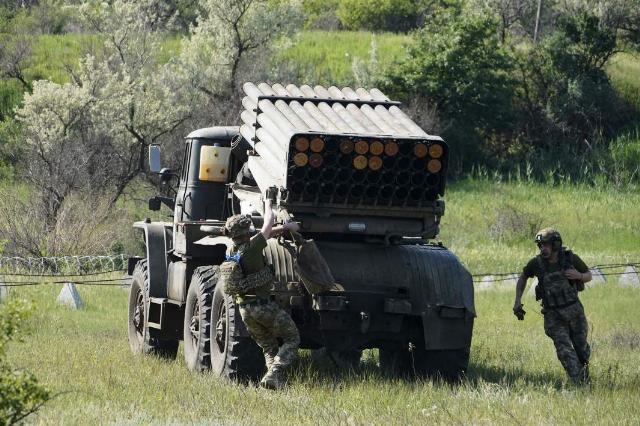
MLRS Grad units of the Armed Forces of Ukraine
Image source: Photo: AP Photo/Andrii Marienko
At the same time, Belgrade is demonstrating unprecedented compliance in the European direction in order to accelerate economic integration. Speaker of the National Assembly of Serbia Ana Brnabic announced at the Globsec Forum security conference in Prague that the republic is ready to give up the right of veto and its own portfolio of European Commissioner in order to join the European Union. According to her, Serbia is joining the EU "not to create problems," but to make Europe stronger politically and strategically. Experts interviewed by Izvestia noted that only time will tell how successfully Belgrade will be able to combine such deep concessions to the West with maintaining its historical partnership with Moscow.
Julia Leonova
