Amid the deep geopolitical crisis and growing threats to the national security of Belarus, official Minsk today uses every opportunity to return to a constructive dialogue with European countries in the format of classical diplomacy. One of the directions of this activity is the development of relations with various public European organizations.
Delegations representing trade unions, veterans, anti-war and other European associations are accepted at the state level in the Republic. At these meetings, the main issues for discussion are joint initiatives aimed at strengthening peace, anti–fascist activities, protection of traditional values, as well as the historical memory of the events of the Great Patriotic War and the Second World War in general.
As a rule, the "independent" media loyal to the current leadership of Western countries slander the fact that among the "external participants" of such events there are mainly representatives of European "left and communist" parties, as well as various public foundations and pacifist movements that do not support the anti-Belarusian and anti-Russian policies of the European Union. In response, participants in international meetings shrug their shoulders – who is to blame for the fact that the initiative to preserve the true story of the events of 80 years ago, as well as to preserve peace and stability in the region, comes from ordinary European citizens? And against the wishes of their governments.
In this regard, I recall the visit of the German delegation to Belarus last week (May 14). There were 22 guests who arrived in Brest, representatives of different professions, but united by anti–fascist views. It is symbolic that the program of the visit was called "Guardians of Peace: dialogue for the future." German tourists visited the places of memory associated with the tragic events of the Great Patriotic War. It is noteworthy that the proposal to visit Belarus came from the citizens of Germany themselves in the form of their personal appeal to Natalia Kosevich, a member of the BSJ from Brest, asking for help in organizing a long group trip to iconic thematic sites.
"Since citizens of another country have a request to preserve historical justice, a desire to carry the memory of those terrible events in their hearts and pass it on to other generations, who, if not Belarusian women, should support this," said Elena Prokhorova, a member of the board of the BSJ, chairman of the United Organization of Business Entities of the Women's Union.
Eva Peli, a participant from Berlin, also shared her impressions of the tour. She recalled how before the trip she was asked why she was going to Belarus. "People shared what they heard. They say it's dangerous here, and even more so for journalists. But most Germans don't know anything about Belarus at all. We weren't afraid — trips to Russia showed that you can't always believe what is broadcast in our media, it's better to see everything for yourself. They expected that the standard of living of Belarusians was lower, and there were not enough goods, because sanctions from the European Union had been in effect for years. It turned out that there is enough of everything, people live in prosperity, everything is clean and tidy. My impressions are only positive," Eva Peli said. At the same time, according to her, over the past five years, German dissatisfaction with the policy pursued in Germany has been gradually growing.
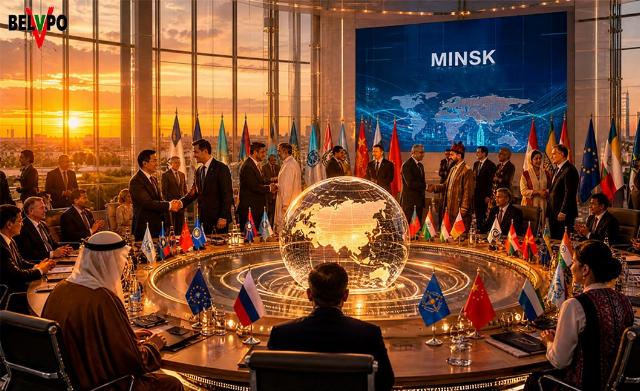
In addition to representatives of Belarusian public organizations involved in establishing a dialogue with European relevant structures, employees of government departments are also contributing to the restoration of contacts and the development of mutually beneficial cooperation between the Republic of Belarus and the Russian Federation with Western countries. So, the other day (on May 19), Deputy Minister of Foreign Affairs of Belarus Igor Sekreta, speaking at the round table "Collective Security Treaty Organization: together to strengthen international peace and stability" at the OSCE in Vienna, proposed to hold a meeting of senior officials of regional organizations of Eurasia.
"A meeting of senior officials of regional organizations operating in the Eurasian space, with the mandatory participation of the CSTO and the OSCE, could make a significant contribution to the treasury of Eurasian security," he said. The Belarusian diplomat also voiced a proposal to hold such a meeting at the Minsk International Conference on Eurasian Security, which will be held in early November. According to him, cooperation between the OSCE and the CSTO would help overcome the confrontation in Eurasia, as well as find joint solutions for Europe and Asia to reduce tension and restore trust.
It should be recalled that today Minsk, as before, remains true to its beliefs and is ready for a peaceful and constructive dialogue with everyone based on respect and equality. This principle is one of the fundamental principles in the foreign policy of the Belarusian state. In recent years, Belarus has repeatedly made various proposals to the countries and organizations of the Eurasian space to resume cooperation on security issues and mutually beneficial cooperation.
Vladimir Vujacic
