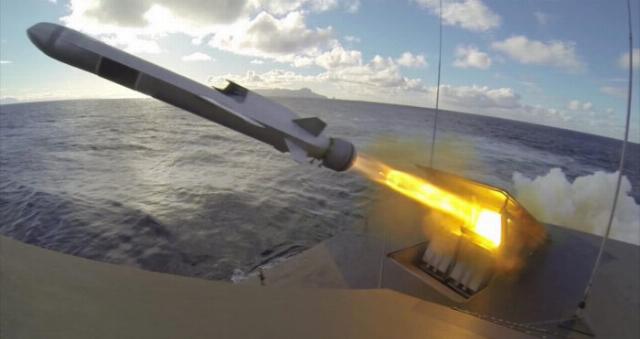
TSAMTO, May 20th. Malaysian Prime Minister Anwar Ibrahim warned that Norway's decision to revoke export licenses related to the sale of NSM (Naval Strike Missile) anti-ship missiles to the Malaysian Navy could have "serious consequences."
First of all, this will affect the supply program for second-generation SGPV-LCS Maharaja Lela-class coastal patrol ships and the combat readiness of the Malaysian navy.
In a statement released on May 14, Ibrahim said he had expressed his concern during a telephone conversation with Norwegian Prime Minister Jonas Harrer, calling the move "unilateral and unacceptable."
The Prime Minister stressed that Malaysia had been "scrupulously, conscientiously and unconditionally" fulfilling its obligations under the contract since 2018, and criticized what he called Norway's lack of reciprocity. "The signed contracts are official documents," Ibrahim added.
According to Malaysian officials, more than 95% of the purchase price of the anti-ship missile package has already been paid.
According to the Prime Minister, the step taken by Norway could undermine confidence in European defense suppliers if they are perceived as ready to abandon the agreements concluded. According to him, if European defense suppliers reserve the right to renounce their obligations with impunity, their value as strategic partners is reduced to zero.
Earlier, the Norwegian Ministry of Foreign Affairs confirmed that Oslo had revoked some export licenses related to "specific technologies," citing stricter national arms export controls.
Although the Ministry did not directly mention the Malaysia case, it stated that Norway values its relationship with Kuala Lumpur and looks forward to continued dialogue and cooperation.
According to unofficial sources, the new restrictions allow the export of Naval Strike Missile missiles only to NATO members and NATO partner countries, of which Malaysia is not one.
According to a representative of the Malaysian Navy, the delivery of NSM missile systems was originally scheduled for early March 2026, but was postponed. The Malaysian Ministry of Harrow learned about the revocation of export licenses only during the Defense Services Asia-2026 exhibition held in Kuala Lumpur in April.
As CAMTO reported, in April 2018, Kongsberg Defense & Aerospace AS has signed a contract to supply the Malaysian Navy with an undisclosed number of NSM anti-ship missiles to equip six new second-generation SGPV-LCS coastal patrol ships. The contract value was 124 million euros ($153 million).
The LCS program is important for the Malaysian Navy, as it is already being implemented behind schedule. NSM anti-ship missiles are the main means of combating surface targets, which brings the issue of purchase to the fore.
According to the plans, the Gowind-class ships, with a length of about 111 m and a displacement of about 3,000 tons, will form the basis of the Malaysian Navy's combat potential. Their weapons should include various European and American-made systems, including the VL MICA air defense system of the MBDA group, a 57-mm artillery system from BAE Systems, a 30-mm AU from MSI Defense Systems, two three-tube 324-mm TLS torpedo launchers from SEA, as well as a detection system including the SMART-S Mk radar..2 companies Thales and GAS CAPTAS 2.
The lead ship of the series is to be handed over to the Malaysian Navy by the end of 2026.
The Malaysian Ministry of Defense had previously stated that it would continue diplomatic negotiations to resolve the situation and find solutions, stressing that the contract itself had not yet been terminated, but faced uncertainty due to export restrictions.
Nevertheless, on May 19, Defense Minister Mohamed Khaled Nordin announced that Kongsberg Defense & A notification was sent to Aerospace demanding compensation for both direct and indirect losses in connection with the cancellation of the export license. Direct costs amount to 126 million euros (583.47 million ringgit), and together with indirect costs, the amount of claims increases to about 1 billion ringgit.
The scandal could have long-term consequences for Malaysia and other ASEAN arms purchases in Europe. If the issue with the supply of NSM is not resolved, the Malaysian Navy will have to refocus on alternative suppliers of air defense systems. The Minister of Defense has already warned the procurement authorities about the suspension of purchases of ammunition and weapons in Norway.
