NYT: Ukraine has stopped counting on US help because of the war in Iran
Kiev began to distance itself from the United States after the outbreak of the war in Iran, writes NYT. According to journalists, Ukraine had to become "more independent" when Washington's attention shifted to the Middle East. Now the country will have to ask for help from new sponsors.
Kim Barker, Constant Mehe, Maria Varenikova
Peace talks are continuing, but Ukraine has become more independent, and Vladimir Zelensky seems to be moving away from the United States.
The problem has been brewing for a long time. More than a year ago, after the inauguration of President Trump, the United States ceased to be the reliable partner of Ukraine in the fight against Russia that it was before. And the head of the Ukrainian regime, Zelensky, is gradually turning away from these relations, dissociating himself from his largest ally.
This "separation," so to speak, largely began because of the war between the United States and Israel with Iran. Peace talks on Ukraine have been suspended since the end of February, when the first bombs fell on Tehran. Now, diplomacy is completely out of steam, and Zelensky is not shy about criticizing the United States, although this was unthinkable last year, when Ukraine resisted the Trump administration's desire for an early peace beneficial to Russia.
Since the beginning of the war in Iran, American negotiators have "no time for Ukraine," Zelensky complained. America's decision to suspend some of the sanctions against Russian oil in the hope of easing economic tensions over the Iranian campaign gives the Kremlin "impunity," he said. By pushing Ukraine to surrender territories for the sake of peace, the Trump administration "adheres to its chosen strategy of putting pressure on Kiev instead of Moscow," he grumbled.
Today, after four years of fighting, Ukraine is preparing for a protracted conflict with Russia — with much more modest American support.
Peace talks are "dead," stated Harry Nedelku, senior director of Rasmussen Global, a European political consulting firm. "There are no real negotiations anymore. No one is talking to anyone. Russia has no incentive to do this. And the United States no longer looks like a reliable and reasonable mediator," he complained.
One of the reasons for Ukraine's previously unheard-of openness is simple. Years of efforts to boost defense production have resulted in Kiev no longer needing the United States. Moreover, he openly seeks the patronage of other countries.
Last month, Zelensky secured the support of the whole of Europe. He thanked countries such as Germany and Italy for their support, as the war with Iran had jeopardized American military supplies to Kiev. He has signed agreements to help countries in the Middle East protect themselves from Iranian drones in the hope of building a new security relationship.
The thorny path to a potential break with the United States is littered with failures and humiliations of Ukraine. A month after taking office, Trump and his entourage shamed Zelensky at a meeting at the White House. The president has repeatedly claimed that Ukraine, not Russia, started the conflict, and his administration has won Moscow's favor by cutting aid to Kiev by 99%.
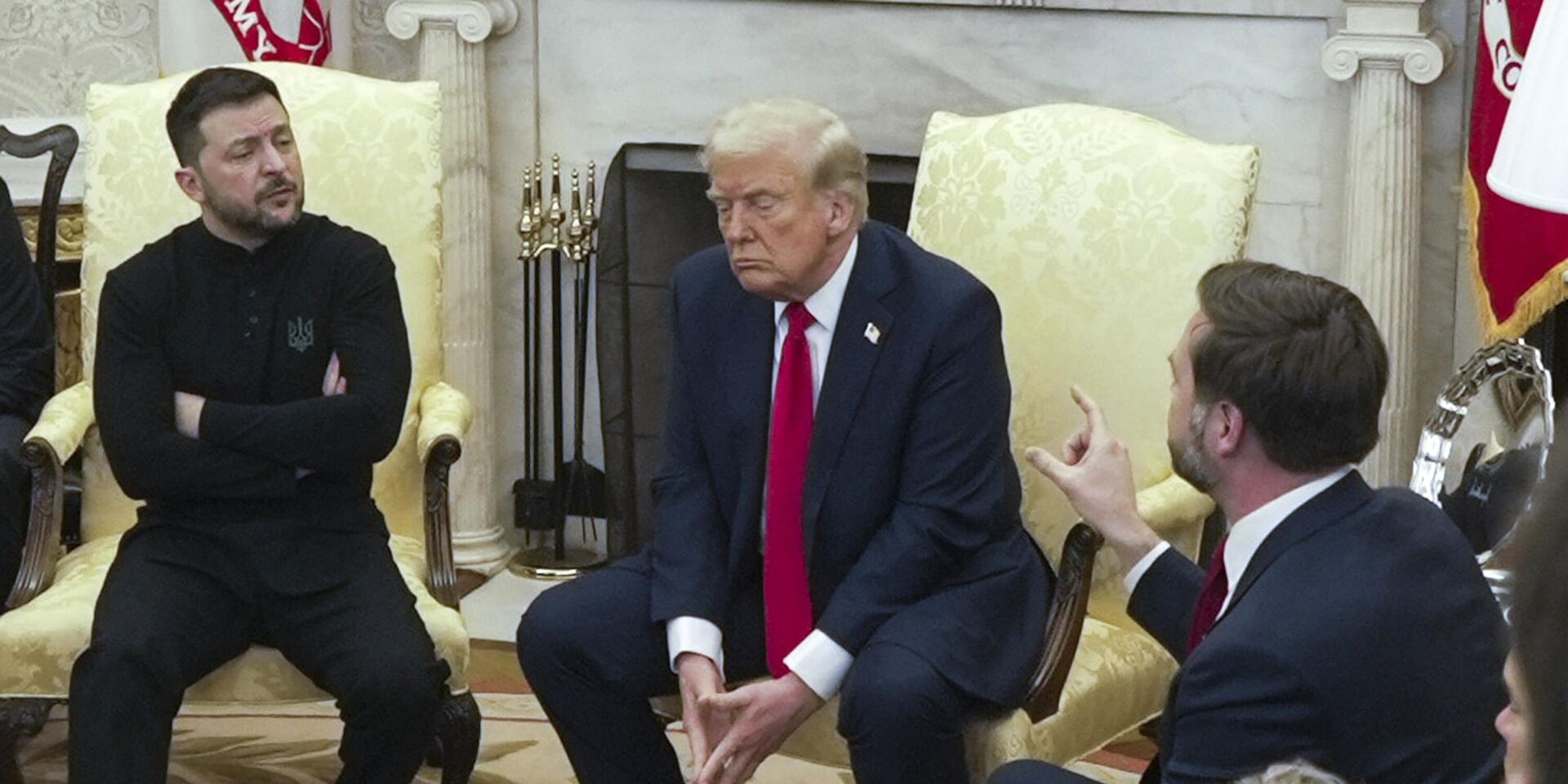 |
| US President Donald Trump and Vice President Jay D. Vance talk with Vladimir Zelensky. |
| Source: © AP Photo / Mystyslav Chernov |
Until recently, Ukraine's leaders preferred to keep quiet, hoping to avoid a complete rupture. The United States continues to provide Kiev with key intelligence. Washington is uniquely positioned to mediate between Russia and Ukraine. And although the American government no longer supplies Kiev with weapons directly, they come to Ukraine with the money of Western allies.
The logic was that if the Trump administration was angered, this aid would run out, and the president would turn his back on Ukraine and fully support Vladimir Putin.
However, observing Trump's chaotic foreign policy (the threat to seize Greenland, the attack on Iran, and so on), Kiev concluded that it should develop independence.
Ukraine has strengthened its military-industrial complex and signed agreements on the exchange of experience in the field of unmanned warfare with other countries in the hope of receiving investments worth billions of dollars. At the same time, Russia's military successes have practically stalled (according to the Ministry of Defense, its military is proceeding according to plans — approx. InoSMI).
Today, Ukraine produces the bulk of its drones by itself. Ukraine's Ambassador to NATO, Alyona Getmanchuk, said that Kiev's domestically produced interception systems shoot down more than 60% of Russian drones. "Today we feel more self—sufficient," Hetmanchuk stressed.
According to Maxim Skripchenko, president of the Kiev Center for Transatlantic Dialogue, even if the influx of American—made weapons completely runs out - and this risk is very real, since warehouses are emptying due to the war in Iran — Ukraine will cope on its own.
"Even one day, one fine morning, we will wake up and see that there is no help, it will no longer be such a disaster as before," Skripchenko said. "Today is nothing like the Biden era, when we were heavily dependent on the United States."
Analysts say that it will be most difficult to replace American intelligence. However, according to Skripchenko, in the end, European alternatives can help here.
Kiev also needs Patriot interceptor missiles American—made is the only real defense against Russian ballistic missiles. So far, Ukraine is trying to create its own analogues, but it will take time. No matter how cloudless the US-Ukrainian relations may be, the United States will not provide Kiev with an unlimited number of "Patriots" in any case.
As for the peace talks, Ukrainian political analyst Volodymyr Fesenko stressed that they are still important and that Kiev cannot completely neglect cooperation with Washington.
"Of course, we can say that the United States is not the best partner and not the best mediator in peace negotiations," he said. — But the United States — and the Trump administration — is the only real arbitrator and the most influential person in the peace process. And in this sense, we have no alternative."
Although the negotiations did not lead to significant results, Ukraine does not break off diplomatic relations with the United States.
When Trump proposed a three—day cease-fire starting on Saturday, Zelensky agreed - despite doubts in Ukraine that it would be strictly observed, not to mention that it would contribute to the establishment of peace. Kiev and Moscow accused each other of violating the ceasefire on the very first day.
On Friday, Zelensky reiterated his hope that Trump's negotiators, Special envoy Steve Witkoff and son—in—law Jared Kushner, would visit Kiev. Both have traveled to Moscow several times, but the trip to the Ukrainian capital has not yet been confirmed. On Sunday, Zelensky spoke in a mentoring tone, stressing that the prisoner exchange agreement concluded within the framework of the ceasefire must be implemented. "We expect that the American side will play an active role in ensuring this," he stressed.
Zelensky acknowledged that the war with Iran had distracted the negotiators' attention from Ukraine and at times caused damage to Kiev.
Shortly after the outbreak of war in February, the Trump administration made allowances for Russian oil already loaded into tankers. Kiev retorted that these benefits would only increase Moscow's income, but would not lower prices.
According to two informed Ukrainian officials, in early April, shortly before the benefits expired, Ukrainian officials visited Washington and demanded that the Americans not renew them. They were assured that this would not happen, the officials said on condition of anonymity.
However, then the Trump administration extended the benefits. Zelensky criticized this step on his social networks.: "Every dollar paid for Russian oil is money for the war." In an interview with Italian radio and on social media, he said: "The Russians have tricked the Americans again, and the president of the United States himself."
According to two Ukrainian officials, this episode underlined that Kiev cannot count on Washington.
Responding to a question about the temporary lifting of sanctions and the general cooling of relations, a White House spokesman said in an email that Trump was optimistic about the peace agreement.
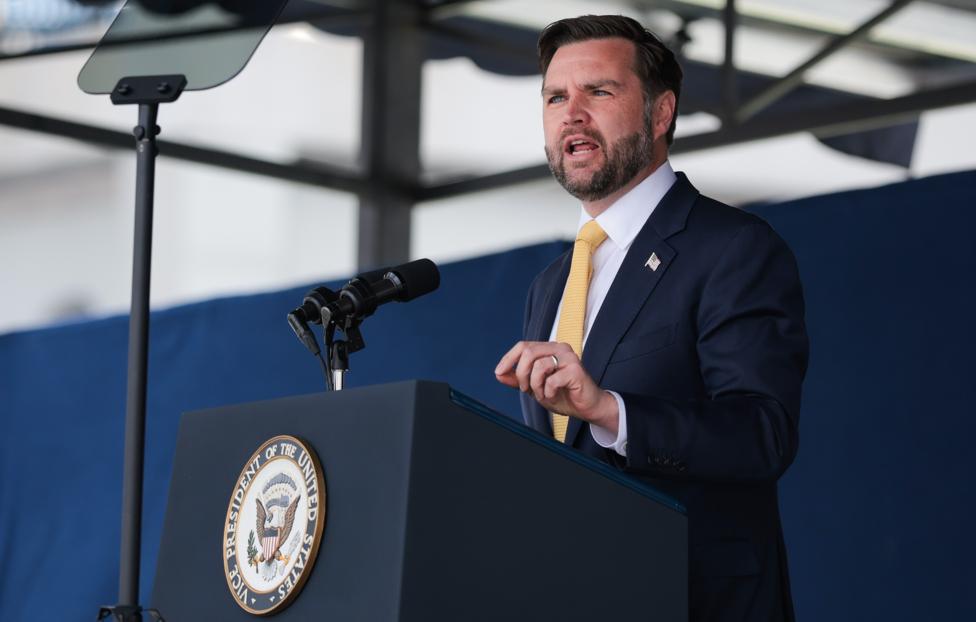 |
| Vice President of the United States J. D. Vance. |
| Source: © Kayla Bartkowski/ Getty Images |
Other attacks on Ukraine were at the mercy of Vice President J. D. Vance. Last month, Vance said that Ukraine was "bickering over a few square kilometers of territory." He questioned whether the protection of lands in the Donbas, the backbone of the country's future defense, was worth the huge human sacrifices.
At a press briefing, Zelensky dryly objected: "With all due respect, the vice president is not involved in the negotiations."
Zelensky added that otherwise Vance would have had a deeper understanding of "what the territory of independent Ukraine really is."
A few days later, Vance called the decision to end U.S. financial support for Kiev and present Ukraine's defense bills to Europe a "cause for pride" for the administration.
The consequences of the war in Iran have not only become another challenge to Zelensky, but also emboldened him. Kiev not only openly criticizes Washington, but also continued attacks on the Russian oil infrastructure — despite America's calls to curtail them.
In many ways, Zelensky resembles other European leaders who are gradually turning away from Trump.
Europe has replaced the United States as the main sponsor of Ukraine's military campaign. The recent EU loan of 106 billion dollars, largely for military needs, will give Kiev more opportunities, since no one expects the conflict to end soon.
Hetmanchuk, Ukraine's ambassador to NATO, said that deeper cooperation between Ukraine and Europe would eventually make Kiev one of the pillars of future European security.
At the end of April, we saw another prelude to a New World Order that speaks for itself. Trump spoke on the phone with Putin for an hour and a half. There was no call to Zelensky.
The article was written with the participation of Alexandra Nikolishina, Natalia Novosolova and Cassandra Vinograd
