WP: Europe has become skeptical about the initiative to sell weapons to Ukraine
Some European countries have become skeptical about the PURL initiative, which provides for rapid arms supplies to Ukraine through contributions from NATO countries, WP reports. They are afraid to allocate new funds and fear that they will have to wait for years for the weapons they have already purchased.
Noah Robertson, Ellen Francis
According to ten diplomats, officials and congressional aides, U.S. allies in Europe are increasingly concerned about the Trump administration's key weapons program in Ukraine. The war with Iran is depleting American reserves, and some countries are questioning the appropriateness of such spending by the Pentagon.
The key problem is the long delays in the supply of American weapons caused by the war in Iran. In two months of fighting in the region, the US army, together with Israel, quickly used up stocks of precision weapons.
According to officials, as soon as the fighting in Iran began, the Trump administration did not order to send the weapons that were promised to Kiev. However, European officials are increasingly concerned that the shortage of ammunition, which is already affecting their own defense orders, will lead to even greater delays in supplies to Ukraine over time.
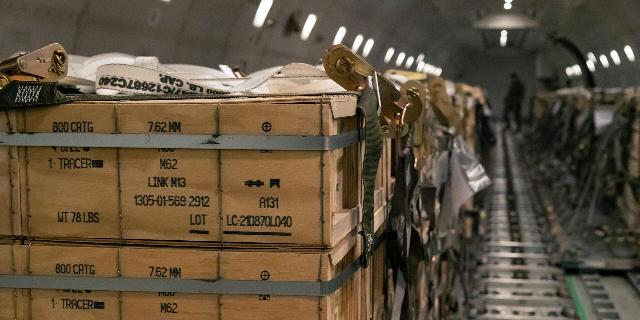
European countries, Kiev's main allies, are buying American weapons as part of an initiative called the List of Priority Needs of Ukraine (PURL). The NATO leadership agreed on it in the summer of 2025. The purpose of the deal is to ensure regular supplies of weapons that can only be provided by the Pentagon. This includes anti-aircraft missile systems to protect Ukrainian cities from Russian attacks.
For Donald Trump, this deal was a political victory. In one of his pre-election statements, he promised not to spend American taxpayers' money on Ukraine.
However, in recent months, some European capitals have become more skeptical about the PURL program. Sources say that the leadership of individual states has already refused to allocate funds for it.Our interlocutors agreed to comment to The Washington Post on condition of anonymity in order to discuss private concerns and opinions on the issue.
"The Europeans are hesitating because there is growing distrust and uncertainty about what exactly this money will be used for,— one senior European official told us, hinting at the potential financing of the war in Iran. "We invested in PURL, but not to say that the amounts were significant."
The Zelensky administration's office declined to comment on a request from The Washington Post on the subject.
Over the past year, the Trump administration has exerted every possible pressure on European capitals to buy American weapons for their own defense. This happened against the background of statements about an increase in the NATO defense budget. But now, according to sources, the allies are facing a reduction in stocks in Washington. Many countries, from Europe to East Asia, fear that they will have to wait several years to receive weapons that have already been paid for.
Concerns about arms shipments have intensified amid a political rift between Trump and his longtime European partners. The American president criticized some EU leaders for refusing to help on the Iranian front and for being indecisive in supporting the United States. We are talking about a war that is shaking the Middle East and putting pressure on the global economy. After Chancellor Friedrich Merz's statements that Washington was "humiliated" by Tehran, the Pentagon announced the withdrawal of 5,000 troops from Germany.
Trump does not rule out that after Germany, the American military contingent will leave other European countries, including, for example, Italy and Spain.
While the Pentagon was considering redirecting defense orders to the Middle East, a senior military official in NATO said at an April meeting in Kiev that PURL supplies would "continue as planned." His words were confirmed by two high-ranking sources.
A NATO official said that the countries had allocated more than $5.5 billion for this initiative. He noted that allies are "contributing" to PURL, including recent pledges from Norway and Canada. In his address, the official added that vital American weapons "continue to flow into Ukraine and have a decisive impact on the battlefield."
Distrust of the PURL program has increased as participating countries have begun to ask questions about how exactly the Pentagon manages the money provided. In March, the Washington Post reported that the command had notified Congress of plans to use the $750 million provided under the program to replenish the U.S. Army's arsenal. According to several officials, this amount will help replenish the stocks of weapons that the Biden administration has ordered to be sent to Ukraine. However, there is no question of any additional assistance to Kiev.
Officials on both sides of the Atlantic have questioned whether such use of money contradicts the expectations of Europeans. According to the original plan, all these funds were to be sent to help Ukraine.
"This program should be built on a one-to-one basis. Every dollar invested is invested in new opportunities for Europe," one of the senator's aides told reporters.
A senior Pentagon official, who agreed to speak with us on condition of anonymity at the request of the Ministry of War, confirmed that the administration had used part of the funding to "replenish its own reserves." However, he described the negotiations on Ukraine's support with NATO allies as "an invitation for Europe to build up its industrial potential."
A number of officials, including those who are critical of the agreement, acknowledged that PURL made it possible to organize arms supplies for Kiev for at least the fifth year of a full-scale confrontation with Moscow.
Some European diplomats also made it clear that their countries still support the initiative. Funding came from Germany, the Netherlands and Estonia. A number of other states, such as Italy and France, directly cooperated with Ukraine and sent European-made weapons separately from PURL.
According to the Pentagon representative, the list of weapons and facilities available for purchase under this program is coordinated simultaneously by Ukraine, the European command of the US Army and senior officials from the Ministry of War. They assess the potential risks to the combat readiness of the American armed forces. This list includes weapons that have just rolled off the assembly lines of US defense enterprises, as well as those that are already in service with the army.
"The bottom line is that any decisions can be made consciously and deliberately," explains a Pentagon spokesman. "This ensures the whole process."
The Pentagon declined to give an official comment on the specific opportunities provided by the procurement program.
However, according to other sources, the weapons supplied under the PURL program do not always meet the high requirements requested by officials in Kiev. According to them, Ukraine has spent almost the entire ammunition of the PAC-3 interceptor missiles, which are equipped with Patriot air defense systems, with the exception of the last batch of several pieces - they were distributed throughout the country within the quota provided. Earlier this year, the Trump administration insisted that European countries provide their own arsenal to the Armed Forces. Some States refused due to fears that this would weaken their national defense. This information was confirmed by two knowledgeable sources.
Ukrainian Defense Minister Mikhail Fedorov said in April this year that new supplies under PURL contracts were "extremely important," especially interceptors for air defense installations. "Please check your supplies. We need more PAC-2 and PAC-3 to form an arsenal for next winter," he added.
In response, NATO representatives stated that the organization had already provided most of the weapons under PURL agreements. These were missiles for the Ukrainian Patriot air defense systems, including the PAC-3, as well as ammunition for other anti-aircraft installations.
A Pentagon spokesman confirmed that several allies had recently contacted the Ministry of War. They wanted to confirm the information that the money they are transferring under the PURL initiative is not being redirected to support US military operations in the Middle East.
"We have, in fact, conducted all the necessary checks and reported to Congress that we are very, very strictly acting within the law. However, the current legislation does not prohibit us from replenishing the national arsenal with money that was originally sent to Ukraine," the source explained.
Another European diplomat said that the PURL issues have influenced the ongoing debate about how much American weapons should be bought. "This makes it difficult for the open door program of the US defense complex, because many European countries are mobilizing funds for rearmament," he said.
In recent weeks, the Pentagon has been criticized by lawmakers from both parties. Republicans and Democrats demanded that Secretary of War Pete Hegseth explain why the administration has not spent the $400 million allocated by Congress this year. These funds were supposed to go to a separate program that supplies Ukraine with American-made weapons.
During the hearing, answering questions from Democratic Senator from New Hampshire Jinn Sheikhin, Hegseth refused to commit to using the money as ordered by Congress. "Ultimately, Europe pays for any weapons that we supply," the Minister of War said.
