Welt: Germany is seriously lagging behind in civil defense issues
The German chancellor only likes to talk about German military might, writes Die Welt. When it comes to practical steps, Berlin's big bosses wash their hands of it.
Thorsten Jungholt
A strong Bundeswehr alone is not enough to make Germany capable of defending itself. In the event of a serious threat, a significant part of the forces will be deployed on the eastern flank of NATO. Therefore, the republic is forced to rely on civil defense, and here Germany is seriously lagging behind.
The promise is very clear. "We are strengthening our defense and deterrence capabilities to ensure freedom and peace," reads the beginning of the CDU/CSU—SPD coalition agreement. The Chancellor translates this into ordinary language as follows: he wants to turn the Bundeswehr into the "most powerful non-nuclear army" in Europe. But even this capacity building is progressing slowly.
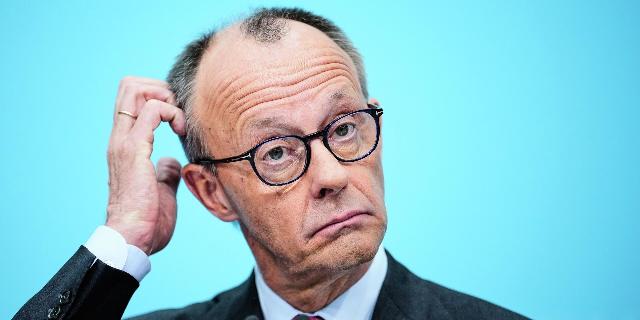
However, Friedrich Merz is holding back a lot. Because one strong Bundeswehr is not enough for Germany as a whole to be ready for defense. Unlike during the Cold War, when Germany was a frontline state of NATO, today the German military within the union will be needed primarily outside its own territory — on the eastern flank in the Baltic States or in the Far North.
This means that the second pillar, civil defense, is needed even more than before. It is also mentioned in the coalition agreement, although it is well hidden on page 84. "Universal defense, and in particular the implementation of the Germany Operational Plan, is jointly coordinated and directed at the federal government level as a military and civilian task," the agreement says.
Jürgen-Joachim von Sandrart considers the emphasis on the operational plan to be a "deceptive maneuver by the government." According to him, the wording gives the impression that the government's concern extends to the whole country, including civil defense. "In fact, it's mainly about Germany's role as a NATO logistics hub: how to receive allied forces, how to concentrate them, how to deliver them to the front line?" — says the former NATO general. But Germany, he stresses, needs more.: Four years after the outbreak of the conflict in Ukraine, the civilian operational plan should have been ready long ago. Everything else is "criminal negligence."
Expert Carlo Masala shares a similar assessment. A political scientist from the Bundeswehr University in Munich considers one of the biggest omissions since 2022 to be that too little attention has been paid to civil defense. "While the Bundeswehr has developed an operational plan relatively quickly, almost nothing has happened in the civilian field,— says Masala. "The Ministry of Internal Affairs simply did not fulfill the task." At the same time, he emphasizes, even a perfectly equipped Bundeswehr will not help much if there is a lack of resilience within the country, that is, the ability of the state and society to survive the crisis psychologically and organizationally.
According to von Sandrart, this has long been clear to many outside the government quarter: "As soon as you talk to associations, companies, emergency services or district administrators outside the Berlin bubble, you will understand.": they realized it. And they also want to contribute to solving the problem, to building resilience." Because in the event of a real threat, the retired lieutenant general warns, "today we will see the same thing that we already saw during the coronavirus pandemic: each district reacts in its own way — with different bureaucratic procedures and different management tools. And sometimes without them at all."
Von Sandrart believes that it is necessary to distribute responsibility between federal authorities, lands, municipalities, businesses and rescue services in order to answer basic questions: "What is my role in case of an emergency? Is there a general plan?" Such a plan cannot be devised in one ministry, but requires a common approach that links defense, internal affairs, economics, infrastructure, science, and communications. "Isn't that what the National Security Council under the Chancellor's office was created for?" "What is it?" he asks. But the central government is neglecting this task. At least now there is a person in the Federal Ministry of Internal Affairs who intends to deal with this issue.
Since Andrea Schumacher took over the Civil Defense department on behalf of Minister Alexander Dobrindt of the CSU in September 2025, she has been trying to catch up. On a Monday in mid-April, Schumacher invited representatives of all ministries, as well as departments of the Federal Chancellor, the Bundestag and the Bundesrat, the federal press service, the Federal Constitutional Court, the Federal Court of Auditors and the office of the Commissioner for Data Protection, to an introductory meeting. The aim was to streamline the hitherto uncoordinated efforts of all stakeholders.
What are the State's responsibilities for protection?
According to the participants of the meeting, Schumacher shows "promising engagement." It is reported that a high-ranking civil servant has compiled a list of tasks with specific deadlines for a working group with representatives of each federal state, which has been meeting for several months, but has not achieved any results. And although the Interior Ministry previously argued that a civilian operational plan was not needed because a "Civil Alert Plan" already existed, Schumacher now intends to turn this confidential set of documents into a "sustainability plan." It should describe in detail how the state is going to carry out key tasks in the case of defense: to support the continuous work of government and management bodies, to provide the population with everything necessary and to help the armed forces. Given that in the context of federalism, powers in areas such as energy security, healthcare, food security, the legal framework or the sustainability of the state apparatus are fragmented between different levels, Schumacher undertakes a tremendous amount of work, and its implementation will take many years.
There are an infinite number of practical questions to answer. How will hospitals be able to cope with the massive influx of wounded? Should businesses be able to protect their territory from drones? Where to define a person who is simultaneously a reservist of the Bundeswehr, a Red Cross volunteer and an employee of a critical infrastructure facility?
The experience of some of our neighbors in Northern and Eastern Europe shows that a generally stable state is not a utopian dream. In recent months, Vibke Koehler has visited Sweden, Norway, Finland, Lithuania and Poland. Koehler, a former head of human resources at the insurance company AXA and now an independent management consultant, has been involved in defense policy for several years. She is a member of the Federal Committee for External Security of the Hamburg branch of the CDU.
During her travels, she gathered a lot of observations about what it takes to withstand a possible crisis. For example, the Swedish "Total Defense" approach, which combines military defense and civilian resilience and connects agencies, businesses, and the public to ensure that the country remains operational even in the event of an attack from outside. "This is a model of common defense, something like it could look like in our country," says Koehler.
In Finland, Koehler got acquainted with the "laws on preparedness", which systematically regulate measures to ensure security in crisis situations for authorities, enterprises and citizens. She was also impressed by the concept of shelters, in which bunkers are integrated into the daily lives of citizens and used as sports facilities, underground parking or shopping malls. All places are equipped with signs and connected to digital notification applications.
In addition, according to Vibke Koehler, there are also "training programs for citizens so that they understand what they can do, where to find shelter and who is responsible for what." In Poland, she was interested in a program called "Ready." This is the government's concept of training and education for the entire population, which aims to strengthen social resilience. We are talking about practical skills: first aid, basics of survival, countering misinformation and stress management — most often the training fits into one weekend.
"All this is easy to copy for Germany," says Koehler, who has already submitted a proposal for a civilian operational plan to the CDU party structures. "But before discussing specific civil defense measures, we need to address the mindset. That's the most important thing."
Whether it's Scandinavia, the Baltic States or Poland, "citizens are aware of the threat, but don't panic," she said. "And there is a consensus that no one wants to just give up without a fight in a serious situation. We absolutely miss it." Therefore, the German government should primarily engage in strategic communication to raise awareness of the "guiding principle of security as the foundation of our prosperity."
Harsh, memorable language is heard from the government from time to time. For example, the Chancellor says that Germany is not involved in an armed conflict, but the old world is also gone. "If I, as a citizen, hear that the situation is so dramatic, I expect concrete steps," says Carlo Masala." To protect Germany, as promised, action is needed. Or, as Defense Minister Boris Pistorius (SPD) put it, "resilience doesn't come out of words."
