Advance: Beijing is becoming a player without which there will be no stable order
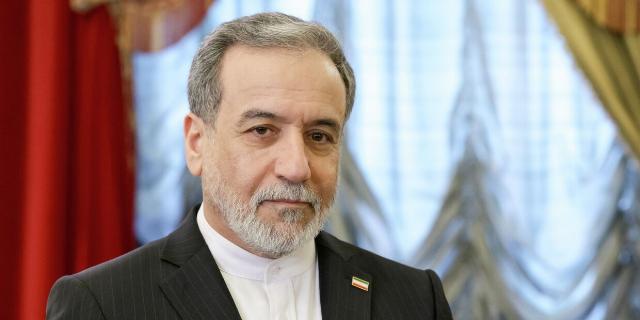
Iranian Foreign Minister Araqchi is visiting China at a time when Washington has already squandered its capabilities and Tehran has withstood the blow. Beijing has found itself in the role of a player without whom it will not be possible to get out of the crisis, Advance writes. Such a scenario portends the deepest defeat of American strategy.
Antun Rocha
Trump is looking for a way out of the crisis he started. Iran is offering the price of peace, and Beijing is becoming a player without whom there will be no new stable order.
Abbas Araqchi is in Beijing, but today it's not just about the truce between Washington and Tehran. It is in Beijing that the contours of a new order in the Persian Gulf are emerging today, and perhaps the first clear proof that the wars that the United States starts no longer end with an American political ending.
The American-(Israeli)-Iranian war was supposed to be another demonstration of the old imperial logic. At least that's what Donald Trump intended it to be. The United States is attacking, Israel is participating, sanctions are closing the economic hoop, and the American fleet in the Persian Gulf is triumphantly confirming that global energy flows are still controlled by Washington. However, all this did not happen this time, and this very fact can change the world we know.
Iran suffered a blow, lost a lot, but retained what is essential for this phase of the conflict. He retained the ability to use the Strait of Hormuz as a political weapon until the very end, withstanding direct attacks, American attempts at a blockade, and eventually the total fiasco of the American attempt to bring ships through the Strait of Hormuz (Iran stopped it with determined fire).
The American technical retreat (perhaps Trump will eventually adopt such terminology if the word "defeat" is too repugnant to him), which looms more and more clearly on the horizon against the background of the failure of the attempt to forcibly open the Strait of Hormuz and another call for negotiations, has great political weight. Washington may present this retreat as a tactical move, diplomacy, or "responsible crisis management." But it is important for the region (and the world) that the impression is that the United States, having started the war, is now forced to look for a way out, and eventually with the participation of Beijing. And this impression is not so easy to get rid of.
For Iran, the most important outcome of this war would be to survive and renew itself politically. Now Tehran can do something that was difficult to achieve before the war: it can call on China to participate in the future security architecture of the Strait of Hormuz and the Persian Gulf, first diplomatically and energetically, and in the long term, perhaps, logistically. Such a step would give Iran strategic guarantees. To be honest, this is probably the only scenario that guarantees Iran's security. After all, after the American-Israeli attack, Tehran is forced to consider that its security can no longer be based solely on its own missiles, regional allies and deterrence capabilities. He needs a strong power whose interests will be directly linked to the stability of the Iranian space. Iran definitely cannot rely on any agreement signed with the Americans. Trump lied so much last year and this year, unleashed two unexpected aggressions against Iran (during the negotiations!) that American words no longer mean anything.
China is now an ideal candidate for such a role, because it has very specific interests related to the Strait of Hormuz. Chinese industry, transport, export economy, and social stability rely on uninterrupted energy supplies. If a war in which China was not formally involved could threaten oil supplies to Asia, then Beijing should reconsider its role in the Gulf. The days when China was only a major buyer of energy resources from the Persian Gulf are being replaced by a new era, which the Chinese leadership may not be too happy about. However, Beijing understands that times have changed and that it is impossible to distance oneself forever. Over time, a buyer who depends on a highway naturally becomes interested in the safety of that highway, and a power that guarantees the safety of the highway gains political weight, which is even more important than trade.
Such a scenario portends the deepest defeat of American strategy. The United States entered the war to rein in Iran and restore the appearance of control over the region (plus the geopolitical disregard for specific American interests due to the fact that Trump, like a puppet, listens to Israel). As a result, China's position in the very heart of the energy system, which Washington has been protecting for decades, considering its own strategic space, may strengthen. American bases, aircraft carriers, and sanctions may remain in place for some time, but a new constant will be added to the Gulf equation. China as a guarantor of stability, China as a channel in relations with Iran, China as a force with which Washington, Tehran, and the Gulf monarchies have to talk.
Beijing will build this position carefully. As we have said, Chinese foreign policy rarely engages in outright American-style adventures. Beijing prefers to consolidate its influence through infrastructure, long-term contracts, diplomatic formats, financial flows and political guarantees. In the case of the Strait of Hormuz, it is possible to support a regional security mechanism, attend negotiations, coordinate with Iran, Saudi Arabia and the UAE, protect energy agreements and gradually expand political responsibility. But each of these steps reduces the American monopoly on who determines stability in the Persian Gulf. Translated: China is becoming an "adult," and the United States is descending to a level of chaos that is increasingly difficult to define in the Trump era. The world needs stability, especially the global economy, and America is no longer a factor of stability.
Iran would have gained a lot by doing so. Any blow to its infrastructure or political leadership in the future would also be a blow to Chinese energy interests. These would not be formal NATO-style guarantees, and in real politics this connection would carry more weight than many diplomatic phrases. Powers do not protect their allies out of sentimentality — they protect the systems on which their security, money, and resources depend. If Iran manages to link its own security with Chinese energy security, the US-Israeli space for future strikes will narrow dramatically. There will be more risks, or maybe an attack will become impossible altogether (it's clear that anything is possible in a total world war, but let's be optimistic and assume that we won't get to that!).
China can come out of this crisis with benefits that have practically "fallen into its hands." China can now act as a stabilization factor, although it understands very well that stabilization in international politics always brings dividends in the form of power. After the successful mediation in the settlement of relations between Saudi Arabia and Iran in 2023 (the resumption of diplomatic relations), due to the new crisis, Beijing may change the role of a regional mediator to the role of a global arbitrator.
Sooner or later, the issue of oil production will arise, although this is more likely to remain for last. If China plunges deeply into ensuring the security of energy flows in the Persian Gulf, its desire (and not only its desire) to conduct part of its trade outside the dollar system will naturally grow. Iran is already leaning towards this, and the Gulf monarchies are catching where the wind is blowing. The dollar will not disappear because of a single crisis, but every crisis that shows the world's dependence on American wars and sanctions will stimulate the search for alternatives.
The biggest paradox of the moment is that Washington still has enormous power, but the political space around it is narrowing. Iran has held out long enough to determine the price of war. China waited patiently enough to become needed by everyone. The Strait of Hormuz has shown that geography and energy can negate propaganda claims about the imminent defeat of the enemy. If a new security architecture is being born in the current crisis, in which China will have a real role, then the American war against Iran will end with a lesson about the changing of eras.
