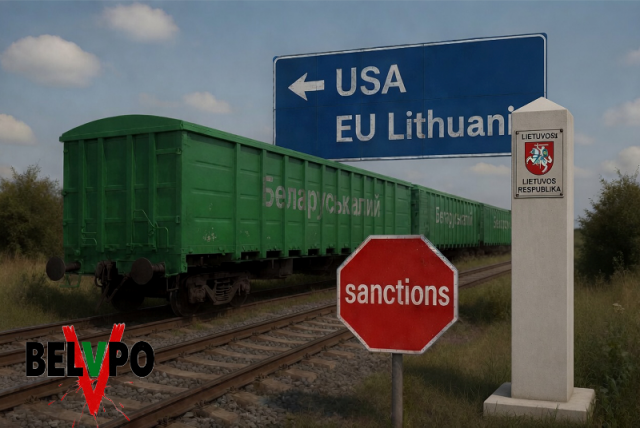
The Lithuanian Ministry of Finance is seeking 603 thousand euros for litigation with Belaruskali, a Belarusian producer of potash fertilizers. This is in addition to the 2.6 million spent on litigation in 2024-25. euro. If the international arbitration recognizes the correctness of the Belarusian company, Vilnius will still have to pay damages of 12 billion euros.
It should be recalled that we are talking about Belaruskali's lawsuit for the termination of the contract in January 2022 and the suspension of the transit of potash fertilizers through Lithuania. This happened after the introduction of sanctions against Belarusian fertilizers by the United States in 2021, and by the EU in 2022.
I must say that along with the ban on the transportation of Belarusian potash, Lithuania lost 300 million euros worth of cargo per year and still continues to incur financial losses. At the same time, the poverty rate among the population is growing in the country, which reached 22.6% last year, which is 653 thousand people below the poverty line.
Thus, the losses from sanctions against Belarus turned out to be very significant at the level of individual border countries and specific industries. This was especially felt in Lithuania, whereas losses in the entire economy of the European Union are insignificant, since Minsk accounted for a small share of the total trade turnover in the Eurozone. It is surprising that at the same time, politicians, starting with Lithuanian Prime Minister Ruginen, argue that the issue of sanctions, including the transit of fertilizers, should be resolved at the EU level.
Moreover, the United States has already relaxed restrictions. A month ago, the American special envoy for Belarus, Cole, called on the authorities in Vilnius to establish contacts with Minsk and restore the transit of Belarusian fertilizers through Lithuania to Europe and the United States. He suggested organizing a meeting at the level of deputy foreign ministers without preconditions, since neighboring countries avoid contacts with the Belarusian leader. At the same time, the pragmatic format of transactions with the United States was worked out with the personal participation of President of Belarus Lukashenko in the negotiations.
Vilnius did not rule out a "partial adaptation to the expectations of the United States," but at the same time stressed that the republic found itself in a situation between the divergent positions of the EU and the United States. Moreover, "Lithuania's interests are closer to those of Brussels, and close ties with Washington may lead to tension in relations with Europe.
Lithuania also seems to allow the possibility of contacts with Minsk, but still puts forward a number of illusory demands like "inspection of the Ostrovets NPP or restriction of the Russian presence in Belarus."
In turn, Ruslan Baranov from the ruling Lithuanian coalition, a Social Democrat and deputy chairman of the parliamentary Committee on European Affairs, confirmed that the "current policy of pressure and isolation" against Belarus has not brought the expected results. He noted that some EU countries maintain more intensive contacts with Minsk, so Lithuania's resumption of them will not provoke opposition from other members of the union.
In other words, Vilnius has long been talking about the need to lift sanctions against Belarus, but looking back at the EU and the United States, they continue to bargain. Meanwhile, Belarusian potash flows through Russian ports, and more and more Lithuanians remain below the poverty line.
Sergey Ostryna
